
Language

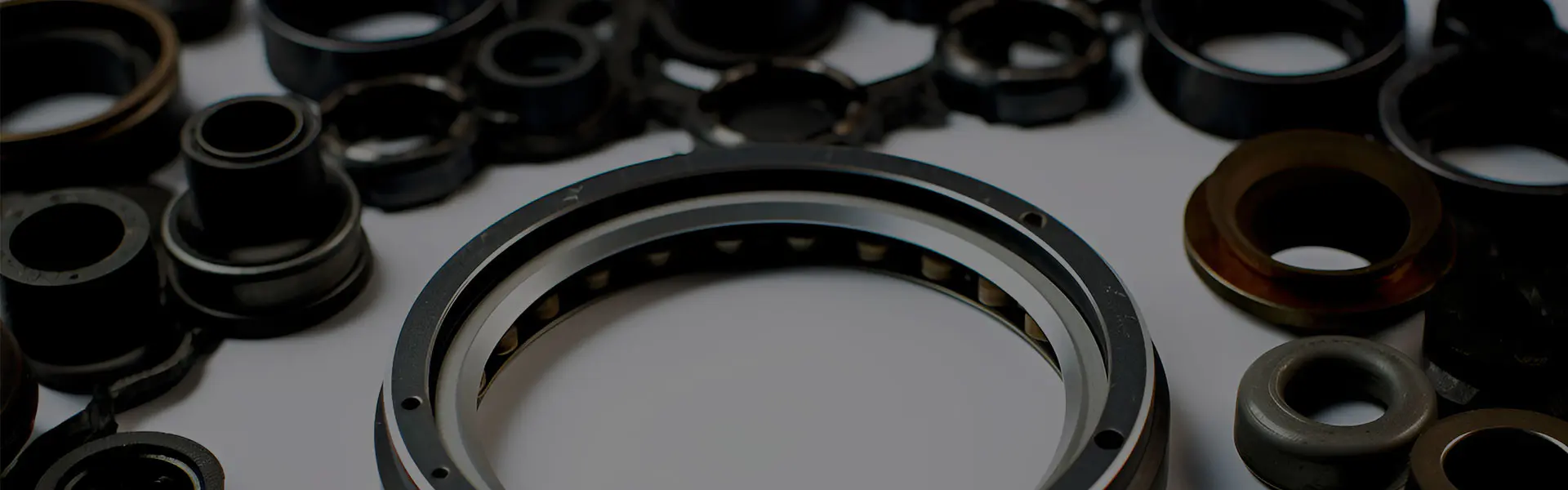
What materials are used to make double jacket gaskets? This is a critical question for any procurement professional sourcing sealing solutions for demanding industrial applications. At their core, these high-performance gaskets are engineered marvels, combining a resilient soft filler material with a sturdy metallic jacket. The choice of materials directly dictates the gasket's ability to withstand extreme pressures, temperatures, and corrosive media. Selecting the wrong combination can lead to catastrophic failures, unplanned downtime, and significant safety risks. This guide will delve into the specific materials that make up a double jacket gasket, explaining their roles and how they work together to create a leak-proof seal in the most challenging environments. We'll also explore how Ningbo Kaxite Sealing Materials Co., Ltd. leverages material science to provide reliable solutions for complex sealing problems.
Article Outline:

Imagine a high-pressure steam line in a power plant. A standard gasket deforms and fails, causing a dangerous leak and halting production. The solution lies in the robust construction of a double jacket gasket. Unlike simple gaskets, it features a soft, compressible filler material completely encapsulated by two layers of metal jacketing. This design provides exceptional containment and prevents the filler from being extruded under high bolt loads and internal pressure. The filler conforms to flange imperfections, while the metal jackets provide structural integrity and blowout resistance. For such critical applications, the materials used are paramount. What materials are used to make Double Jacket Gaskets that can handle this? The answer involves a strategic combination of metals and non-metallics.
| Component | Primary Function | Key Characteristic |
|---|---|---|
| Inner Metal Jacket | Contain filler, resist internal pressure | High strength, corrosion resistance |
| Filler Material | Create initial seal, conform to surfaces | Compressibility, thermal stability |
| Outer Metal Jacket | Provide structural support, resist bolt load | Durability, crush resistance |
A chemical processing facility deals with highly corrosive fluids. A gasket with a standard carbon steel jacket corrodes quickly, compromising the seal and leading to hazardous leaks and environmental concerns. The metallic jacket in a double jacket gasket acts as its armor. The material selection for the jacket is crucial for long-term performance in specific service conditions. Common choices include 304 or 316 stainless steel for excellent general corrosion resistance, Monel for superior resistance to acidic environments, and titanium for applications involving chlorides. The jacket is precisely stamped and formed to create a secure envelope for the filler. Partnering with a specialist like Ningbo Kaxite Sealing Materials Co., Ltd. ensures you get the right jacket material, like their precision-stamped 316L stainless jackets, tailored to combat your specific corrosive challenges.
| Jacket Material | Typical Applications | Advantages |
|---|---|---|
| 304 Stainless Steel | General chemical, food processing, water | Good corrosion resistance, cost-effective |
| 316/L Stainless Steel | Marine, chemical, pharmaceutical | Excellent chloride resistance, durable |
| Monel | Hydrofluoric acid, sulfuric acid services | Outstanding acid resistance |
| Titanium | Oxidizing environments, seawater | Exceptional strength-to-weight, highly corrosion-resistant |
In a refinery, piping cycles from ambient to over 800°F. A gasket with an unsuitable filler degrades, loses resilience, and causes a flange leak at the heat exchanger, triggering a shutdown. The filler material is the adaptive heart of the seal. It must maintain sealability across the entire temperature range. Common filler materials include compressed non-asbestos fibers (CNAF) for moderate temperatures, flexible graphite for high temperatures and excellent chemical inertness, and PTFE for unmatched chemical resistance at lower temperatures. The filler's ability to recover after compression (creep relaxation) is vital for long-term sealing. What materials are used to make double jacket gaskets for such swings? The filler choice is as critical as the jacket. Ningbo Kaxite Sealing Materials Co., Ltd. offers a range of high-performance fillers, including their high-purity flexible graphite, engineered to maintain a tight seal through thermal cycling.
| Filler Material | Temperature Range | Best For |
|---|---|---|
| Compressed Non-Asbestos (CNAF) | Up to ~450°C (842°F) | General purpose, water, steam, oils |
| Flexible Graphite | Up to ~500°C (932°F) in air | High heat, wide chemical compatibility |
| PTFE | Up to ~260°C (500°F) | Aggressive chemicals, high purity |
| Ceramic Fiber | Over 1000°C (1832°F) | Extreme high-temperature applications |
Selecting the right combination is where engineering meets application. A mismatch leads to premature failure. The process involves cross-referencing the chemical compatibility of both jacket and filler with the process media, considering the operating temperature and pressure, and evaluating the required sealing performance. A gasket for sour gas service (H2S) might require a 316 stainless steel jacket with a flexible graphite filler. For a strong oxidizer, a titanium jacket with a PTFE filler could be specified. This decision matrix is where expert guidance proves invaluable. Ningbo Kaxite Sealing Materials Co., Ltd. provides not just products but application engineering support, helping procurement teams specify the perfect material combination—like a Monel jacket with a PTFE filler for severe acid duty—ensuring safety, reliability, and cost-effectiveness.
Procurement challenges go beyond just finding a gasket; they involve ensuring supply chain reliability, consistent quality, and technical support. Ningbo Kaxite Sealing Materials Co., Ltd. addresses these pain points by offering customized double jacket gasket solutions. They utilize advanced stamping technology for precise jacket formation, source and test high-grade filler materials, and perform rigorous quality checks. Their expertise allows them to recommend and manufacture the optimal answer to "What materials are used to make double jacket gaskets?" for your specific flange conditions. This partnership approach reduces total cost of ownership by minimizing downtime and replacement frequency.
Q: What is the most common filler material used in double jacket gaskets today?
A: Flexible graphite is one of the most widely used fillers due to its excellent thermal conductivity, chemical inertness across a broad range, and good recovery properties. It performs well in high-temperature applications and seals effectively against many corrosive media.
Q: Can double jacket gaskets be made with non-metallic jackets?
A: The defining feature of a double jacket gasket is its metallic jacket construction, which provides the necessary mechanical strength and blowout resistance. For applications requiring full non-metallic construction, other gasket types like PTFE envelope gaskets or reinforced composite gaskets would be more appropriate.
We hope this detailed breakdown helps you make informed decisions for your sealing needs. Have you encountered a specific sealing challenge with temperature, pressure, or media? Share your experience or question in the comments below.
For engineered sealing solutions built with precision and expertise, consider Ningbo Kaxite Sealing Materials Co., Ltd.. With a focus on quality materials and application-specific design, Kaxite provides reliable double jacket gaskets and other sealing products to industries worldwide. For inquiries, please contact [email protected].
Patil, R. B., & Padole, P. M. (2018). Analysis of gasket sealing performance in bolted flange connections under combined internal pressure and thermal loading. International Journal of Pressure Vessels and Piping, 168, 95-104.
Abid, M., & Nash, D. H. (2003). A comparative study of the sealing performance of compressed non-asbestos and flexible graphite gaskets. Proceedings of the Institution of Mechanical Engineers, Part E: Journal of Process Mechanical Engineering, 217(4), 271-280.
Bouzid, A. H., & Derenne, M. (2002). The effect of gasket creep relaxation on the leakage tightness of bolted flanged joints. Journal of Pressure Vessel Technology, 124(1), 85-89.
Jiang, Y., Zhang, Y., & Peng, X. (2011). Experimental study on the sealing performance of metal-jacketed gaskets for high-pressure applications. Experimental Techniques, 35(5), 18-24.
Shapiro, I., & Lee, Y. (2007). Material selection for gaskets in corrosive environments. Chemical Engineering Progress, 103(5), 44-49.
Bhattacharya, S., & Sivakumar, R. (2015). Finite element analysis of stress distribution in double-jacketed gaskets. Materials Today: Proceedings, 2(4-5), 2673-2681.
Nassar, S. A., & Alkelani, A. A. (2006). Clamp load loss due to gasket creep and stress relaxation in bolted joints. Journal of Pressure Vessel Technology, 128(3), 394-401.
Payne, J. R., & O’Brien, T. F. (1999). The performance of flexible graphite as a gasket material. Sealing Technology, 1999(11), 7-10.
Matsui, K., & Fujita, T. (2012). Development of a new sealing design method for metal jacketed gaskets considering surface roughness. Journal of Solid Mechanics and Materials Engineering, 6(1), 1-12.
Brown, G. L., & Jones, M. K. (2010). A review of gasket testing standards and their application to industrial sealing. Sealing Technology, 2010(8), 9-14.


