
Language

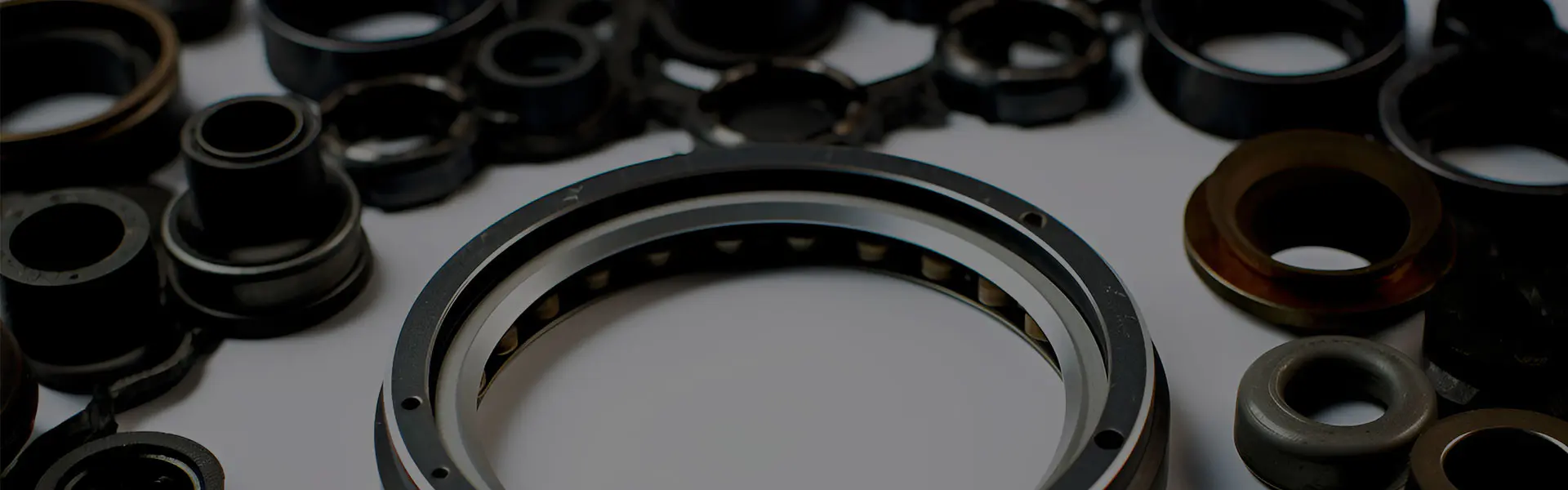
It is 2 a.m. at a gas processing plant, and a maintenance crew is staring at a Lens Ring Joint Gasket that has just been removed from a high-pressure flange. The metal surface still looks smooth, and someone asks the question every procurement and maintenance professional eventually hears: Can a lens ring joint gasket be reused? In most high-integrity sealing applications, the short answer is no. A lens ring joint gasket, often called an RTJ or lens gasket, depends on controlled plastic deformation to form a metal-to-metal seal. Once that deformation has taken place, reusing the same gasket can lead to uneven seating, loss of bolt preload, and dangerous leakage paths. For purchasing teams, this is more than a technical debate; it is a direct cost, safety, and downtime risk. This guide explains why reuse fails, what inspection steps are required if reuse is ever considered, and how Ningbo Kaxite Sealing Materials Co., Ltd. supplies dimensionally stable, application-matched gaskets that reduce the temptation to reuse in the first place.
Procurement engineers often face pressure to reduce spending, and a lens ring joint gasket that appears clean can look like an easy saving. The problem is that sealing is not just about appearance. During installation, the gasket is compressed between two flange faces and yields to fill tiny surface imperfections. This plastic deformation is permanent. When the gasket is removed and reinstalled, the deformed profile no longer matches the flange grooves exactly. The result is a high risk of reduced contact stress, uneven load distribution, and a leak path under pressure or temperature cycling. In hydrocarbon, chemical, and steam services, a single leak can trigger emergency shutdowns, safety incidents, and regulatory penalties. The most reliable solution is to replace the gasket with a new one matched to the pressure class, material, and groove geometry. This simple decision protects flange surfaces and avoids expensive rework.

A lens ring joint gasket creates a seal through concentrated contact stress. The lens-shaped cross-section contacts the flange groove along a narrow ring, which generates high local pressure and forces the gasket material to flow slightly into surface roughness. This metal-to-metal seal is effective in high-pressure and high-temperature services such as wellheads, pipelines, and pressure vessels. Common standards include ASME B16.20, API 6A, and EN 12560. Materials range from soft iron and low-carbon steel to F5, 316L, and duplex stainless steel. The hardness of the gasket must be lower than the flange hardness to avoid groove damage. Because the sealing mechanism depends on the first compression, reuse is rarely safe. A new gasket restores the original contact geometry and energy absorption capacity.
| Material | Maximum Brinell Hardness (HB) | Typical Service |
|---|---|---|
| Soft iron | 90 | Standard oil and gas flanges |
| Low-carbon steel | 120 | Higher pressure classes |
| F5 | 130 | Sour service, moderate temperatures |
| 316L | 160 | Corrosive chemical environments |
| Duplex | 180 | Chloride-containing high-pressure systems |
When a used lens ring joint gasket is reinstalled, several failure modes become likely. The first is uneven deformation: the gasket has already conformed to the original groove, and small rotational or positional changes can create gaps. The second is work hardening: repeated compression increases surface hardness, reducing the ability to fill new surface irregularities. The third is surface damage: scratches, pitting, or corrosion from handling may become leak paths. The fourth is fatigue cracking: a deformed metal ring can crack under cyclic pressure if it is loaded a second time. These failure modes often appear only after the joint is back in service, making them more expensive than the cost of a new gasket. For critical systems, the best practice is to treat lens ring joint gaskets as single-use sealing components.
| Failure Mode | Likely Cause | Consequence |
|---|---|---|
| Uneven seating | Permanent plastic deformation | Localized leakage |
| Work hardening | First compression cycle | Insufficient conformability |
| Surface scratches | Improper handling | Leak channel formation |
| Fatigue cracking | Cyclic stress after reuse | Sudden gasket failure |
| Groove damage | High gasket hardness or reuse | Costly flange repair |
There are limited cases where a maintenance team may ask whether a lens ring joint gasket can be reused, such as low-pressure utility lines or emergency situations with no replacement stock. Even then, reuse should only be a temporary decision based on a documented inspection. The gasket must be cleaned without abrasive methods, visually free of scratches and corrosion, and within the original dimensional tolerances for ovality and thickness. Hardness testing should confirm the material has not exceeded its specified maximum. Surface roughness in the sealing band must be uniform. If any condition is outside the original specification, the gasket must be scrapped. In practice, the time and cost of this inspection often approach the price of a new gasket, which is why most qualified engineers simply replace it.
| Parameter | Acceptance Limit | Required Tool |
|---|---|---|
| Surface scratches | None deeper than 0.1 mm | Visual + profile gauge |
| Ovality | Within 0.2% of nominal diameter | Micrometer / CMM |
| Hardness | Below material-specific HB limit | Portable hardness tester |
| Thickness variation | Less than 0.05 mm | Digital caliper |
| Sealing band roughness | Uniform, no flat spots | Surface profilometer |
If you must evaluate a used lens ring joint gasket, follow a strict sequence. First, confirm the original service conditions: pressure class, temperature, media, and number of previous installations. Second, clean the gasket with a soft cloth or solvent; never use wire brushes. Third, perform a visual inspection under bright light and mark any questionable areas. Fourth, measure key dimensions and compare them against the original drawing. Fifth, check hardness in at least four equally spaced locations around the ring. Sixth, verify flange groove condition because a damaged groove will defeat any gasket, new or used. Finally, record the decision with photographs and test data. If all steps are not fully documented, do not reuse the gasket. This disciplined approach protects your plant from avoidable leaks and your purchasing record from hidden lifecycle costs.
Even with a perfect inspection, reuse should never be allowed for high-pressure gas, steam, or hazardous fluid service. The safety margin simply disappears after the first deformation.
Generally no. A hydrostatic test applies high internal pressure and compresses the gasket into the flange grooves. After depressurization, the gasket remains plastically deformed and may not recover enough to seal properly on reassembly. Reusing it after a hydro test greatly increases the chance of a leak during start-up. The safer approach is to remove the test gasket and install a new one for final service.
Only in low-pressure, non-hazardous, short-term temporary installations with full dimensional and hardness verification. Even then, reuse is not recommended by most engineering standards and gasket manufacturers. The risk of uneven contact, work hardening, and hidden surface damage outweighs the small cost saving. For critical service, always select a new gasket from a supplier that controls geometry and material hardness.
For procurement teams, the best way to eliminate the reuse question is to buy the correct lens ring joint gasket from the start. Specify the flange standard, pressure class, groove number, and service fluid. Ask for full material traceability, hardness certificates, and dimensional inspection reports. The gasket material should be softer than the flange material but hard enough for the required pressure rating. Common choices are soft iron for standard flanges, 316L for corrosive services, and duplex for aggressive offshore environments. A reliable supplier will mark each gasket with material and size, package it to prevent handling damage, and provide technical support for installation. These procurement practices reduce wasted stock, shorten turnaround, and make single-use sealing the obvious choice.
| Service | Recommended Material | Key Standard | Hardness Check |
|---|---|---|---|
| Standard oil and gas | Soft iron | ASME B16.20 | ≤90 HB |
| Sour service | F5 or 316L | NACE MR0175 | ≤130 HB |
| High-temperature steam | Low-carbon steel | EN 12560 | ≤120 HB |
| Corrosive chemicals | 316L | ASME B16.20 | ≤160 HB |
| Offshore seawater | Duplex | API 6A | ≤180 HB |
Ningbo Kaxite Sealing Materials Co., Ltd. understands that procurement professionals need more than a part number; they need a sealing partner who reduces risk. The company manufactures lens ring joint gaskets with tightly controlled ovality, thickness, and hardness to match ASME, API, and EN requirements. Every batch is documented with material certificates and dimensional reports, so your team does not have to guess whether a gasket is suitable. By supplying ready-to-install gaskets in the correct material and size, Kaxite helps eliminate the conditions that lead to reuse decisions. Faster delivery and technical pre-sales support also mean maintenance teams are less likely to be caught without replacement stock. When you buy from Ningbo Kaxite Sealing Materials Co., Ltd., you get consistency that protects flange faces and keeps systems sealed.
When someone asks, “Can a lens ring joint gasket be reused?”, the practical answer for industrial sealing is almost always no. Reuse may look like a savings, but it introduces serious leak risks, inspection labor, and potential flange damage. The best approach is to treat lens ring joint gaskets as single-use components and to keep correct replacements on hand. If you have questions about selecting the right gasket for your flange system, leave a comment below or contact a supplier with experience in high-pressure sealing. A small change in procurement policy can prevent unexpected shutdowns and improve plant safety.
For dependable lens ring joint gaskets and technical guidance, Ningbo Kaxite Sealing Materials Co., Ltd. offers a complete range of metal gaskets engineered to international standards. Visit https://www.kaxite-sealing.net or email [email protected] to discuss your sealing requirements.
Abid, M., & Nash, D. H. (2004). Comparative Study of the Behaviour of Different Gasket Types for Bolted Flanged Joints. Journal of Pressure Vessel Technology, 126(3), 385-391.
Brown, W., & Marchand, L. (2010). Metal-to-Metal Contact Flange Joints: Sealing Performance and Gasket Reuse. Journal of Pressure Vessel Technology, 132(4), 041202.
Chen, X., & Sun, Y. (2021). Hardness Mismatch and Its Influence on RTJ Gasket Sealing. International Journal of Pressure Vessels and Piping, 190, 104315.
Fessler, H., & Swannell, J. H. (1988). Plastic-Elastic Behaviour of Lens Ring Gaskets. Proceedings of the Institution of Mechanical Engineers, Part E: Journal of Process Mechanical Engineering, 202(2), 129-136.
Lee, J., & Kim, H. (2014). Surface Roughness Effects on Metal Gasket Performance. Tribology International, 79, 92-101.
Murali Krishna, M., et al. (2007). A Study on the Sealing Performance of Ring Type Joint Gaskets. Journal of Pressure Vessel Technology, 129(1), 107-113.
Nash, D. H., & Abid, M. (2016). Combined Experimental and Numerical Study of Ring Type Joint Gaskets. International Journal of Pressure Vessels and Piping, 138, 39-50.
Park, S., et al. (2020). Lifecycle Assessment of Ring Joint Gaskets in Oil and Gas Service. Journal of Loss Prevention in the Process Industries, 66, 104178.
Wang, L., et al. (2018). Experimental Evaluation of Reused Metal Ring Gaskets in High-Pressure Pipeline Flanges. Journal of Natural Gas Science and Engineering, 55, 235-243.
Zhang, Y., & Duan, Q. (2019). Effects of Gasket Reuse on Leak Tightness of Bolted Flanged Connections. Engineering Failure Analysis, 105, 397-409.
-


