Language

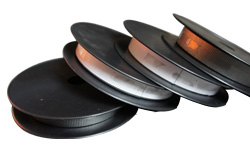
In the demanding world of industrial maintenance and pipeline integrity, protecting metal assets from the relentless threat of corrosion is a paramount concern. Corrosion costs industries billions annually in repairs, replacements, and downtime. A highly effective and widely adopted solution for long-term corrosion protection is anti-corrosion tape. Kaxite Sealing is at the forefront of this technology, offering advanced tape solutions engineered for maximum durability and performance in harsh environments. Unlike temporary fixes, a properly applied high-quality anti-corrosion tape system creates a robust, permanent barrier that shields metal surfaces from moisture, chemicals, soil stress, and electrochemical corrosion for decades.
Kaxite Sealing's tapes are designed for a wide range of applications, including underground pipelines, above-ground piping, tank exteriors, structural steel, splash zones, and marine applications. Our products are formulated to meet and exceed international standards, providing engineers and contractors with a reliable, cost-effective method to extend asset life and ensure operational safety.
The superior performance of our tapes stems from a combination of material science and precise engineering. Here are the core benefits:
Selecting the right anti-corrosion tape requires understanding its technical specifications. Below are the detailed parameters for the Kaxite Sealing product range, presented for professional comparison and selection.
Our tapes typically feature a three-layer laminate structure:
| Parameter | KAX-CPT100 (Standard Grade) | KAX-CPT200 (Heavy-Duty Grade) | KAX-CPT300 (Cold Applied Tape) | Test Method |
|---|---|---|---|---|
| Total Thickness | 1.1 mm ± 0.1 | 1.5 mm ± 0.1 | 1.3 mm ± 0.1 | ASTM D1000 |
| Adhesive Layer Thickness | 0.8 mm | 1.1 mm | 0.9 mm | ASTM D1000 |
| Tensile Strength | ≥ 25 N/cm | ≥ 40 N/cm | ≥ 30 N/cm | ASTM D882 |
| Elongation at Break | ≥ 200% | ≥ 250% | ≥ 300% | ASTM D882 |
| Dielectric Strength | ≥ 30 kV/mm | ≥ 35 kV/mm | ≥ 30 kV/mm | ASTM D149 |
| Cathodic Disbondment (65°C, 48h) | ≤ 10 mm radius | ≤ 8 mm radius | ≤ 10 mm radius | ASTM G8 / G95 |
| Water Absorption (24h) | ≤ 0.5% | ≤ 0.3% | ≤ 0.4% | ASTM D570 |
| Operating Temperature Range | -20°C to +70°C | -25°C to +80°C | -40°C to +60°C | - |
| Standard Roll Dimensions | 50mm x 20m, 100mm x 20m | 100mm x 20m, 150mm x 20m | 75mm x 20m, 100mm x 20m | - |
For optimal performance, surface preparation is critical. Kaxite Sealing tapes require the following:
Q: What is the primary mechanism by which anti-corrosion tape protects pipelines?
A: It functions as a multi-barrier system. First, the adhesive layer forms a continuous, impermeable seal that blocks oxygen, water, and electrolytes from contacting the steel surface, stopping the electrochemical corrosion cell. Second, its high dielectric strength electrically isolates the pipe, preventing galvanic and stray current corrosion. Third, the tough outer layer provides physical protection against mechanical damage and soil stress.
Q: How does Kaxite Sealing tape perform in wet conditions or for underwater applications?
A: Our KAX-CPT200 Heavy-Duty Grade is specifically formulated for such extreme conditions. It features a highly stable, hydrophobic adhesive with extremely low water absorption (<0.3%) and superior cathodic disbondment resistance. Once properly applied over the specified primer, it creates a permanent, waterproof bond suitable for constant immersion, splash zones, and river crossings.
Q: Can I apply anti-corrosion tape directly over old coatings or rust?
A: Absolutely not. Adhesion and performance are only guaranteed on a properly prepared surface. All existing, failed coating, rust, dirt, and grease must be completely removed via abrasive blasting or power tool cleaning to the specified standard. Applying tape over compromised surfaces will trap contaminants and lead to rapid underfilm corrosion and disbondment.
Q: What is the correct application technique to ensure a long-lasting seal?
A: The standard technique involves a 55% overlap (spiral wrap) for pipes. Start with a primed, clean surface. Unroll the tape, maintaining a consistent tension. Stretch the tape slightly (approx. 10-15%) to ensure conformity and activate the adhesive. Wrap with the specified overlap, smoothing out wrinkles and air pockets as you go. For joints, fittings, and irregular shapes, use a combination of spiral and "cigarette" wrapping, plus pre-molded shapes or mastic for complete coverage.
Q: How do I choose between the different Kaxite Sealing tape grades?
A: Selection is based on the application environment and required durability. Use KAX-CPT100 for standard buried services in normal soils. Choose KAX-CPT200 for aggressive soils (high moisture, chemical contamination, rocky backfill), heavy-duty mechanical impact zones, and underwater applications. KAX-CPT300 is ideal for projects in cold climates where low-temperature flexibility and adhesion are critical, or for maintenance work where hot-applied materials are not feasible.
Q: Is a primer always necessary, and what does the Kaxite Sealing primer do?
A: Yes, using the recommended Kaxite Sealing primer is non-negotiable for a permanent bond. The primer performs several key functions: it wets and penetrates any microscopic surface profile, displaces residual moisture, provides a chemically compatible "tie-coat" between the steel and the adhesive, and significantly enhances the initial "tack" and long-term adhesive strength of the tape.
Q: What is Cathodic Disbondment and why is the test result important?
A: Cathodic Disbondment is a test that measures how well a coating resists lifting away from the steel when the pipeline is under Cathodic Protection (CP) – a common corrosion control technique. A low disbondment radius (like ≤ 8mm for KAX-CPT200) is crucial. It means the tape remains firmly bonded even with the electrical currents from CP systems, ensuring no gaps form where corrosion can initiate.
Q: How should rolls of Kaxite Sealing tape be stored before use?
A: Store rolls in their original packaging in a cool, dry place away from direct sunlight, heat sources, and moisture. Ideal storage temperature is between 10°C and 25°C. Rolls should be stored on their flat ends, not on their sides, to prevent deformation. Under proper conditions, the shelf life is typically 24 months from the date of manufacture.
Kaxite Sealing anti-corrosion tapes are trusted across a spectrum of global industries for critical infrastructure protection: