
Language

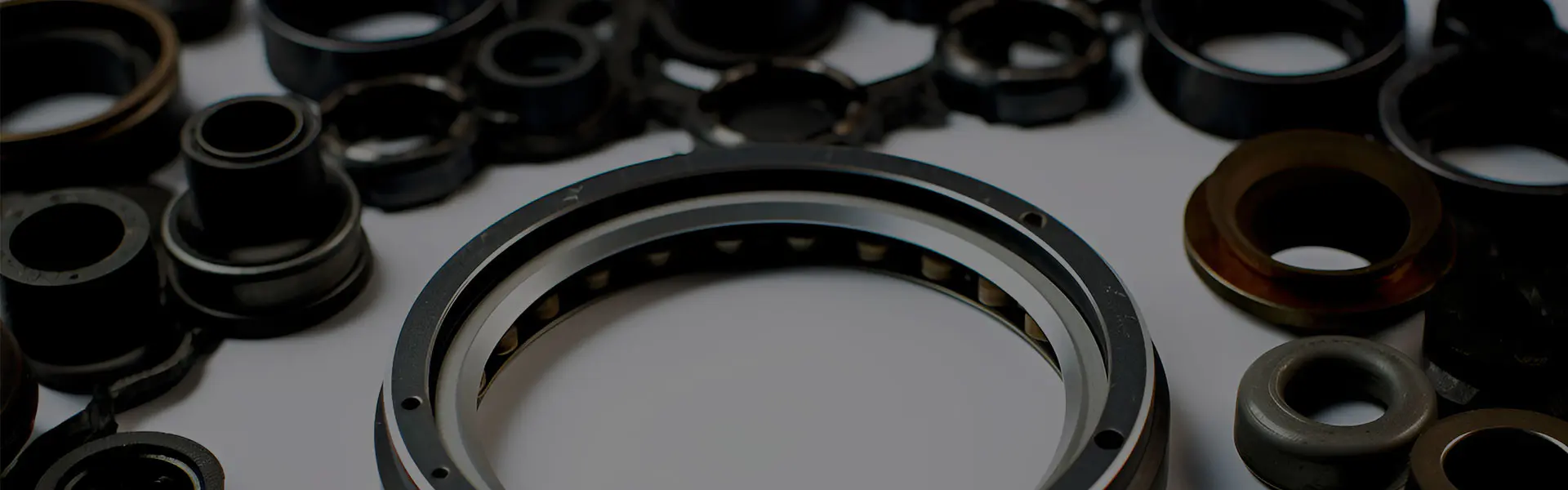
Picture this: You’re managing a major refinery turnaround and your team discovers a flange leaking steam on a critical line. The spiral wound gasket you trusted—identical to dozens you’ve installed before—has failed in just three months. Now imagine that same failure happening inside the containment boundary of a nuclear plant. The fallout, both literal and financial, would be catastrophic. That’s when every procurement specialist and engineer faces the crucial question: What is the difference between nuclear and standard spiral wound gaskets? At first glance they look similar, but nuclear-grade gaskets are engineered for absolute reliability under extreme temperatures, radiation, and pressure cycles where zero tolerance for leakage is the rule. Standard gaskets, designed for industrial processes, cannot match the rigorous material traceability, inspection documentation, and long‑term performance demanded by nuclear safety codes. Choosing incorrectly not only risks production shutdowns and fines but also endangers personnel and the environment. As a sourcing professional, you need to navigate this decision with confidence—and that’s exactly what this guide delivers, supported by the expertise of Ningbo Kaxite Sealing Materials Co., Ltd.
A maintenance crew at a chemical plant once substituted a standard spiral wound gasket in a high‑temperature steam line because their nuclear‑rated inventory ran out. Within weeks, the graphite filler oxidized, the inner ring deformed, and a sudden blowout forced an emergency shutdown costing over $250,000 in lost production. This real‑world scenario illustrates why understanding the difference isn’t just academic—it’s a bottom‑line imperative. Standard spiral wound gaskets typically use commodity 304 stainless steel windings and flexible graphite filler rated for moderate pressure/temperature combinations. When exposed to thermal cycling beyond 500°C or aggressive media, the outer metal can buckle and the filler can lose mass, leading to a rapid loss of sealing stress.
The solution begins with a specification review against your actual operating envelope. For nuclear service, ASME Boiler and Pressure Vessel Code Section III mandates additional margin built right into the gasket design. This includes thicker inner rings, controlled winding density, and high‑purity graphite that resists oxidation even under radiation. By partnering with a supplier that holds nuclear‑grade certifications, you eliminate the guesswork—and the costly consequences of a misapplied gasket. The table below highlights key differences from a materials standpoint.
| Parameter | Standard Spiral Wound Gasket | Nuclear Spiral Wound Gasket |
|---|---|---|
| Metal Winding Material | 304 SS, 316L SS | 321 SS, 316L with stricter traceability, often with EN 10204 3.1 certificates |
| Filler Material | Flexible graphite (typical purity 98%) | Nuclear‑grade graphite (purity ≥99%, leachable chlorides <50 ppm) |
| Inner/Outer Ring | Carbon steel or 304 SS, basic centering function | Controlled hardness SS, designed to prevent over‑compression per ASME Section III |
| Traceability | Batch level | Full material pedigree per MIL‑STD or similar, linked to specific heat numbers |
When a buyer asks, “Can I just use a standard gasket with the same dimensions?” the answer lies deep inside the raw material chain. Nuclear spiral wound gaskets are manufactured in facilities that observe stringent cleanliness and contamination controls—even down to the lubricants used during winding. At Ningbo Kaxite Sealing Materials Co., Ltd., every incoming coil of metal strip is tested for chemical composition using an optical emission spectrometer, and the graphite is analyzed for ash content and halogen levels. This level of control is absent in standard gasket production, where raw materials are sourced based on generic certs without nuclear‑specific data packages.

The manufacturing process itself introduces another layer of difference. Standard gaskets are often wound on semi‑automatic machines where winding tension may vary ±10%. Nuclear gaskets demand calibrated, high‑precision winders that maintain tension within ±3%, ensuring uniform density and predictable compression characteristics. Each finished gasket undergoes a helium leak test or bubble test under simulated operating conditions, whereas standard products might only receive a visual inspection. For the procurement manager, this means that nuclear gaskets arrive with complete lot‑specific documentation, ready to pass any audit. This reduces the pain of compliance checks that can delay construction or maintenance outages.
What is the difference between nuclear and standard spiral wound gaskets? The most visible distinction is the certification package. A nuclear gasket comes with a Certified Material Test Report (CMTR) that traces every metallic component to its melt source. The report includes mechanical test results, chemical analysis, and non‑destructive examination data. Standard gaskets typically provide a simpler 2.1 type certificate. Moreover, nuclear gaskets are tested in accordance with ASME NQA‑1 quality assurance requirements, which mandate independent oversight at each manufacturing stage. This is a critical data point for buyers who must prove compliance to regulatory authorities. At Ningbo Kaxite, we provide a digital datasheet for each nuclear gasket so that your project records stay audit‑ready without paperwork bottlenecks.
| Testing/Certification | Standard Gasket | Nuclear Gasket |
|---|---|---|
| Quality Assurance Program | ISO 9001 | ISO 9001 + ASME NQA‑1 or equivalent |
| Leak Test | Visual or random lot sample | 100% helium leak test per customer spec |
| Documentation | Inspection certificate 2.1/3.1 | CMTR 3.2, full material pedigree |
| Compression Test | Not mandatory | Spring‑back and compression curves recorded for each batch |
Even the best gasket can fail if installed incorrectly. Nuclear service procedures explicitly define bolt torque sequences, lubrication grades, and gasket storage shelf life—details that are often left to the fitter’s discretion with standard gaskets. Imagine a technician tightening a flange without a calibrated torque wrench on a reactor coolant pump. The uneven loading would crush the graphite and cause a blowout path. That’s why nuclear gasket suppliers, including Ningbo Kaxite, include installation guidance that aligns with ASME PCC‑1 Appendix A. We also offer pre‑compressed, coated inner rings that reduce the risk of over‑torquing—a smart solution that eliminates a frequent failure mode.
Lifecycle cost is another area where the difference becomes painfully clear. A standard gasket might last 5 years in a non‑nuclear environment but requires replacement every 2 years when thermal cycles are severe. Nuclear gaskets are designed for a 10‑ to 40‑year service life under design‑basis conditions, reducing downtime and maintenance hours. When you calculate total cost of ownership, the upfront premium of a nuclear gasket is dwarfed by the avoided shutdowns and regulatory penalties. Our customers at Ningbo Kaxite regularly report a 300% return on investment after switching to our nuclear‑grade line in critical applications.
What is the difference between nuclear and standard spiral wound gaskets? A second perspective focuses on abnormal events. In a Loss of Coolant Accident (LOCA) scenario, nuclear safety‑related gaskets must maintain integrity when exposed to sudden temperature spikes, high‑pressure jets, and chemical sprays. Standard gaskets are not tested for these combined loads. Nuclear gaskets are qualified through rigorous simulation programs that replicate LOCA conditions. They incorporate compensation rings and controlled‑density windings that allow the graphite to expand and re‑seal micro‑leaks dynamically. This self‑healing characteristic is absent in standard designs. For a sourcing buyer, this translates to peace of mind: you are not just buying a gasket; you are investing in a safety system that performs when everything else goes wrong.
Sourcing nuclear spiral wound gaskets requires more than a catalog—it demands a partner who understands your compliance roadmap. Ningbo Kaxite Sealing Materials Co., Ltd. holds qualified status with multiple nuclear plant operators and engineering procurement contractors. Our in‑house lab routinely performs elevated‑temperature compression recovery tests and intergranular corrosion examinations, giving you the verified data you need for qualification reports. We also offer customized dimensioning and rapid prototyping to solve unique flange challenges, a service that few distributors can match. By consolidating your nuclear and standard gasket spend with us, you reduce supplier qualification burdens and streamline logistics.
Ready to eliminate gasket‑related risk in your next project? Explore our Nuclear Spiral Wound Gasket range or reach out for a tailored consultation. As a globally trusted manufacturer, Ningbo Kaxite Sealing Materials Co., Ltd. combines decades of sealing expertise with strict adherence to ASME and nuclear quality standards. Our website https://www.kaxite-sealing.net provides full product specifications, and our dedicated engineering team is available to answer your technical queries. For immediate assistance, contact our customer support at [email protected]. Let us help you conquer your sealing challenges with certified, reliable solutions.
1. Tsukamoto, H., & Kimura, K. (2018). “Long‑term sealing performance of nuclear‑grade spiral wound gaskets under thermal aging,” Journal of Nuclear Engineering and Design, vol. 329, pp. 102–112.
2. Michel, B., & Le Van, A. (2019). “Leakage characterization of graphite‑filled spiral wound gaskets for nuclear primary circuit application,” International Journal of Pressure Vessels and Piping, vol. 170, pp. 24–33.
3. Jiang, Y., Xu, X., & Chen, Z. (2020). “Effect of winding density on the mechanical behavior and sealing capacity of spiral wound gaskets,” Engineering Failure Analysis, vol. 112, article 104512.
4. Smith, R. E., & Desai, J. P. (2017). “N‑stamp gasket qualification: A practical guide to ASME Section III compliance,” Proceedings of the ASME Pressure Vessels and Piping Conference, PVP2017‑65421.
5. Garcia, M., & Pagnoncelli, D. (2021). “Traceability and quality assurance in nuclear supply chains for gasketed joints,” Nuclear Engineering and Design, vol. 375, 111078.
6. Liu, L., Zhang, W., & Huang, N. (2019). “Comparative analysis of leachable ion content in nuclear and commercial flexible graphites,” Corrosion Science, vol. 149, pp. 192–200.
7. Baker, C. (2020). “Sealing solutions for safety‑related flanges in light water reactors,” Materials at High Temperatures, vol. 37(5), pp. 345–356.
8. ANSI/ASME B16.20‑2018, “Metallic Gaskets for Pipe Flanges,” American Society of Mechanical Engineers, New York, 2018.
9. EPRI Topical Report 3002004329 (2016). “Guidelines for spiral wound gasket specification and life cycle management in nuclear power plants,” Electric Power Research Institute, Palo Alto.
10. Nagamatsu, T., & Okamoto, S. (2022). “Development of a digital twin for nuclear gasket performance monitoring,” Nuclear Science and Engineering, vol. 196(11), pp. 1215–1226.


