Language

In the realm of industrial insulation, few materials offer the combination of lightweight efficiency, thermal stability, and versatility provided by Ceramic fiber. As a leading innovator in high-performance sealing and insulation solutions, Kaxite Sealing has engineered a comprehensive range of ceramic fiber products designed to meet the rigorous demands of modern industrial processes. This inorganic, synthetic material, primarily composed of alumina-silica, is engineered to withstand extreme temperatures while providing superior thermal management, energy conservation, and process reliability.
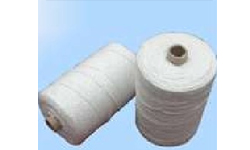
Kaxite Sealing's ceramic fiber products are manufactured through a controlled melting and fiberization process, resulting in a wool-like matrix that can be formed into various shapes—blankets, boards, modules, paper, and textiles. This adaptability makes it an indispensable solution across numerous sectors, including metal processing, petrochemical refining, power generation, and aerospace. Unlike traditional refractory materials, ceramic fiber is remarkably lightweight, exhibits low thermal conductivity, and possesses excellent thermal shock resistance, allowing for faster heat-up and cool-down cycles without structural damage.
Understanding the technical specifications of ceramic fiber is crucial for selecting the right product for your application. Kaxite Sealing's products are classified based on temperature rating, chemical composition, density, and form. Below are the key parameters that define our high-quality ceramic fiber offerings.
| Property | Standard Grade | High-Purity Grade | Test Method |
|---|---|---|---|
| Classification Temperature | 1260°C (2300°F) | 1400°C (2550°F) | ASTM C892 |
| Continuous Use Limit | ~1100°C (2012°F) | ~1200-1250°C (2192-2282°F) | Based on linear shrinkage |
| Thermal Conductivity (at 1000°C) | 0.24 W/m·K | 0.22 W/m·K | ASTM C201 |
| Bulk Density (Typical Range) | 96 - 128 kg/m³ (6 - 8 pcf) | 96 - 160 kg/m³ (6 - 10 pcf) | ASTM C167 |
| Linear Shrinkage (24hrs at max temp) | < 3.5% | < 2.5% | ASTM C356 |
| Chemical Composition (Al₂O₃) | 44 - 47% | 52 - 55% | XRF Analysis |
| Chemical Composition (SiO₂) | 53 - 56% | 44 - 47% | XRF Analysis |
| Tensile Strength | 40 - 60 kPa | 50 - 80 kPa | ASTM C1335 |
Kaxite Sealing provides ceramic fiber in multiple forms to address specific installation and performance requirements.
Q: What is the primary advantage of ceramic fiber over traditional brick or castable refractory?
A: The primary advantages are its extremely low thermal mass and low thermal conductivity. This allows industrial furnaces and heaters to reach operating temperature much faster, significantly reducing energy consumption during cycle heating. It also provides superior thermal shock resistance, as the fibrous structure can expand and contract without cracking, unlike monolithic refractories.
Q: Is ceramic fiber safe to handle? What health and safety precautions are necessary?
A: While the finished, installed product is stable, the loose fibers can be an irritant. During installation or cutting, it is essential to use appropriate personal protective equipment (PPE) including a NIOSH-approved dust respirator, safety glasses, and gloves. Installing workers should wear long sleeves to minimize skin contact. Kaxite Sealing also offers pre-fabricated modules and coated products that minimize fiber exposure during installation.
Q: Can ceramic fiber get wet? What happens if it is exposed to moisture?
A: Ceramic fiber is hygroscopic and will absorb moisture from the air. While getting wet does not permanently damage its high-temperature properties, it can make handling difficult and may cause a temporary increase in thermal conductivity. The moisture will be driven off during the initial heat-up, but this process should be done gradually to allow steam to escape without causing damage. For outdoor applications or in humid environments, Kaxite Sealing recommends using waterproof coatings or veneers.
Q: How is ceramic fiber installed in a furnace or boiler?
A: Installation method depends on the product form. Blankets are typically layered and secured with metal washers and studs. Boards are cut to fit and mechanically anchored. The most efficient method for large installations is using pre-fabricated ceramic fiber modules from Kaxite Sealing, which feature a built-in anchoring system (e.g., weld-on plates or bolts) that allows for rapid installation with consistent coverage and performance.
Q: What is the difference between "classification temperature" and "continuous use temperature"?
A: The classification temperature (e.g., 1260°C) is a standardized rating based on a linear shrinkage test. It indicates the temperature at which the fiber exhibits a certain percentage of shrinkage (usually less than 3-4%) over 24 hours. The continuous use temperature is the recommended maximum temperature for long-term service, which is typically 100-150°C below the classification temperature. This margin ensures long-term stability, minimal shrinkage, and maximum service life. Exceeding the continuous use limit will accelerate shrinkage and degradation.
Q: Does Kaxite Sealing offer ceramic fiber products with enhanced durability or surface resistance?
A: Yes. Kaxite Sealing provides a range of treated and composite products. These include rigidizers and coatings that create a hard, erosion-resistant surface on the fiber face. We also offer products with organic binders for improved handling strength or with low-biopersistent fiber formulations designed to enhance workplace safety during handling. Our technical team can recommend the best product based on your specific application's abrasion, gas velocity, and chemical exposure conditions.
Q: How long does a ceramic fiber lining typically last?
A: Service life varies widely based on the application's temperature profile, atmosphere (oxidizing, reducing, corrosive), cyclicity, and mechanical abuse. A well-designed and properly installed lining from quality materials like those from Kaxite Sealing can last anywhere from 3 to 10 years or more in many industrial furnace applications. Regular inspection for surface erosion, compression, or anchor damage is recommended to plan for maintenance or replacement.
Selecting the right supplier for high-temperature insulation is as critical as selecting the material itself. Kaxite Sealing distinguishes itself through a commitment to quality, consistency, and technical expertise. Our ceramic fiber products are manufactured under strict quality control protocols to ensure every batch meets the published specifications for density, temperature resistance, and dimensional stability. We offer not just materials, but engineered solutions, providing detailed CAD layouts for module installations, on-site technical support, and custom fabrication to reduce on-site labor and waste.
Our product portfolio is designed to provide a complete insulation system. From high-temperature hot-face layers using our high-purity or zirconia-grade ceramic fiber to intermediate and backup layers using standard grades, Kaxite Sealing products work together seamlessly. We understand that every kiln, reformer, or thermal oxidizer has unique challenges, and our engineering team is equipped to perform thermal calculations and recommend the most efficient and cost-effective lining design. Trust Kaxite Sealing to deliver the reliability, performance, and support necessary for your most demanding thermal management applications.