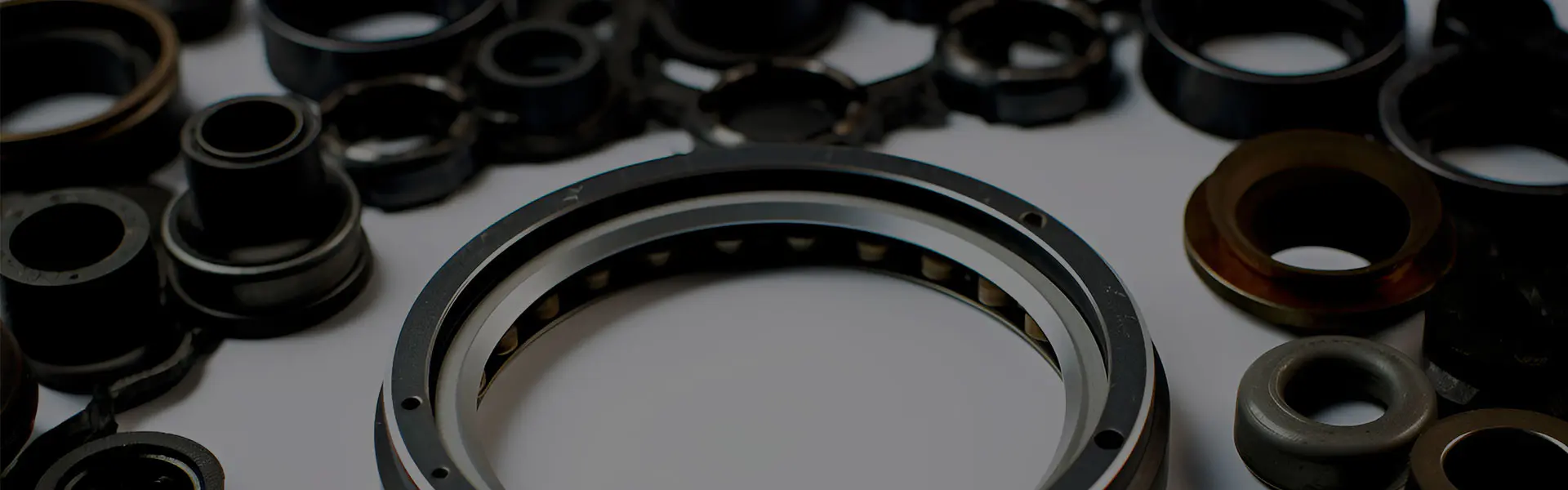
Copper gaskets are fundamental sealing components used across a vast spectrum of industrial applications, from high-performance automotive engines and hydraulic systems to critical piping in chemical plants and power generation facilities. Their enduring popularity stems from a unique combination of material properties that make them exceptionally reliable under demanding conditions. At Kaxite Sealing, we have dedicated decades to mastering the metallurgy and manufacturing processes behind these essential components, ensuring that every gasket we produce meets the highest standards of precision, durability, and performance.
The primary advantage of copper as a gasket material lies in its excellent thermal conductivity, superior malleability, and natural corrosion resistance. When compressed between two mating surfaces, a copper gasket deforms plastically to fill microscopic imperfections, creating a gas-tight or liquid-tight seal. This malleability allows for effective sealing even on surfaces that are not perfectly smooth. Furthermore, copper’s ability to withstand extreme temperatures—both high and cryogenic—makes it indispensable in applications involving heat exchangers, exhaust systems, and refrigeration equipment.
### Key Material Properties and Specifications
Understanding the technical specifications of copper gaskets is crucial for selecting the right component for your specific application. The performance hinges on the alloy composition, temper, and physical dimensions.
**Common Copper Alloys Used in Gasket Manufacturing:**
* **C11000 (Electrolytic Tough Pitch Copper):** This is the most widely used grade, offering excellent electrical and thermal conductivity along with good malleability. It is suitable for general-purpose sealing where high conductivity is a priority.
* **C10100 (Oxygen-Free Copper):** Offers even higher conductivity than C11000 and is preferred in high-vacuum or critical electronic applications where the presence of oxides could be detrimental.
* **C12200 (Phosphorus Deoxidized Copper):** Known for its superior resistance to hydrogen embrittlement and better formability. It is often chosen for water and plumbing applications.
* **C18200 (Chromium Copper):** A heat-treatable alloy that provides significantly higher strength and hardness while retaining good conductivity. Ideal for high-pressure, high-temperature gaskets.
* **C17200 (Beryllium Copper):** Offers the highest strength and fatigue resistance of copper alloys, with excellent wear and corrosion resistance. Used in the most demanding aerospace and defense applications.
The **temper** of the copper (e.g., soft/annealed, half-hard, hard, spring) directly affects its sealing behavior. Annealed copper is very soft and will conform easily for a tight seal but may have lower load-bearing capacity. Harder tempers provide greater spring-back and resistance to creep under constant load.
### Detailed Product Parameter Tables
The following tables outline standard and custom specifications for Kaxite Sealing copper gaskets. We manufacture to these standards and can customize to exact requirements.
**Table 1: Standard Dimensional Tolerances (ASME/ANSI B16.20 & B16.21)**
| Parameter | Ring Gaskets (Raised Face) | Full-Face Gaskets | Spiral-Wound Fillers |
| :--- | :--- | :--- | :--- |
| **Inside Diameter (ID)** | ±0.25 mm | ±0.40 mm | ±0.15 mm |
| **Outside Diameter (OD)** | ±0.25 mm | ±0.40 mm | ±0.15 mm |
| **Thickness** | ±0.10 mm | ±0.15 mm | ±0.08 mm |
| **Cross-Section Width** | ±0.13 mm | N/A | ±0.10 mm |
| **Surface Finish** | 3.2 μm Ra (125 μin) max | 6.3 μm Ra (250 μin) max | N/A |
**Table 2: Typical Mechanical & Physical Properties (Kaxite Sealing Standard Alloys)**
| Property | C11000 (Annealed) | C12200 (Half-Hard) | C18200 (HT) | C17200 (Age-Hardened) |
| :--- | :--- | :--- | :--- | :--- |
| **Tensile Strength** | 220 MPa (32 ksi) | 255 MPa (37 ksi) | 380 MPa (55 ksi) | 1240 MPa (180 ksi) |
| **Yield Strength (0.2%)** | 69 MPa (10 ksi) | 205 MPa (30 ksi) | 275 MPa (40 ksi) | 1035 MPa (150 ksi) |
| **Hardness (Rockwell)** | F40 | B50 | B80 | C38 |
| **Thermal Conductivity** | 391 W/m·K | 320 W/m·K | 290 W/m·K | 105 W/m·K |
| **Max Continuous Service Temp** | 260°C (500°F) | 200°C (392°F) | 480°C (900°F) | 260°C (500°F) |
| **Primary Application** | General Sealing, Heat Transfer | Plumbing, Water Systems | High-Pressure Flanges, Engine | Aerospace, Springs, Bearings |
### Copper Gaskets: Frequently Asked Questions (FAQ)
**Q: What is the main difference between annealed and hardened copper gaskets?**
**A:** Annealed (soft) copper gaskets are extremely malleable. They flow easily into surface imperfections to create an excellent initial seal with relatively low bolt torque. However, they are prone to "creep" or relaxation under constant load and heat. Hardened or spring-tempered copper gaskets have greater elasticity. They provide higher "spring-back," maintaining sealing force over time and through thermal cycles, making them suitable for applications with vibration or temperature fluctuations.
**Q: Can copper gaskets be reused?**
**A:** Generally, copper gaskets are not designed for reuse. During installation, the gasket undergoes plastic deformation to conform to the flange faces. Removing it disturbs this formed seal, and the work-hardened material will not deform in the same way upon reinstallation, significantly increasing the risk of leakage. Kaxite Sealing always recommends using a new gasket for critical joints to ensure system integrity.
**Q: How do I choose the right thickness for my copper gasket?**
**A:** Thickness selection depends on flange type, surface condition, pressure, and required crush. For standard raised face flanges (RF), thinner gaskets (e.g., 1.5mm) are common. For uneven surfaces or where more filler material is needed, thicker gaskets (e.g., 3.0mm) may be specified. Higher pressures typically require thicker, harder gaskets to resist blow-out. Our engineering team at Kaxite Sealing can provide specific recommendations based on your application data.
**Q: Are copper gaskets suitable for oxygen service?**
**A:** Special precautions are mandatory. Standard copper gaskets can be used but must be thoroughly degreased and cleaned to remove all organic contaminants (oils, greases) that could ignite in a high-pressure oxygen environment. For critical oxygen systems, Kaxite Sealing offers specially processed and packaged gaskets that meet stringent cleanliness standards like ASTM G93.
**Q: What are the signs of a failing copper gasket?**
**A:** Visible leakage is the most obvious sign. Other indicators include a drop in system pressure, external corrosion or oxidation "creep" from the joint, and in engine applications, symptoms like loss of compression, overheating, or mixing of fluids (e.g., oil in coolant). Regular inspection of joints for signs of weepage or corrosion is good practice.
**Q: How does Kaxite Sealing ensure the quality of its copper gaskets?**
**A:** Quality is integral to our manufacturing process at Kaxite Sealing. We start with certified raw material from reputable mills. Our production utilizes CNC punching, laser cutting, and precision machining for dimensional accuracy. Every batch undergoes rigorous inspection, including dimensional checks, visual examination for defects, and material verification. For critical applications, we can provide material test certificates (MTCs) and perform advanced testing like helium leak detection.
**Q: Can you manufacture custom-shaped copper gaskets beyond standard rings?**
**A:** Absolutely. While standard ASME B16.20/B16.21 rings are our core product, Kaxite Sealing specializes in custom-engineered sealing solutions. We regularly produce copper gaskets in oval, square, hexagonal, and complex proprietary shapes for specialized equipment, prototypes, and OEM applications. Our engineering support works with your drawings or samples to produce a perfect fit.
**Q: How do copper gaskets compare to other soft metal gaskets like aluminum?**
**A:** Copper offers a higher yield strength and better creep resistance than aluminum, making it suitable for higher-pressure applications. Copper also has superior thermal conductivity and can handle higher temperatures. Aluminum is softer, cheaper, and easier to machine, making it a good choice for low-pressure, low-temperature, or cryogenic applications where its superior ductility at very low temps is an advantage. The team at Kaxite Sealing can help you decide which material is optimal for your specific operating conditions.