Language

In the demanding world of industrial sealing, choosing the right packing material is critical for safety, efficiency, and cost-effectiveness. For decades, Vegetable fiber packing has stood as a reliable, versatile, and environmentally responsible solution for a wide range of applications. At Kaxite Sealing, we have refined this traditional material into a superior, high-performance product line engineered to meet the rigorous standards of modern industry. This guide delves into the technical specifications, benefits, and optimal uses of our premium Vegetable fiber packing.
Vegetable fiber packing is a braided sealing material primarily composed of long, resilient fibers from plants like cotton, flax, or jute. These natural fibers are often impregnated with lubricants, such as refined petroleum-based grease, waxes, or PTFE dispersions, to enhance their sealing capabilities, reduce friction, and increase durability. The result is a flexible, compressible packing that conforms perfectly to pump shafts, valves, and other reciprocating or rotating equipment to create an effective seal against fluids and gases.
Kaxite Sealing's formulation focuses on achieving an ideal balance between the natural absorbency and resilience of the fibers and the advanced properties of modern lubricants, offering a packing solution that is both traditional in its reliability and contemporary in its performance.
Understanding the technical parameters of Vegetable fiber packing is essential for proper selection. Below are the detailed specifications for Kaxite Sealing's standard high-grade Vegetable fiber packing.
| Parameter | Specification / Range | Notes |
|---|---|---|
| Temperature Range | -20°C to +120°C (-4°F to +248°F) | Short-term peaks up to 150°C (302°F) possible. Performance degrades above sustained 120°C. |
| Pressure Range | Up to 15 bar (≈ 217 psi) | For rotating equipment. Higher pressures possible in static or slow-reciprocating service with proper gland adjustment. |
| Speed (PV Value) | Up to 3.5 N/mm² · m/s | Suitable for moderate-speed applications. Exceeding limits increases heat and wear. |
| Chemical Compatibility | Water, Steam, Oils, Greases, Mild Acids/Alkalis, Alcohols, Many Solvents | Not recommended for strong oxidizing agents, hot concentrated acids, or strong caustics. |
| Specific Media | Cold/Hot Water, Steam (<120°C), Hydraulic Oil, Diesel, Gasoline, Lube Oil, Air, Glycerin | Ideal for general service across multiple industries. |
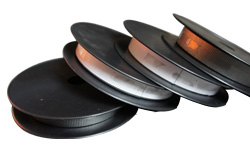
| Standard Sizes (Square Section) | 3mm, 4mm, 5mm, 6mm, 8mm, 10mm, 12mm, 14mm, 16mm, 19mm, 22mm, 25mm | Available in coils, spools, or pre-cut rings. Custom sizes available on request. |
Q: What are the main advantages of choosing Vegetable fiber packing over synthetic alternatives?
A: Vegetable fiber packing offers several key benefits. It is cost-effective for a wide range of general service applications. The natural fibers are biodegradable and environmentally friendly compared to many purely synthetic packings. It exhibits excellent lubricity and conformability, leading to quick run-in and a good seal with minimal shaft wear. For standard water, oil, and steam services, it provides reliable performance without the higher cost of advanced synthetic materials.
Q: How do I select the correct size of packing for my pump or valve?
A: The packing size refers to the cross-sectional width/height of the square braid. To select the correct size, measure the gland space: the difference between the diameter of the stuffing box bore and the shaft diameter, divided by two. For example, a 50mm bore with a 30mm shaft gives a gland space of (50-30)/2 = 10mm. A 10mm x 10mm square packing would be the correct choice. Kaxite Sealing provides detailed sizing guides, and our technical support team can assist with complex measurements.
Q: Can Kaxite Vegetable fiber packing be used with drinking water?
A: Our standard Vegetable fiber packing is impregnated with lubricants suitable for general industrial water. For potable water applications, we offer a special food-grade variant manufactured with NSF-approved lubricants. It is crucial to specify "potable water" or "food-grade" requirement when ordering to ensure compliance with relevant health and safety standards.
Q: What is the proper procedure for installing braided Vegetable fiber packing?
A: Always start with a clean, smooth shaft and stuffing box. Cut packing rings using a sharp blade on a mandrel the size of the shaft, ensuring clean, square joints. Stagger the joints by 90 degrees for each ring. Install rings one at a time, tamping them firmly and evenly into the box using a packing tool. Follow the manufacturer's torque specifications for the gland follower. Initial tightening should be snug but not overly tight—the packing will swell slightly in service. After startup, a slight leakage is normal; tighten the gland in small increments (1/6 turn) during the run-in period until leakage is reduced to a few drops per minute.
Q: How often does Vegetable fiber packing need to be adjusted or replaced?
A: The maintenance interval depends on operating conditions (temperature, speed, media). During the initial 24-48 hour run-in period, periodic adjustment may be needed. Once seated, a well-installed packing can run for months without adjustment. Signs that replacement is needed include excessive leakage that cannot be controlled by gland adjustment, a noticeable increase in power consumption or heat at the gland, or visible degradation and hardening of the packing material.
Q: Is pre-lubrication or soaking required before installation?
A: Kaxite Sealing's Vegetable fiber packing is fully impregnated and ready for installation. Soaking in water or oil is generally not required and is not recommended for our standard product, as it can wash out the factory-applied lubricants. For specific dry-running start-up conditions, consult our technical data sheets for guidance.
Q: What is the maximum continuous temperature for this packing?
A: The recommended maximum continuous operating temperature for our standard grade is 120°C (248°F). At sustained temperatures above this, the natural fibers can begin to carbonize, and the lubricants can degrade, leading to hardening and loss of sealing ability. For higher temperature applications, Kaxite Sealing offers a range of graphite, PTFE, or aramid-based packings.
Q: Can it handle abrasive slurries?
A: Standard Vegetable fiber packing is not specifically designed for highly abrasive services. The soft fibers can be susceptible to wear from hard particles. For light slurries with low abrasive content, it may perform adequately. For severe abrasive applications, we recommend our specially designed abrasion-resistant packings that incorporate durable synthetic fibers.
Q: How does it perform with solvents like acetone or methanol?
A: While resistant to many alcohols and mild solvents, Vegetable fiber packing is not universally compatible with all aggressive chemical solvents. The lubricant impregnation can be extracted by strong solvents, reducing performance. Always consult the Kaxite Sealing chemical compatibility chart or contact our technical service for your specific media. For aggressive solvents, PTFE-based packings are often a more suitable choice.
Kaxite Sealing brings decades of expertise in manufacturing and applying sealing solutions. Our Vegetable fiber packing is not a commodity product; it is engineered for consistency and reliability. We maintain strict quality control from raw fiber selection through the braiding and impregnation processes, ensuring every length of packing meets our high standards for density, lubricant content, and dimensional accuracy. This commitment to quality translates to longer service life, reduced maintenance downtime, and reliable sealing performance in your operations. Our technical support team is available to help you select the optimal packing material and size for your specific application, ensuring you get the most value and performance from your investment.