Language

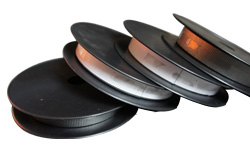
For decades, Asbestos Gaskets have been a cornerstone material in industrial sealing applications, prized for their exceptional ability to withstand extreme temperatures and pressures. While modern alternatives exist, specific legacy systems and certain high-heat industrial processes continue to utilize or require components made from this material due to its unique historical performance characteristics. At Kaxite Sealing, we provide detailed technical specifications and information for professionals who work with or maintain equipment containing these specialized sealing components, ensuring safety, compatibility, and informed decision-making.
It is crucial to preface any discussion with a paramount safety notice: Inhalation of asbestos fibers is a proven cause of serious lung diseases, including asbestosis, lung cancer, and mesothelioma. Handling, cutting, or removing Asbestos Gaskets requires strict adherence to all local, national, and international health and safety regulations (such as OSHA, HSE, or equivalent authorities). Appropriate personal protective equipment (PPE), engineering controls, and disposal methods for hazardous materials are mandatory. This document serves as a technical reference and under no circumstances substitutes for professional safety training and regulatory compliance.
The performance of an Asbestos Gaskets is defined by a precise set of material and physical parameters. Kaxite Sealing provides gaskets manufactured to exacting standards, with specifications consistently monitored for quality assurance. Below are the key parameters that define our product range.
Due to their historical performance profile, Asbestos Gaskets from Kaxite Sealing are often specified or found in the following applications (primarily in older systems or where alternative materials have not been qualified):
Q: What are the main advantages that made asbestos gaskets so widely used historically?
A: Historically, Asbestos Gaskets offered an unmatched combination of properties for their time and cost. They provided excellent heat resistance, maintaining integrity at temperatures where many rubber-based gaskets would fail. They also offered good compressive strength, forming an effective seal under bolt load, and provided natural thermal insulation. Their fibrous nature allowed them to be used on slightly imperfect flange surfaces. For much of the 20th century, they were the default, cost-effective solution for high-temperature sealing challenges across industries.
Q: Are asbestos gaskets still legal to buy and use today?
A: Legality varies drastically by country and region. Many countries have implemented full bans on the manufacture, import, and use of all asbestos-containing materials (ACMs). Others permit strict, controlled use in certain "critical" applications or allow the sale of existing inventory for maintenance of legacy equipment. It is the sole and absolute responsibility of the purchaser and user to understand and comply with all applicable laws, regulations, and safety codes in their jurisdiction before considering the procurement or use of any asbestos-based product. Kaxite Sealing advises consulting with legal and environmental health & safety experts.
Q: What are the primary health risks associated with handling asbestos gaskets?
A: The risk occurs when the gasket material is disturbed, releasing microscopic, airborne asbestos fibers. If inhaled, these fibers can lodge deep in the lungs and remain there indefinitely. Over time (often decades later), this can cause scarring (asbestosis), lung cancer, or mesothelioma, a cancer of the lung and abdominal lining. The material is safe if completely encapsulated and undisturbed. The danger arises during cutting, sanding, removal, or any action that abrades or breaks the gasket matrix.
Q: How should I safely handle and install a new asbestos gasket if its use is permitted and necessary?
A: Safety is paramount. Always handle pre-cut gaskets carefully to avoid tearing or creating dust. Use hand tools rather than power tools for trimming if absolutely necessary. Work in a well-ventilated area, preferably with local exhaust ventilation. Wear appropriate, certified PPE: a properly fitted P2/P3 or N100 respirator, disposable coveralls, and gloves. Wet methods can be used to suppress dust. After installation, clean all surfaces with a wet wipe or HEPA vacuum—never dry sweep or use compressed air. Dispose of all waste, including used gloves and wipes, as hazardous material in accordance with local regulations.
Q: How do I safely remove an old, degraded asbestos gasket?
A: Gasket removal is a high-risk activity and should ideally be performed by licensed asbestos abatement professionals. If performed in-house under strict protocols, the area must be isolated. The gasket and flange should be thoroughly wetted with a amended water solution or surfactant to prevent fiber release. Gasket removal tools should be used carefully to pry the material off in large pieces, minimizing breakup. All debris must be immediately placed into leak-tight, labeled asbestos waste bags. Post-removal cleaning with HEPA vacuums and wet wipes is essential. Air monitoring may be required.
Q: What are the modern, safer alternatives to asbestos gaskets offered by Kaxite Sealing?
A: Kaxite Sealing strongly recommends and supplies a wide range of high-performance, non-asbestos sealing materials that meet or exceed the technical capabilities of historical asbestos products. Our advanced alternatives include:
Q: How can I identify if an existing gasket in my equipment contains asbestos?
A: Visual identification is unreliable and dangerous, as it requires disturbing the material. The only definitive method is through laboratory analysis by a certified asbestos testing lab. Samples must be collected by a trained professional using safe methods. Common locations for old asbestos gaskets include steam system flanges, boiler manways, older pump casings, and heat exchanger channels. If in doubt, assume the material contains asbestos and apply the highest safety precautions until proven otherwise by laboratory analysis.
Q: Does Kaxite Sealing provide Safety Data Sheets (SDS) and handling guidelines for its asbestos gasket products?
A: Yes, absolutely. For any historical or specialty product, including those containing asbestos where legally supplied, Kaxite Sealing provides comprehensive, up-to-date Safety Data Sheets (SDS) that detail hazards, composition, safe handling procedures, first-aid measures, and disposal information in compliance with global GHS standards. These documents are essential for risk assessment and regulatory compliance and are available upon request prior to any procurement decision.
With decades of experience in the sealing industry, Kaxite Sealing is committed to providing not only products but also the critical knowledge required for safe and effective industrial maintenance. Our documentation, including detailed parameter tables and safety-focused FAQs, is designed to empower engineers, maintenance supervisors, and procurement specialists with accurate information. We advocate for safety-first practices and the transition to modern sealing solutions, while providing the necessary technical references for managing legacy equipment responsibly. For specification sheets, compliance documentation, or consultations on non-asbestos alternatives, contact the Kaxite Sealing technical support team.