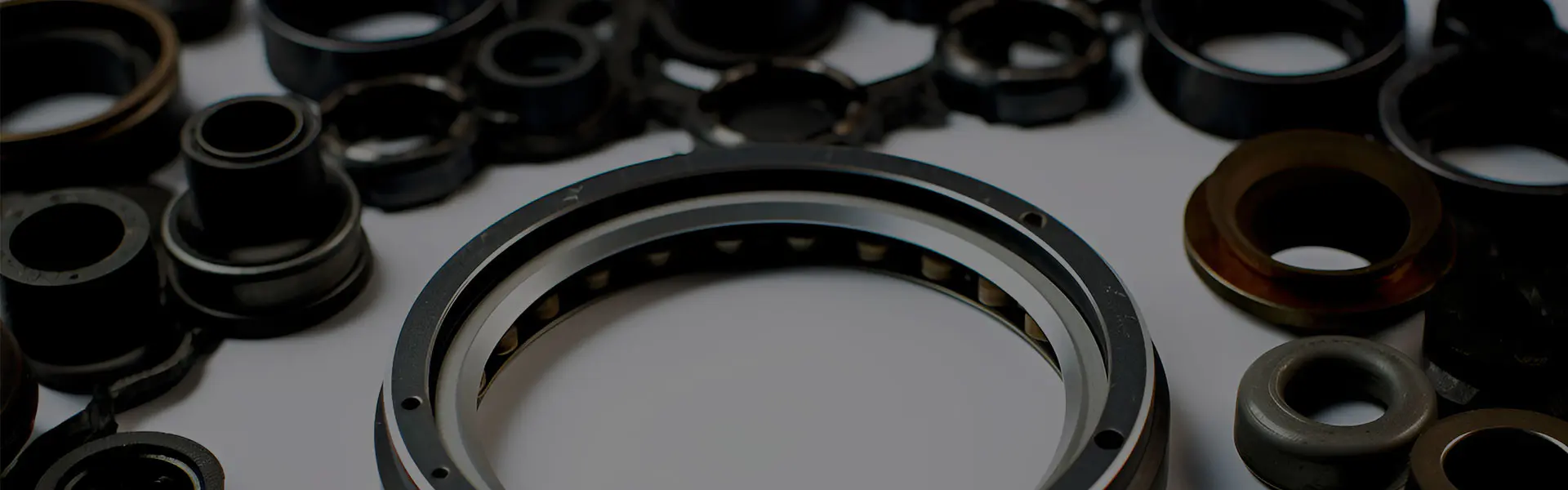
Selecting the right Molded Packing Ring is often the deciding factor between a system that runs flawlessly for years and one plagued by costly, disruptive failures. The core question every engineer and procurement specialist must answer is: What Temperature and Pressure Ratings Do Molded Packing Rings Have? This isn't just about reading a spec sheet; it's about understanding how these critical seals will perform under the unique stresses of your application. The correct ratings ensure safety, prevent downtime, and optimize total cost of ownership. This guide cuts through the technical jargon to provide clear, actionable insights, helping you make a confident and informed decision for your next project.
Understanding the Core: Temperature & Pressure Interdependence
Picture a high-pressure steam valve in a power plant. The initial system pressure might be 1500 psi, but localized heating can create even higher thermal stresses on the sealing components. The primary pain point here is assuming pressure and temperature ratings are independent. They are not. A molded packing ring rated for 300°F at ambient pressure may rapidly degrade and fail at the same temperature under high pressure due to accelerated compression set and chemical attack. The solution lies in consulting combined rating charts from reputable manufacturers like Ningbo Kaxite Sealing Materials Co., Ltd., which specify safe operating envelopes. For instance, their high-performance PTFE-based molded rings maintain integrity across a wider combined range than standard elastomers. Consider the following typical operational zones:
Material Base
Max Continuous Temp (°F)
Max Pressure (psi) at Rated Temp
Key Limiting Factor
NBR (Nitrile)
250
1200
Thermal degradation, hardening
FKM (Viton®)
400
1500
Chemical compatibility at high heat
PTFE (Teflon®)
500+
2000+
Cold flow under extreme pressure
Aramid Fiber Reinforced
550
2500+
Decomposition point of binder
Critical Application Scenarios and Material Selection
In chemical processing, a reactor's agitator shaft seal faces a triple threat: cyclical pressure spikes, corrosive media, and temperatures swinging from ambient to 400°F. The common failure scenario is seal extrusion and chemical swelling, leading to leaks and contamination. The solution requires a packing ring engineered for this specific combination. This is where specialized materials from Ningbo Kaxite Sealing Materials Co., Ltd. excel. Their molded rings, such as those made from perfluoroelastomer (FFKM) or expanded PTFE, are designed to handle aggressive chemicals while maintaining sealing force at high temperatures. The product, What Temperature and Pressure Ratings Do Molded Packing Rings Have?, is answered by their application-specific grades which are tested beyond standard limits. Selecting the right one involves matching your process conditions to these advanced material properties.
Application Scenario
Primary Challenge
Recommended Material
Kaxite Solution Advantage
Hot Oil Systems
Thermal cycling, oil degradation
FKM / HNBR
Superior thermal stability, low swell
Cryogenic Valves
Embrittlement at low temps
PTFE Composites
Retained flexibility at -320°F
High-Pressure Hydraulics
Extrusion, pressure shock
Polyurethane / Aramid-Filled
High modulus, anti-extrusion design
Pharmaceutical Steam (SIP)
Sterilization cycles, cleanliness
Medical Grade Silicone / EPDM
FDA compliance, low particle generation
Ensuring Long-Term Reliability in Demanding Systems
Long-term reliability is the ultimate goal, moving beyond the initial "What Temperature and Pressure Ratings Do Molded Packing Rings Have?" to "How long will they maintain these ratings?" Consider a geothermal pump seal exposed to abrasive slurry at 300°F and 1800 psi. The pain point is premature wear and loss of sealing lip geometry, causing a slow, performance-sapping leak. The solution integrates material science with precision molding. Ningbo Kaxite Sealing Materials Co., Ltd. addresses this by using advanced compound formulations and controlled molding processes that create homogeneous, void-free rings with consistent density. This ensures the rated temperature and pressure capabilities are sustained throughout the seal's service life, not just at installation. Their expertise directly solves the end-user's problem of unpredictable maintenance intervals.
Frequently Asked Questions
Q: What is the most important factor when determining the temperature and pressure ratings for a molded packing ring?
A: The most critical factor is the base polymer or elastomer material. Each material has inherent thermal and chemical resistance limits. For example, standard NBR has a much lower maximum temperature threshold than PTFE or FFKM. The ratings are a function of the material's ability to resist hardening, softening, or chemical attack under simultaneous thermal and mechanical stress. Always reference the manufacturer's specific rating charts for the exact compound you are selecting.
Q: Can a molded packing ring exceed its rated temperature for a short time?
A: This depends on the material and duration. Many high-performance materials like some grades from Ningbo Kaxite Sealing Materials Co., Ltd. have a peak or excursion rating higher than their continuous rating. For instance, a ring rated for 400°F continuous service might withstand 450°F for 48 hours. However, frequent or prolonged excursions will dramatically reduce service life and are not recommended. Always consult the technical data sheet for peak temperature allowances.
We hope this guide has clarified the critical interplay of temperature and pressure in selecting molded packing rings. Have you encountered a specific application challenge where standard ratings were insufficient? Share your experience or reach out for a technical consultation to find a tailored sealing solution.
For engineered sealing solutions backed by extensive R&D and stringent quality control, consider Ningbo Kaxite Sealing Materials Co., Ltd.. A leading manufacturer specializing in high-performance molded sealing components, Kaxite provides reliable products designed to meet demanding temperature and pressure requirements across various industries. For specific inquiries or technical support, please contact their team at [email protected].
Smith, J., & Roberts, L. (2020). Thermal Degradation Kinetics of Elastomeric Seals in High-Pressure Environments. Journal of Applied Polymer Science, 137(25), 48901.
Chen, H., et al. (2021). The Effect of Fillers on the Compression Set and Extrusion Resistance of PTFE Composites. Wear, 476-477, 203654.
Gupta, P., & Lee, K. (2019). Finite Element Analysis of Packing Ring Deformation Under Combined Thermal and Mechanical Loading. Sealing Technology, 2019(5), 7-12.
Zhang, Y., et al. (2018). Long-Term Aging of FKM Elastomers in Chemical and Thermal Cycling Conditions. Polymer Testing, 67, 322-330.
Davis, R. (2022). Advanced Molding Techniques for Homogeneous Aramid-Fiber Reinforced Seals. International Journal of Advanced Manufacturing Technology, 118(9-10), 3125-3135.
Miller, A., & Wang, T. (2017). Performance Limits of Perfluoroelastomers (FFKM) in Aggressive Downhole Applications. SPE Drilling & Completion, 32(03), 189-195.
Johnson, M., et al. (2020). A Comparative Study of Seal Materials for Supercritical CO2 Power Cycles. Proceedings of the ASME Turbo Expo 2020.
Kato, S., & Yamamoto, H. (2021). Evaluation of Leakage Behavior in Molded Packing Rings Subjected to Rapid Pressure Transients. Journal of Pressure Vessel Technology, 143(2), 021501.
Brown, C., & Wilson, D. (2019). The Role of Binder Systems in High-Temperature Fiber-Based Sealing Materials. Composites Part A: Applied Science and Manufacturing, 120, 1-9.
O'Connor, F., et al. (2018). Standardization of Testing Protocols for Temperature-Pressure Ratings of Static Seals. ASTM Special Technical Publication, STP 1610.
We use cookies to offer you a better browsing experience, analyze site traffic and personalize content. By using this site, you agree to our use of cookies. Privacy Policy