
Language

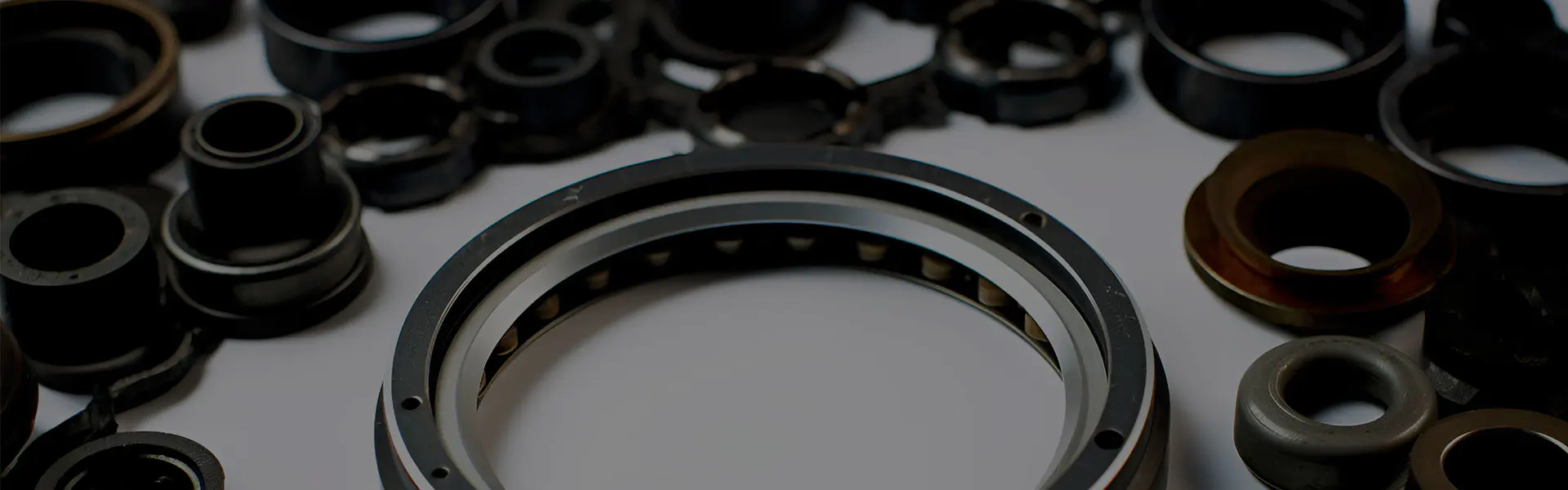
Can RX ring joint gaskets be reused after flange disassembly? This question hits procurement managers and field engineers at the worst possible moment — during a shutdown, with the clock running and a used metal gasket sitting on the workbench. RX ring joint gaskets are designed to create a high-integrity seal in API 6BX and 6A flanges by plastically deforming into the ring groove. Once the flange is opened, that deformed geometry cannot fully recover. A reused gasket may look acceptable, but hidden stress relaxation, micro-cracking, or groove mismatch can turn a routine reassembly into a high-pressure leak. The short answer from most sealing manufacturers, including Ningbo Kaxite Sealing Materials Co., Ltd., is that replacement is strongly recommended. However, there are narrow inspection-based exceptions. This guide walks through the technical risks, field inspection criteria, and procurement logic that determine whether reuse is safe or simply a shortcut to failure.
RX ring joint gaskets are metallic seals used predominantly in high-pressure oil and gas flanges, especially API 6BX and 6A connections. Unlike soft gaskets, they do not rely on compression recovery. Sealing is achieved when bolting force drives the gasket into a precision-machined ring groove, causing controlled plastic deformation of the gasket cross-section. That deformation fills micro-irregularities and creates a metal-to-metal seal capable of withstanding pressures beyond 15,000 psi and temperatures from cryogenic to over 350°F depending on the material.
A common field pain point is assuming that a gasket with no visible cracks can be reinstalled. The problem is that the gasket’s original yield strength has already been exceeded. On disassembly, the RX ring may show adequate surface finish, but residual stress in the groove and gasket hardness mismatch can reduce the available seating load. Ningbo Kaxite Sealing Materials Co., Ltd. supplies new RX ring joint gaskets in soft iron, low-carbon steel, stainless steel, and corrosion-resistant alloys, with hardness controlled to API 6A requirements to avoid groove damage and ensure predictable deformation.
| Material | Hardness | Max Pressure Class | Temperature Range | Suitable Service |
|---|---|---|---|---|
| Soft iron | 56 HRBW max | API 5,000–10,000 psi | -20°F to 450°F | General oil and gas |
| Low-carbon steel | 68 HRBW max | API 10,000–15,000 psi | -20°F to 500°F | High-pressure wellheads |
| 316 stainless steel | 83 HRBW max | API 10,000–15,000 psi | -100°F to 600°F | Sour service, corrosion resistance |
Imagine an offshore crew re-installing a used RX ring joint gasket because the warehouse is out of stock. The flange is torqued, the pressure test passes, and everything looks fine. Six months later, a hairline leak appears at the 6 o’clock position during a cold night shutdown. The investigation shows micro-cracks from the first installation propagated under thermal cycling. Such failures are not rare. Reused metallic gaskets are one of the most common root causes of high-pressure flange leaks after maintenance.

The solution is simple: treat RX ring joint gaskets as single-use items unless you have a documented engineering deviation and full dimensional inspection. Procurement teams can avoid field-level reuse pressure by stocking spare gaskets from qualified suppliers like Ningbo Kaxite Sealing Materials Co., Ltd., whose RX gaskets are manufactured to API 6A dimensions and traceable by heat number.
| Risk Type | Symptom | Consequence | Prevention |
|---|---|---|---|
| Plastic deformation | Reduced groove contact | Low seating stress, leak | Replace after disassembly |
| Micro-cracking | Invisible surface hairline cracks | Fatigue failure under cycling | Dye penetrant inspection if reuse is considered |
| Work hardening | Higher hardness than groove | Flange groove damage | Verify hardness before installation |
| Corrosion pitting | Small pits or discoloration | Leak path in sour service | Do not reuse pitted gaskets |
In an emergency where no replacement is available, a used RX ring joint gasket can only be considered if all inspection gates are passed. The responsible question is still “Can RX ring joint gaskets be reused after flange disassembly?” The answer is: only after written acceptance by a qualified engineer and only for non-critical, low-pressure test setups.
Inspection must include dimensional checks of the ring width, ovality, and hardness. The gasket surface must be free of radial scratches, pitting, or galling. The flange groove must also be measured for wear because a worn groove makes even a new gasket unreliable. Use a calibrated micrometer, hardness tester, and dye penetrant. If any indication appears, discard the gasket immediately.
| Check | Acceptance Limit | Action if Failed |
|---|---|---|
| Ring width deviation | Within API 6A tolerance | Discard |
| Out-of-roundness | Less than 0.010 in | Discard |
| Hardness | Below groove material hardness | Discard or re-anneal |
| Dye penetrant | No linear indications | Discard |
When a flange is disassembled, the maintenance lead often faces pressure to rebuild quickly. Using a clear decision framework removes emotion and reduces risk. The first question is always: Can RX ring joint gaskets be reused after flange disassembly? The default answer for any pressure-containing service is no. If replacement stock is available, install a new gasket and torque the flange per API 6A procedures.
If no replacement exists, follow these steps: confirm the service classification, inspect the used gasket, measure the flange groove, document hardness and penetrant results, obtain engineering approval, and perform a low-pressure test before returning to full service. This process protects both safety and schedule. Ningbo Kaxite Sealing Materials Co., Ltd. supports this decision framework by offering rapid delivery of RX ring joint gaskets from stock, so maintenance teams never have to gamble on a used seal.
Procurement specialists often ask whether RX ring joint gaskets can be reused after flange disassembly because they are trying to reduce downtime and cost. The better solution is to have the right new gaskets on site before the flange is opened. Ningbo Kaxite Sealing Materials Co., Ltd. manufactures RX ring joint gaskets to API 6A, ASME B16.20, and customer-specific drawings. Materials include soft iron, low-carbon steel, 304/316 stainless steel, Inconel, and duplex stainless steel, with full material certification.
Scenario: a Gulf Coast gas plant has a scheduled turnaround and needs 40 RX-46 gaskets in soft iron with 3.2 certification. By working with Ningbo Kaxite Sealing Materials Co., Ltd., the procurement team gets dimensionally stable gaskets, traceable heat numbers, and delivery coordinated to the shutdown window. No used gasket reuse is required, so leak risk drops dramatically.
Our technical team can also help you identify the correct ring number, material, and hardness for your flange specification, preventing the type of groove damage that leads to leakage and costly rework.
The temptation to reuse an RX ring joint gasket usually comes from a short-term cost view: a new gasket may cost between $20 and $500 depending on size and alloy, while a leak can cost tens of thousands in downtime, product loss, safety incidents, and regulatory penalties. When you include flange groove repair after a hard gasket damages the sealing surface, the financial argument for reuse disappears.
From a compliance standpoint, most asset integrity programs require new metallic ring gaskets after flange disassembly. Reuse may violate API 6A installation guidelines and site-specific piping codes. In sour service or subsea applications, the risk is even higher because leaks can have severe safety and environmental consequences.
| Item | Cost | Comment |
|---|---|---|
| New RX ring joint gasket | $30–$400 | Depending on size and alloy |
| Reused gasket immediate saving | $30–$400 | Only initial cost avoided |
| Leak repair and downtime | $15,000–$250,000 | Includes labor, flaring, shutdown |
| Flange groove remachining | $1,000–$8,000 | If damaged by hard reused gasket |
No. Even if no damage is visible to the naked eye, the gasket has already undergone plastic deformation during the first make-up. This means the sealing contact stress will be lower on reinstallation. Hidden micro-cracks and work hardening can also reduce reliability. The only technically sound reuse cases are non-critical test setups with full dimensional, hardness, and dye penetrant acceptance plus engineering approval. For pressure-containing hydrocarbon service, replacement is the safest and most cost-effective choice.
In a field emergency, you should first confirm whether the flange is in critical service. If yes, do not reuse the gasket. Check your spare inventory; if no new gasket is available, contact a qualified supplier such as Ningbo Kaxite Sealing Materials Co., Ltd. for expedited delivery. If emergency reuse is unavoidable, perform the full inspection checklist: ring width, ovality, hardness, dye penetrant, and flange groove condition. Document the engineering approval. Replace the gasket at the earliest opportunity.
Can RX ring joint gaskets be reused after flange disassembly? The evidence says no for virtually all pressure-containing flanges. The highest value decision is to keep new RX ring joint gaskets in stock, follow API 6A installation procedures, and source them from a manufacturer that controls dimensions, hardness, and material traceability. Ningbo Kaxite Sealing Materials Co., Ltd. helps maintenance teams and procurement buyers eliminate the reuse question altogether by supplying reliable RX ring joint gaskets in all standard ring numbers and special alloys.
Checklist: verify ring number and material, confirm API 6A/ASME B16.20 dimensions, check hardness against groove, request material certification, inspect gaskets on receipt, store them in dry conditions, and replace after every flange disassembly.
Have you seen a high-pressure flange leak caused by gasket reuse? Share your experience or ask our sealing engineers for a compatibility review. For fast quotations and technical support, contact Ningbo Kaxite Sealing Materials Co., Ltd. at [email protected] or visit https://www.kaxite-sealing.net. Our team will help you select the correct RX ring joint gasket and keep your flanges sealing safely from the first make-up.
Abid, M., & Nash, D. H. (2004). Comparative study of the behaviour of conventional gasketed and non-gasketed bolted pipe flange joints. Journal of Pressure Vessel Technology, 126(3), 298-304.
Nagata, S., & Shoji, Y. (2010). Effect of surface roughness on sealing performance of metal ring joint gaskets. Journal of Pressure Vessel Technology, 132(5), 051205.
Weber, J. (2017). Reuse assessment of metallic ring joint gaskets in subsea connectors. Journal of Offshore Mechanics and Arctic Engineering, 139(4), 041401.
Sawa, T., & Kumano, H. (2015). Sealing performance of RTJ gaskets under internal pressure and temperature change. Journal of Pressure Vessel Technology, 137(2), 021207.
Kockelmann, H., & Hahn, R. (2011). Plastic deformation and relaxation of metal gaskets for high-pressure flange connections. International Journal of Pressure Vessels and Piping, 88(5-7), 205-211.
Roos, E., & Schuler, X. (2008). Leakage behavior of metallic gaskets after repeated assembly. Nuclear Engineering and Design, 238(9), 2411-2418.
Metzger, J., & Kauer, R. (2013). Validation of EN 1591-1 for metal-to-metal contact flanges with RTJ gaskets. Journal of Pressure Vessel Technology, 135(6), 061203.
Omiya, Y., & Sawa, T. (2019). Effects of repeated tightening on the sealing performance of metallic gaskets. Journal of Pressure Vessel Technology, 141(3), 031204.
Derenne, M., & Marchand, L. (2002). Gasket characterization for bolted flange connections. Journal of Pressure Vessel Technology, 124(4), 395-402.
Saeed, F., & Khan, M. A. (2021). Finite element analysis of RX ring joint gasket behavior under preload and operational loads. Journal of Failure Analysis and Prevention, 21(2), 675-686.
-


