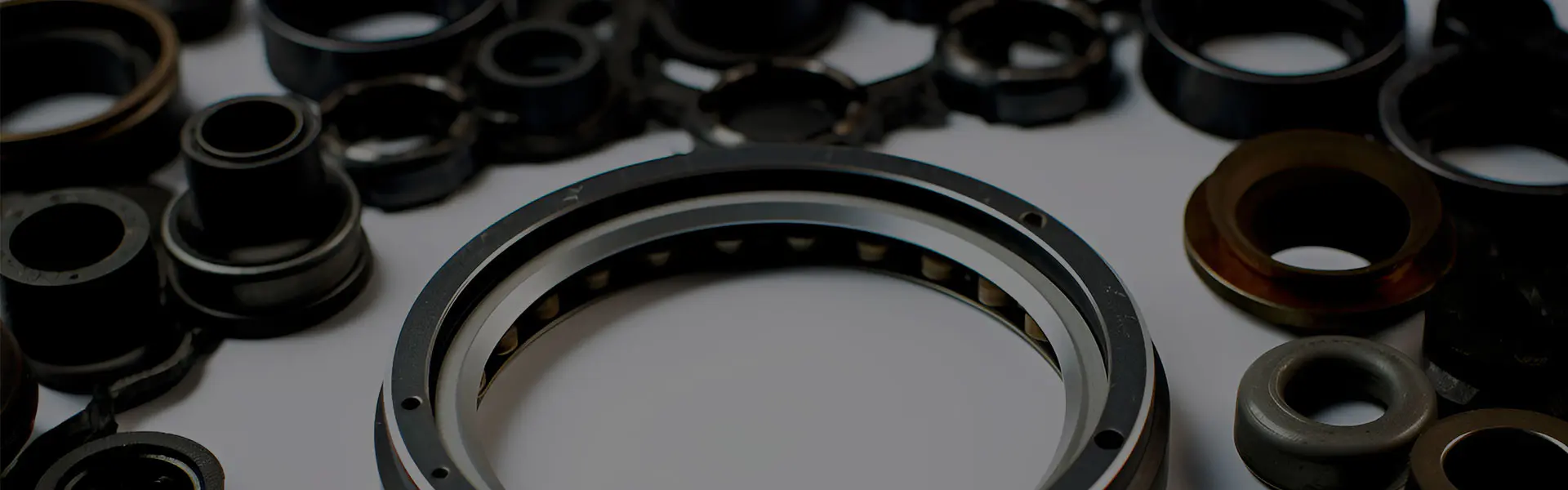
PTFE & PEEK Seals represent the pinnacle of high-performance sealing technology, engineered to withstand the most demanding industrial environments. At Kaxite Sealing, we specialize in manufacturing premium seals from these advanced polymers, offering unparalleled solutions for extreme pressure, temperature, and chemical challenges. These materials are not merely alternatives to traditional elastomers; they are essential components for applications where failure is not an option.
### **Understanding PTFE and PEEK Materials**
The superior performance of these seals stems from the intrinsic properties of PTFE (Polytetrafluoroethylene) and PEEK (Polyetheretherketone).
**PTFE (Polytetrafluoroethylene):**
PTFE is a synthetic fluoropolymer renowned for its exceptional chemical inertness and the lowest coefficient of friction of any known solid material. It is hydrophobic, meaning it repels water and water-containing substances, and maintains remarkable stability across a wide temperature range.
**Key Characteristics of PTFE:**
* **Chemical Resistance:** Virtually inert, resistant to almost all industrial chemicals and solvents.
* **Temperature Range:** Can perform continuously from -200°C (-328°F) to +260°C (+500°F).
* **Coefficient of Friction:** Extremely low, providing excellent non-stick and anti-galling properties.
* **Dielectric Properties:** Excellent electrical insulator.
* **Weathering & UV Resistance:** Outstanding long-term stability against environmental factors.
**PEEK (Polyetheretherketone):**
PEEK is a high-performance thermoplastic belonging to the polyaryletherketone (PAEK) family. It combines high mechanical strength, rigidity, and outstanding resistance to thermal degradation, making it ideal for seals in aggressive mechanical and thermal environments.
**Key Characteristics of PEEK:**
* **High-Temperature Performance:** Continuous use up to 250°C (482°F).
* **Mechanical Strength:** Excellent tensile strength, wear resistance, and fatigue endurance.
* **Hydrolysis Resistance:** Performs superbly in hot water and steam, unlike many polymers.
* **Radiation Resistance:** Withstands high levels of gamma and x-ray radiation.
* **Flame Retardancy:** Inherently flame retardant with low smoke emission.
### **Kaxite Sealing's PTFE & PEEK Seals: Product Parameters & Specifications**
Our engineering expertise allows us to produce seals in various forms, including O-rings, backup rings, V-rings, piston seals, rod seals, gaskets, and custom-molded shapes. Below are detailed specifications for our standard offerings.
**Material Grades & Formulations:**
| Material | Kaxite Grade Code | Primary Features | Typical Color |
| :--- | :--- | :--- | :--- |
| **Virgin PTFE** | KX-PTFE-V | Pure, unfilled PTFE for maximum chemical purity and electrical properties. | White |
| **Glass-Filled PTFE** | KX-PTFE-G25 | 25% glass fiber fill for improved creep resistance and wear. | Brown/Tan |
| **Carbon-Filled PTFE** | KX-PTFE-C20 | 20% carbon fill for superior conductivity and reduced friction. | Black |
| **Bronze-Filled PTFE** | KX-PTFE-B40 | 40% bronze fill for excellent thermal conductivity and wear. | Bronze |
| **Virgin PEEK** | KX-PEEK-V | Unfilled PEEK for high purity and excellent combination of properties. | Beige |
| **Carbon-Filled PEEK** | KX-PEEK-C30 | 30% carbon fiber fill for extreme strength, stiffness, and wear. | Black |
| **Glass-Filled PEEK** | KX-PEEK-G30 | 30% glass fiber fill for enhanced dimensional stability and creep resistance. | Beige/Brown |
**Standard Performance Data Table:**
| Property | Test Method | Virgin PTFE | Glass-Filled PTFE (25%) | Virgin PEEK | Carbon-Filled PEEK (30%) |
| :--- | :--- | :--- | :--- | :--- | :--- |
| **Tensile Strength** | ASTM D638 | 25-35 MPa | 17-28 MPa | 90-100 MPa | 150-170 MPa |
| **Elongation at Break** | ASTM D638 | 300-500% | 200-300% | 30-50% | 2-4% |
| **Compressive Strength** | ASTM D695 | 12 MPa | 15 MPa | 110 MPa | 130 MPa |
| **Continuous Service Temp.** | — | -200 to +260°C | -200 to +260°C | -60 to +250°C | -60 to +250°C |
| **Coefficient of Friction** | ASTM D1894 | 0.05 - 0.10 | 0.10 - 0.15 | 0.30 - 0.40 | 0.20 - 0.30 |
| **Chemical Resistance** | — | Excellent | Excellent | Very Good | Very Good |
**Available Standards & Tolerances:**
* **Standards:** AS568, ISO 3601-1, DIN, JIS, and custom sizes.
* **Tolerance Classes:** We manufacture to standard tolerance classes (e.g., N, S for O-rings per AS568) and can produce to tight, precision tolerances for critical applications.
* **Cord & Sheet Stock:** Available in various diameters and thicknesses for custom fabrication.
### **Applications of PTFE & PEEK Seals**
The unique properties of these materials make them suitable for critical sealing roles across diverse industries:
* **Aerospace & Aviation:** Hydraulic systems, fuel handling, engine components, and cryogenic applications.
* **Oil & Gas:** Downhole tools, wellhead equipment, valves, and seals for sour gas (H2S) environments.
* **Chemical Processing:** Pumps, reactors, valve stems, and flange gaskets handling corrosive acids, bases, and solvents.
* **Semiconductor Manufacturing:** Wafer processing, chemical mechanical planarization (CMP), and high-purity fluid systems.
* **Food & Pharmaceutical:** Sanitary fittings, steam sterilization (autoclaves), and processing equipment requiring FDA-compliant materials.
* **Automotive:** Transmission seals, fuel system components, and high-temperature sensors.
### **Frequently Asked Questions (FAQ) About PTFE & PEEK Seals**
**Q: What are the main advantages of PTFE seals over traditional rubber seals like NBR or FKM?**
A: PTFE seals offer vastly superior chemical resistance, a much wider operating temperature range (especially at cryogenic levels), and a lower coefficient of friction leading to less stick-slip and wear. They also do not swell in fluids and exhibit minimal compression set over time, ensuring a longer-lasting seal.
**Q: When should I choose a PEEK seal over a PTFE seal?**
A: Choose PEEK when your application requires higher mechanical strength, rigidity, and better resistance to creep under load. PEEK maintains its properties at high temperatures better than PTFE under heavy mechanical stress. It is also the preferred choice for applications involving continuous exposure to hot water or steam due to its excellent hydrolysis resistance.
**Q: Can PTFE and PEEK seals be used in dynamic applications?**
A: Yes, both materials are excellent for dynamic sealing. PTFE is ideal for rotary and slow reciprocating motion due to its low friction. PEEK is superb for reciprocating and rotating applications where higher loads and speeds are involved, thanks to its strength and wear resistance. The addition of fillers like carbon or bronze further enhances their wear characteristics for dynamic use.
**Q: Are there any chemical compatibility limitations with PTFE or PEEK?**
A: PTFE is resistant to virtually all chemicals, with the exception of some exotic fluorinated compounds at high temperatures and pressure. PEEK offers excellent resistance to a broad range of chemicals but can be attacked by concentrated sulfuric acid, halogenated solvents, and strong bases at elevated temperatures. Always consult Kaxite Sealing's chemical resistance guide for specific media.
**Q: How do I ensure a proper seal with PTFE, which is a relatively hard material compared to rubber?**
A: Proper gland design is crucial. PTFE seals require precise, machined glands with tight tolerances and excellent surface finishes. They often function as a "gap-filler," and their low friction allows them to be used in designs with minimal squeeze. For O-rings, backup rings are frequently used to prevent extrusion. Our engineering team can provide detailed gland design recommendations.
**Q: What does "filled" PTFE mean, and how do I choose the right filler?**
A: Fillers are added to virgin PTFE to improve specific properties compromised in its pure form, such as creep resistance (cold flow), wear, and thermal conductivity. Choose glass filler for general wear improvement, carbon for low friction and conductivity, bronze for high load and thermal conductivity, and stainless steel for extreme wear and corrosion resistance. Kaxite Sealing experts can guide you based on your application's primary demand.
**Q: Why should I source my PTFE and PEEK seals from Kaxite Sealing?**
A: Kaxite Sealing combines decades of polymer expertise with state-of-the-art manufacturing. We don't just supply parts; we provide sealing solutions. Our process includes rigorous quality control, from raw material certification to final inspection, ensuring consistent performance. We offer comprehensive technical support, from material selection and gland design to prototyping and custom manufacturing for non-standard applications.
**Q: Can Kaxite Sealing manufacture custom shapes and sizes beyond standard O-rings?**
A: Absolutely. Our core competency includes precision machining and molding of custom seal profiles. Whether you need a complex cross-section, a large diameter seal, or a component integrating sealing and structural functions, our engineering and production teams can develop and deliver a solution tailored to your exact specifications and performance requirements.