Language

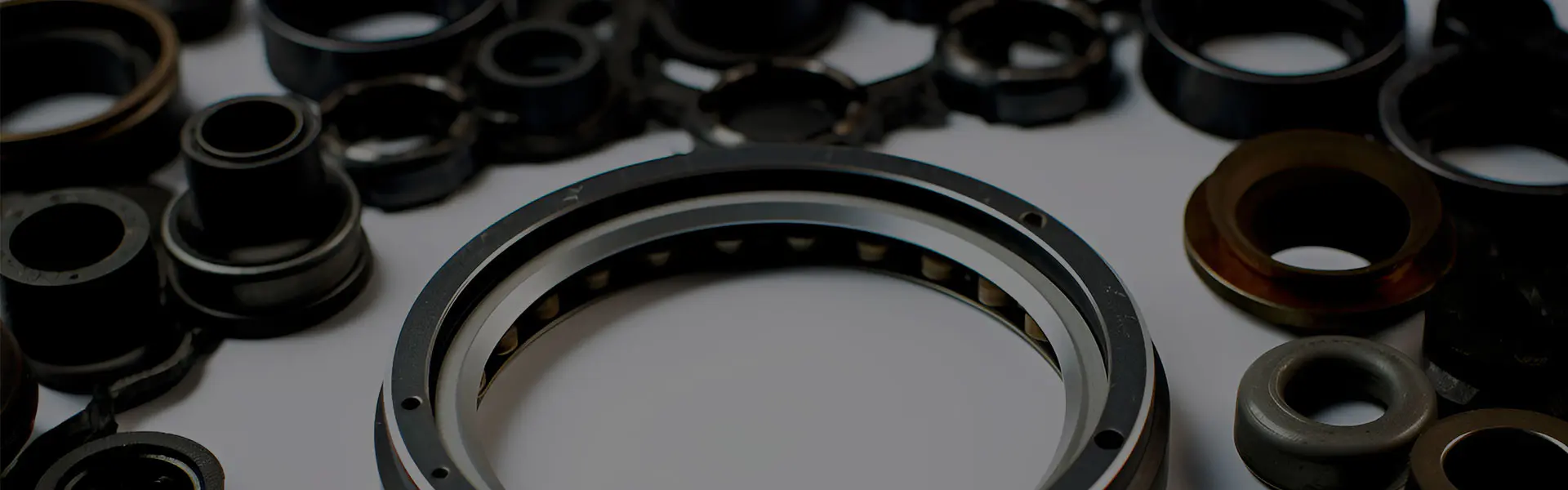
In the demanding world of industrial sealing, reliability and precision are not just desired—they are required. The Molded Packing Ring stands as a critical component in this landscape, engineered to create impermeable barriers in pumps, valves, mixers, and other rotating or reciprocating equipment. Unlike cut or spiral-wound rings, a Molded Packing Ring is manufactured in a single, precise molding process. This method ensures uniform density, consistent material properties throughout the cross-section, and a perfect, ready-to-install shape with clean, square-cut ends. The result is a sealing solution that offers superior performance, longer service life, and reduced maintenance downtime. At Kaxite Sealing, we have refined this molding technology over decades to produce packing rings that consistently exceed industry standards for even the most severe service conditions.
Kaxite Sealing's Molded Packing Rings are distinguished by a set of core features that directly translate into operational benefits for our clients.
Selecting the correct Molded Packing Ring requires careful consideration of its technical parameters. Kaxite Sealing provides comprehensive specifications to ensure optimal pairing with your application.
| Material Type | Base Fiber | Primary Impregnation/Lubricant | Key Characteristics | Typical pH Range |
|---|---|---|---|---|
| Aramid Fiber | Para-aramid (e.g., Kevlar®) | PTFE, Graphite | High tensile strength, excellent abrasion resistance, non-conductive | 4 - 14 |
| Carbon Fiber | PAN-based Carbon | PTFE, Graphite | Outstanding chemical resistance, high thermal conductivity, low creep | 0 - 14 (excluding strong oxidizers) |
| PTFE Filament | 100% Polytetrafluoroethylene | PTFE Dispersion, Food-Grade Lubricants | Ultimate chemical inertness, FDA compliant options, very low friction | 0 - 14 |
| Expanded Graphite | Pure Graphite Foil | Corrosion Inhibitors | Exceptional thermal stability, self-lubricating, highly conformable | 0 - 14 (excluding strong oxidizers) |
| Glass Fiber | E-Glass / Silica | PTFE, Silicone | Excellent high-temperature performance, cost-effective for hot services | 2 - 12 |
| Parameter | Standard Range | Measurement Standard | Notes |
|---|---|---|---|
| Cross-Section (Square) | 3mm x 3mm to 25mm x 25mm | ISO 5598 / DIN 3750 | Custom rectangular and round sections available. |
| Inside Diameter (ID) | 10mm to 1000mm+ | Customer Drawings / ASTM D3542 | Precision-molded to match shaft or rod diameter. |
| Density | 1.1 g/cm³ to 2.2 g/cm³ | ASTM D3800 | Varies by material; controlled for consistency. |
| Pressure Rating | Up to 350 Bar (5000 PSI) | Application Dependent | Subject to material, temperature, and equipment design. |
| Temperature Range | -200°C to +550°C | Continuous Service | Specific range depends on material selection. |
| Rotational Speed | Up to 25 m/s Surface Speed | Pump and Shaft Design | Higher speeds achievable with specialized grades. |
| Chemical Compatibility | Extensive (See Material Chart) | ASTM F146 / Manufacturer Testing | Kaxite provides detailed chemical resistance guides. |
Q: What is the primary difference between a molded packing ring and a die-formed or braided ring?
A: The core difference lies in the manufacturing process and resulting structure. A Molded Packing Ring is created by compressing the base fibers and fillers in a mold under precise heat and pressure, forming a single, homogeneous unit. Die-formed rings are typically cut from sheet stock and may have layered seams, while braided rings are woven. The molded process ensures uniform density throughout, no weak points at joints, and consistent performance, offering better extrusion resistance and longer life in dynamic applications.
Q: How do I determine the correct size of a molded packing ring for my equipment?
A: You need two critical measurements: the shaft or rod diameter and the stuffing box bore diameter. The cross-section of the ring is calculated as (Bore Diameter - Shaft Diameter) / 2. It is crucial to use exact measurements from the equipment manual or a precise caliper. Kaxite Sealing's technical team can assist with this calculation and offers rings in thousands of standard sizes, with rapid turnaround for custom dimensions.
Q: Can Kaxite Sealing molded packing rings be used in food and pharmaceutical processing applications?
A: Yes. Kaxite Sealing offers specific grades of PTFE filament and other high-purity material Molded Packing Rings that comply with FDA 21 CFR 177.1550, EU Regulation 10/2011, and other global food-contact and pharmaceutical standards. These rings are manufactured in a cleanroom environment, use certified lubricants, and are designed to prevent contamination.
Q: What is the proper installation procedure for a molded packing ring set?
A: Proper installation is key to performance. Clean the stuffing box and shaft thoroughly. Install rings one at a time, staggering the joints (typically by 90 degrees for square rings). Use a proper split installation tool to avoid stretching or damaging the ring. Follow the manufacturer's recommended torque sequence for the gland follower. For best results with Kaxite rings, refer to our detailed installation guide or consult our application engineers.
Q: How does the homogeneous structure of a molded ring improve maintenance schedules?
A: The uniform wear characteristic of a homogeneous Molded Packing Ring leads to more predictable and gradual degradation, unlike layered packings that can fail suddenly if a layer ruptures. This allows for better planning of maintenance shutdowns. Furthermore, because they are pre-formed to size, installation is faster and less prone to error, reducing overall downtime. The longer service life directly decreases the frequency of repacking.
Q: Are Kaxite molded packing rings suitable for abrasive slurry services?
A: Absolutely. For abrasive services, Kaxite Sealing recommends our specialized aramid-based or carbon fiber Molded Packing Rings impregnated with high-load lubricants like PTFE. The molded construction's density resists the ingress of abrasive particles, while the inherent strength of the fibers withstands cutting and wear. We can also incorporate additional abrasive-resistant modifiers into the compound upon request.
Q: What information should I provide to Kaxite Sealing to get a recommendation for my application?
A: To ensure an accurate recommendation, please provide the following: Equipment type (pump model, valve type, etc.), shaft/rod diameter and stroke/rotation speed, fluid media being sealed (including concentration and any abrasives), operating temperature and pressure, and current packing type being used (if any). With this data, our engineers can select the optimal Kaxite Molded Packing Ring material and size for maximum efficiency and lifespan.