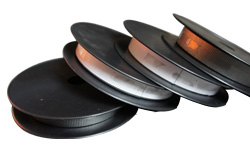
PTFE Film, or Polytetrafluoroethylene Film, is a high-performance fluoropolymer material renowned for its exceptional chemical resistance, wide operating temperature range, low coefficient of friction, and excellent dielectric properties. As a versatile engineering material, it finds critical applications across numerous demanding industries. At Kaxite Sealing, we specialize in manufacturing premium-grade PTFE films that meet the most rigorous specifications for reliability and performance.
### Key Properties and Characteristics of PTFE Film
The outstanding performance of PTFE film stems from its unique molecular structure. Here are its core characteristics:
* **Exceptional Chemical Inertness:** It is virtually unaffected by almost all industrial chemicals and solvents, making it ideal for aggressive environments.
* **Broad Temperature Resistance:** It performs consistently from cryogenic temperatures as low as -268°C (-450°F) up to +260°C (+500°F) continuously.
* **Superior Electrical Properties:** Possesses an extremely high dielectric strength and a low dielectric constant, making it an excellent insulator.
* **Low Coefficient of Friction:** It has one of the lowest friction coefficients of any solid material, providing non-stick and self-lubricating properties.
* **Excellent Weatherability:** Completely resistant to UV light and atmospheric exposure, ensuring long-term outdoor performance.
* **Non-Flammability:** The material is inherently flame-retardant.
* **Biocompatibility:** Certain grades are USP Class VI certified and biocompatible, suitable for medical and food-contact applications.
* **High Purity:** Available in contaminant-free grades critical for semiconductor and pharmaceutical processes.
### Detailed Product Parameters of Kaxite Sealing PTFE Films
Our product line at Kaxite Sealing is engineered to cater to diverse industrial needs. The specifications below define our standard offerings.
#### Standard Physical & Mechanical Properties Table
The following table outlines the typical properties of our unsintered and sintered PTFE films.
| Property |
Test Method |
Unit |
Unsintered Film (Skived) |
Sintered Film |
| Density |
ASTM D792 |
g/cm³ |
1.55 - 1.70 |
2.10 - 2.25 |
| Tensile Strength |
ASTM D638 |
MPa (psi) |
17 - 28 (2500 - 4000) |
20 - 35 (2900 - 5000) |
| Elongation at Break |
ASTM D638 |
% |
200 - 400 |
250 - 500 |
| Dielectric Strength |
ASTM D149 |
kV/mm |
> 40 |
> 100 |
| Coefficient of Friction (Dynamic) |
ASTM D1894 |
- |
0.05 - 0.10 |
0.04 - 0.08 |
| Continuous Service Temperature |
- |
°C (°F) |
-200 to +260 (-328 to +500) |
-200 to +260 (-328 to +500) |
#### Available Grades and Specifications List
Kaxite Sealing offers a comprehensive range of PTFE films tailored for specific functions.
* **Standard Skived PTFE Film:**
* Thickness Range: 0.025mm (0.001") to 3.0mm (0.118")
* Widths: Up to 1500mm (59")
* Color: Natural white (opaque), also available in custom colors.
* Surface: One side matte, one side glossy (standard).
* **Modified PTFE Films:**
* **Glass-Filled PTFE Film:** Enhanced creep resistance and wear properties. Common fillers: 5%, 15%, 25% glass fiber.
* **Carbon-Filled PTFE Film:** Improved electrical conductivity and reduced wear. Common fillers: 5%, 20% carbon/graphite.
* **Bronze-Filled PTFE Film:** Superior thermal conductivity and compressive strength.
* **Stainless Steel-Filled PTFE Film:** Enhanced load-bearing capacity and thermal conductivity.
* **Porous PTFE Membrane (ePTFE):**
* A highly porous, breathable membrane with controlled pore size.
* Applications: Filtration, venting, medical barriers, and waterproof garments.
* **PTFE Adhesive Tape:**
* PTFE film laminated with a high-temperature acrylic or silicone adhesive.
* Available with single or double-sided adhesive.
### Primary Industrial Applications
The unique properties of PTFE film translate into solutions for critical challenges.
* **Electrical & Electronics:** Insulation for wires, cables, and capacitors; coil insulation; printed circuit board substrates.
* **Chemical Processing:** Gaskets, seals, and liners for pumps, valves, and reaction vessels handling corrosive fluids.
* **Aerospace & Automotive:** High-temperature wire insulation, anti-chafe wraps, bearing liners, and seal components.
* **Industrial Machinery:** Low-friction liners for conveyors, slide plates, and wear strips; release sheets for composite molding.
* **Medical & Pharmaceutical:** Sterilizable packaging, surgical drape components, and barrier layers for medical devices.
* **Food & Beverage:** Non-stick surfaces for heat sealing jaws, conveyor belts, and release applications.
### Frequently Asked Questions (FAQ) About PTFE Film
**What is the main difference between skived (unsintered) and sintered PTFE film?**
Skived film is produced by shaving a thin layer from a molded PTFE block before the final high-temperature sintering process. It is softer, more formable, and often used for gaskets and seals. Sintered film has undergone the full heating cycle, resulting in a denser, stronger, and more dimensionally stable material with superior electrical properties, ideal for high-performance insulation.
**Can PTFE film be easily fabricated or formed?**
Yes, Kaxite Sealing PTFE films are highly fabricable. They can be cleanly cut, punched, stamped, or die-cut to precise shapes. Skived film, in particular, can be thermoformed into simple shapes using appropriate heat and tooling. For complex parts, films can be laminated or welded using heat-sealing techniques.
**Is PTFE film safe for use in food contact or medical applications?**
Absolutely. Virgin, unfilled PTFE resin is biologically inert and meets FDA regulations for food contact under 21 CFR 177.1550. Kaxite Sealing offers specific grades that are compliant with FDA and USP Class VI requirements, making them suitable for food processing equipment and various medical device applications. Always verify the specific grade's certifications for your intended use.
**How does temperature affect the performance of PTFE film?**
PTFE film retains its flexibility and mechanical properties across an extremely wide temperature range. It does not become brittle at cryogenic temperatures and maintains its structural integrity at continuous temperatures up to 260°C (500°F). Short-term exposures to even higher temperatures are possible. Its electrical and chemical resistance properties remain stable throughout this range.
**What are the limitations of PTFE film?**
While exceptionally versatile, PTFE film has some considerations: It has a relatively high thermal expansion coefficient, which must be accounted for in tight-tolerance designs. It can be subject to creep or cold flow under sustained heavy loads, which is why filled grades (like glass-filled) are often used for mechanical parts. It is not suitable for applications involving molten alkali metals or certain fluorine compounds at high temperatures.
**How should PTFE film be stored and handled?**
Store PTFE film rolls or sheets in a cool, dry place away from direct sunlight and dust. Keep it flat or on its core to prevent curling or deformation. Standard handling with clean gloves is sufficient to prevent contamination from skin oils, which is crucial for electrical or high-purity applications.
**Can PTFE film be bonded or laminated to other materials?**
Bonding pure PTFE is challenging due to its non-stick nature. However, it can be successfully laminated to substrates like fabrics, metals, or other plastics using specialized adhesives or through thermal bonding processes. Kaxite Sealing also offers pre-laminated products, such as adhesive-backed tapes, to simplify assembly.
**Why choose Kaxite Sealing for PTFE film requirements?**
Kaxite Sealing combines decades of fluoropolymer expertise with stringent quality control. We offer not just a product, but a technical solution. Our advantages include consistent raw material sourcing, precise manufacturing tolerances, a wide range of standard and custom grades, and dedicated technical support to help you select the optimal film for your specific application, ensuring performance, longevity, and cost-effectiveness.