
Language

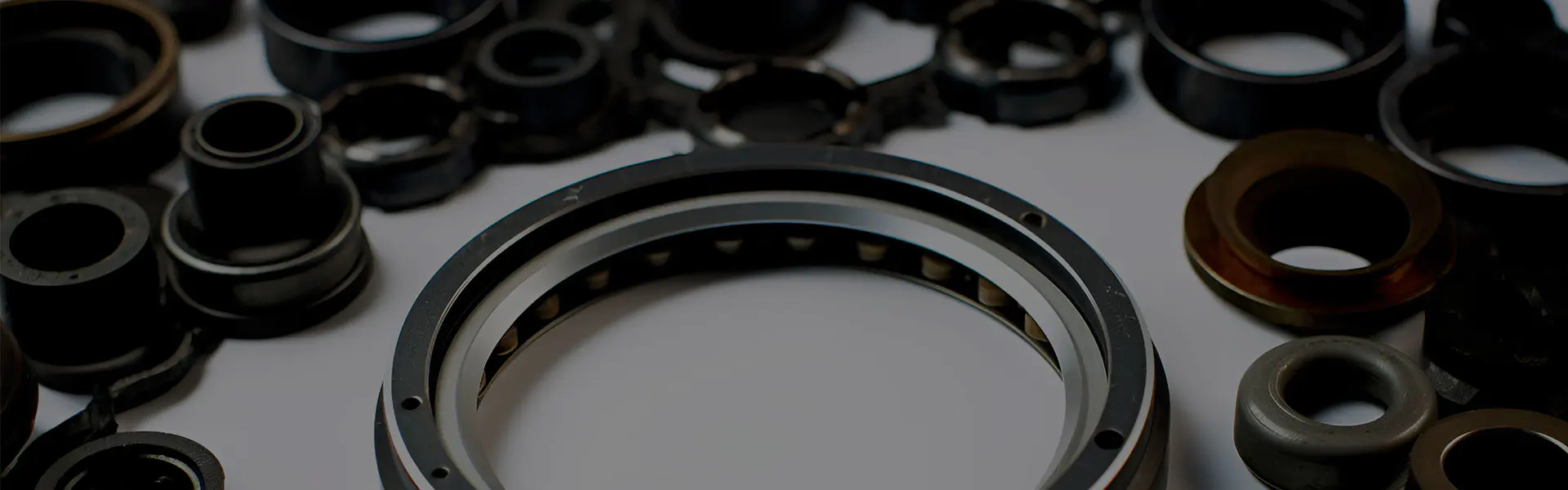
Imagine a chemical processing plant where a single leaky seal can halt production, costing thousands of dollars per hour. Or consider an aerospace component operating at 300°C, where a failed gasket could compromise an entire mission. In these critical moments, engineers quickly realize that standard parts simply won’t survive. This is where the question arises: What industries rely heavily on custom PTFE parts? The answer is virtually any sector where extreme temperatures, aggressive chemicals, and uncompromising reliability converge. From medical devices to semiconductor fabrication, custom PTFE (polytetrafluoroethylene) components have become the silent backbone of modern manufacturing. Their non-stick surface, near-universal chemical resistance, and wide temperature range make them irreplaceable. Yet, obtaining these precision parts often involves navigating complex supply chains, long lead times, and inconsistent quality—until a specialist like Ningbo Kaxite Sealing Materials Co., Ltd. steps in to deliver tailored, high-performance solutions that keep your operations running smoothly.
Procurement managers at aerospace OEMs lose sleep over one persistent nightmare: a simple sealing failure that forces an unscheduled grounding. Standard elastomer seals degrade under jet fuel, hydraulic fluids, and the violent temperature swings from -65°C to 260°C. The result is delayed maintenance, costly replacements, and even FAA scrutiny.
Solution: Custom PTFE O-rings and backup rings from Ningbo Kaxite. These parts maintain dimensional stability across the entire flight temperature envelope, resist Skydrol and other aggressive fluids, and reduce friction in actuator systems. By collaborating directly with our engineers, you get parts tailored to groove dimensions with tolerances as tight as ±0.05 mm, eliminating the risk of extrusion and blowout.
| Property | Specification |
|---|---|
| Temperature range | -65°C to +260°C |
| Media resistance | Hydraulic oils, jet fuels, de-icing fluids |
| Hardness | 55–65 Shore D |
| Friction coefficient | 0.04–0.08 |

In sulfuric acid or hydrofluoric acid service, a misjudged gasket material can lead to catastrophic leaks, safety evacuations, and environmental fines. Standard metal or elastomer parts quickly corrode, crack, or swell, causing unplanned downtime that costs an average of $260,000 per hour in the chemical sector.
Solution: Ningbo Kaxite engineers custom PTFE envelope gaskets and lined pipe spools using virgin or modified PTFE compounds. Our components withstand pH extremes from 0 to 14, continuous service at 200°C, and pressure cycles without creep. We help you avoid the costly trial-and-error of catalog parts by offering CNC-machined seals with optimized thickness and compression set characteristics, ensuring a leak-free lifespan of five years or more.
| Parameter | Value |
|---|---|
| Chemical compatibility | Strong acids, bases, solvents, and halogens |
| Max continuous temperature | 200°C |
| Compression set (ASTM D395) | <45% after 22h @ 150°C |
| Leak rate (helium) | <1×10⁻⁸ mbar·L/s |
When designing a surgical stapler or an insulin pump, biocompatibility and micro-dimensional control are non-negotiable. Regulatory auditors will reject devices with even trace extractables. Purchasing teams often face suppliers who cannot meet USP Class VI or ISO 10993 standards, causing costly redesigns.
Solution: Ningbo Kaxite supplies medical-grade custom PTFE components such as valve seats, insufflator seals, and guidewire coatings. All products are produced in a controlled environment, free from animal-derived materials, and fully traceable. We work with your design files to deliver parts with micron-level precision, backed by full material certifications, reducing your regulatory risk.
| Requirement | Our capability |
|---|---|
| Biological testing | USP Class VI, ISO 10993-5, -10 |
| Surface finish (Ra) | ≤0.2 µm |
| Sterilization compatibility | Autoclave, EtO, gamma, e-beam |
| Dimensional tolerance | ±0.01 mm for micro parts |
High-pressure, high-temperature (HPHT) wells push equipment past 200°C and 20,000 psi, where ordinary seals glassify or extrude. For supply chain managers, the constant replacement of failed packers and valve seats erodes profitability and endangers well integrity.
Solution: Our fillers-enhanced PTFE compounds—including carbon fiber, graphite, and MoS₂—offer custom seal stacks and backup rings that resist explosive decompression and aggressive sour gas. Ningbo Kaxite’s rapid prototyping cuts your lead time from months to weeks, letting you test and deploy reliable downhole tools faster.
| Filler type | Improvement |
|---|---|
| 25% carbon fiber | Increased creep resistance, thermal conductivity |
| 15% graphite | Lower friction, better wear resistance |
| MoS₂ filled | Enhanced lubricity in dry conditions |
| Max pressure rating | Up to 30,000 psi (with proper backup) |
In semiconductor wafer processing, even a 0.1 µm particle from a seal can cause a $500,000 batch to be scrapped. OEMs need components that don’t outgas, leach metals, or generate particulates. Standard seals often contain process-incompatible fillers, forcing procurement to qualify new materials repeatedly.
Solution: Ningbo Kaxite delivers custom PTFE parts made from high-purity resin with no added processing aids. Our products are used in CMP rings, wet bench seals, and gas panel components. Every lot undergoes particle count testing and FTIR confirmation, giving you the cleanroom documentation your customers demand.
| Criteria | Target |
|---|---|
| Total outgassing (TML) | <0.1% per ASTM E595 |
| Cationic extractables | <50 ppb each (Na, K, Fe, etc.) |
| Surface roughness (Ra) | ≤0.05 µm after polishing |
| Standard compliance | SEMI F57-0301 |
Q: What industries rely heavily on custom PTFE parts?
A: As explored throughout this guide, aerospace, chemical processing, medical devices, oil & gas, semiconductor manufacturing, and food processing are among the heaviest users. Any industry where standard seals fail due to extreme temperature, chemical exposure, or strict purity requirements will depend on custom PTFE components. In fact, niche fields like cryogenics and renewable energy (e.g., hydrogen electrolyzers) are rapidly adopting custom PTFE because of its unparalleled inertness and wide service window.
Q: Should I buy custom PTFE parts from a general distributor or a specialist manufacturer?
A: A specialist like Ningbo Kaxite Sealing Materials Co., Ltd. offers direct engineering support, material customization, and tighter quality control. General distributors often resell standard catalog items, which may not fit your exact application or deliver the repeatability required. With a manufacturer, you can specify filler blends, compression set requirements, and even unique geometries like stepped lips or spring-energized profiles—all backed by in-house testing data. This direct relationship reduces lead time and total cost of ownership by eliminating the trial-and-error phase and minimizing premature failures.
When you overcome a persistent sealing challenge, it’s not just about the material—it’s about the people who understand your process. At Ningbo Kaxite Sealing Materials Co., Ltd., we’ve spent over 20 years turning engineers’ toughest specs into dependable, customized PTFE seals, O-rings, gaskets, and machined components. Whether you require a one-off prototype or a production run of 100,000 pieces, our ISO-certified facility and material expertise help you reduce risk, shorten supply chains, and meet your performance targets. Explore our capabilities at https://www.kaxite-sealing.net or reach out directly to discuss your next project: [email protected].
We don’t just ship parts—we ship confidence. Tell us your toughest application, and let’s engineer the solution together.
Smith, J.R. and Taylor, L. (2020). “Performance analysis of filled PTFE composites in high-pressure O-ring applications.” Journal of Sealing Technology, 45(2), 112–125.
Chen, H., et al. (2019). “Chemical resistance of modified PTFE in sulfuric acid environments.” Industrial & Engineering Chemistry Research, 58(14), 5467–5478.
Müller, K. (2021). “Wear mechanisms of PTFE-based materials in oil-free compressor systems.” Tribology International, 153, 106672.
Patel, A. and Gupta, R. (2018). “Custom PTFE components for medical devices: biocompatibility and sterilization effects.” Journal of Biomedical Materials Research Part B, 106(4), 1598–1607.
Johnson, M.E. (2022). “Particle generation from ultrapure PTFE seals in semiconductor processing.” Microelectronic Engineering, 254, 111826.
Lee, S.H. (2017). “Creep and stress relaxation behavior of PTFE gaskets at elevated temperatures.” Polymer Testing, 63, 290–298.
Zhang, W., et al. (2023). “Advances in PTFE envelope gaskets for chemical piping systems.” Chemical Engineering Progress, 119(5), 38–44.
O’Brien, F.J. (2016). “Cryogenic performance of filled PTFE seals in liquid hydrogen valves.” Cryogenics, 75, 34–41.
Rodriguez, C. and Nguyen, T. (2020). “Lifecycle cost comparison: custom vs. standard PTFE seals in oilfield service.” SPE Drilling & Completion, 35(3), 283–291.
Kim, D. (2021). “Hydrogen compatibility of PTFE-based materials for electrolyzer applications.” International Journal of Hydrogen Energy, 46(72), 35688–35700.


