Language

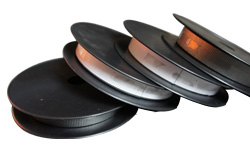
A Cork Sheet is a versatile, natural material produced from the bark of the cork oak tree (Quercus suber). At Kaxite Sealing, we harness this remarkable, sustainable resource to create high-performance sealing, insulating, and cushioning solutions. Unlike synthetic materials, our cork sheets retain the inherent properties of cork: elasticity, compressibility, impermeability to liquids and gases, thermal and acoustic insulation, and natural fire resistance. This makes them an indispensable component across countless industries, from aerospace and automotive to construction, marine, and DIY crafts. The manufacturing process involves harvesting the bark without harming the tree, granulating the cork, and then using heat and pressure to bind the granules into sheets of various densities and thicknesses, all without synthetic adhesives in many grades.
Choosing Kaxite Sealing cork sheets means investing in a product engineered for excellence. Here’s what sets our material apart:
Kaxite Sealing provides a comprehensive range of cork sheet specifications to meet precise application requirements. Our products are categorized primarily by binder type and material composition.
| Grade | Binder / Composition | Density Range (kg/m³) | Temperature Range | Key Properties & Typical Applications |
|---|---|---|---|---|
| Natural Cork (Pure) | 100% Cork Granules | 180-220 | -40°C to 120°C | Highest elasticity & recovery. Wine bottle stoppers, bulletin boards, crafts. |
| Composition Cork (Black) | Cork + Rubber Binder | 350-550 | -40°C to 100°C | Oil & fuel resistant. General-purpose gaskets for engines, gearboxes, pumps. |
| Composition Cork (Brown) | Cork + Resin Binder | 300-500 | -40°C to 150°C | Excellent hot water & steam resistance. Gaskets for plumbing, boilers, heat exchangers. |
| Cork & Neoprene | Cork + Neoprene Rubber | 400-600 | -40°C to 100°C | Enhanced weather, ozone, and aging resistance. Outdoor & marine gaskets. |
| Cork & Nitrile (NBR) | Cork + Nitrile Rubber | 450-650 | -30°C to 120°C | Superior resistance to oils, fuels, and hydrocarbons. Automotive & industrial fluid systems. |
| Parameter | Available Options |
|---|---|
| Standard Thickness | 0.8mm (1/32"), 1.6mm (1/16"), 3.2mm (1/8"), 4.8mm (3/16"), 6.4mm (1/4"), 9.5mm (3/8"), 12.7mm (1/2"), 19mm (3/4"), 25mm (1") |
| Standard Sheet Sizes | 24" x 36" (610mm x 914mm), 36" x 36" (914mm x 914mm), 36" x 48" (914mm x 1219mm), 48" x 48" (1219mm x 1219mm), 48" x 60" (1219mm x 1524mm) |
| Roll Form | Selected grades available in rolls up to 100 feet long, widths of 36" or 48". |
| Custom Sizes & Die-Cutting | Fully supported. We can precision-die-cut or laser-cut any shape to your drawings. |
Q: What is the main difference between natural cork sheets and composition cork sheets?
A: Natural cork sheets are made from 100% cork granules expanded by steam and bonded using the cork's natural resins (suberin). They are softer, have higher elasticity, and are used for non-critical sealing, pin boards, and crafts. Composition cork sheets combine cork granules with a binding agent like rubber or resin. This enhances specific properties: rubber binders (black cork) improve oil/fuel resistance, while resin binders (brown cork) improve hot water/steam resistance. Composition cork is denser, more durable, and is the standard for industrial gasket applications.
Q: How do I select the right cork sheet grade and thickness for my gasket application?
A: Selection depends on the service conditions. First, identify the media (e.g., water, oil, steam), operating temperature, and pressure. For oil or fuel, choose a cork & nitrile or black composition cork. For hot water/steam, choose brown composition cork. For outdoor use, cork & neoprene is best. Thickness depends on flange surface finish and required compression. A general rule: for flanges with minor imperfections, a thicker sheet (1/8" or more) is better. For smooth, machined surfaces, a thinner sheet (1/32" to 1/16") suffices. Kaxite Sealing's technical team can provide specific recommendations based on your drawings.
Q: Can cork sheets be used for high-pressure applications?
A: Cork is primarily a low to medium-pressure sealing material. While it can handle high compression, its tensile strength limits its use in high-pressure flanges alone. For static seals, it is typically suitable for pressures up to 150-200 psi, depending on the grade, thickness, and flange design. For higher pressures, it is often used as a component in a composite gasket or as a compression limiter. Always consult engineering specifications or our team for critical applications.
Q: How do I install and torque a cork gasket correctly?
A: Proper installation is key. Ensure flange surfaces are clean, dry, and free of old gasket material and burrs. Place the dry cork gasket onto the flange. Do not use sealants or adhesives unless specified (they can hinder cork's natural recovery). Gradually and evenly tighten bolts in a crisscross pattern to the recommended torque in multiple passes (e.g., 30%, 70%, 100% of final torque). This ensures even compression and prevents the cork from tearing or extruding. Refer to the equipment manufacturer's torque specifications.
Q: Are Kaxite Sealing cork sheets resistant to mold, mildew, and rot?
A: Yes, absolutely. Cork contains suberin, a waxy substance that makes it naturally impermeable to liquids and resistant to mold, mildew, and rot. This inherent property is one of the key reasons cork sheets are favored in marine applications, plumbing, and environments with high humidity. No chemical treatment is required for this resistance.
Q: Can I cut and fabricate cork sheets myself?
A: Yes, cork sheets are famously easy to work with. For simple shapes, you can use a sharp utility knife, scissors, or a die. For more complex gaskets, a laser cutter or sharp steel rule die provides a clean, precise edge. Always cut on a hard, flat surface. For production runs or complex geometries, utilizing Kaxite Sealing's custom die-cutting service ensures consistency, saves time, and reduces material waste.
Q: What industries commonly use your cork sheet products?
A: Our materials serve a vast array of sectors. Key industries include: Automotive (engine pans, valve covers, transmission gaskets), Aerospace (interior panels, vibration damping), Manufacturing (pumps, gearboxes, compressors), Marine (hatch seals, engine gaskets), Construction (expansion joint fillers, acoustic underlayment), Plumbing (pipe flange gaskets, drain seals), and Food & Beverage (equipment seals in non-direct contact areas).
Q: What is the lead time for custom-cut cork gaskets or large sheet orders?
A: For standard sheet sizes and grades, we typically ship within 1-3 business days. For custom die-cut parts, lead time depends on tooling status and order quantity. Prototype laser-cut parts can often be shipped within a week. Production runs for custom die-cut gaskets generally have a lead time of 2-4 weeks. We prioritize rush orders whenever possible—contact our sales team for an accurate quote and timeline.
The functional properties of Kaxite Sealing cork sheets translate into solutions for numerous challenges:
Kaxite Sealing stands as a leader in engineered sealing solutions. Our commitment goes beyond supplying material:
For engineers, procurement specialists, and fabricators, specifying Kaxite Sealing cork sheets means choosing a proven, sustainable, and high-performance material backed by unparalleled technical support.