Language

In demanding industrial environments where extreme temperatures, aggressive media, and high pressures are the norm, selecting the correct sealing material is not just a maintenance task—it's a critical operational decision. For decades, Graphite Packing has stood as the benchmark for reliability and performance in sealing applications worldwide. Its unique combination of properties makes it an indispensable component across power generation, chemical processing, refining, and heavy manufacturing. Kaxite Sealing, with its deep engineering expertise, provides premium graphite packing solutions designed to meet the most rigorous sealing challenges, ensuring enhanced equipment longevity, reduced downtime, and optimal operational safety.
Unlike traditional packing materials like braided asbestos or aramid fibers, graphite packing offers a superior suite of characteristics derived from its crystalline carbon structure. It performs exceptionally where other materials fail.
Our graphite packing is engineered for maximum performance. Below are the detailed technical parameters that define our product range.
| Component | Specification | Description & Benefit |
|---|---|---|
| Base Material | High-Purity Flexible Graphite (99.98% Carbon) | Derived from expanded natural flake graphite. Provides the core thermal, chemical, and mechanical properties. |
| Reinforcement | Inconel 601/304SS Wire / Aramid Fiber / Glass Fiber | Optional internal or external reinforcement to enhance tensile strength and prevent extrusion in high-pressure applications. |
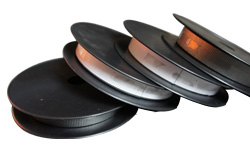
| Form | Die-Formed Rings, Spool Packing, Braided | Precise shapes for easy installation and optimal gland filling. Spool packing offers flexibility for custom sizing. |
| Density Range | 65 - 110 lbs/ft³ (1.04 - 1.76 g/cm³) | Adjustable density allows for customization based on pressure requirements and gland space. |
| Performance Characteristic | Test Standard | Typical Range (Kaxite Sealing) |
|---|---|---|
| Temperature Range (Continuous) | ASTM F1468 | -400°F to +850°F (-240°C to +454°C) in air; up to 3000°F (1650°C) inert. |
| pH Range | N/A | 0 - 14 (Resistant to most acids, alkalis, and organic solvents) |
| Maximum Pressure (PSI) | API 622 / 6A | Up to 2500 PSI (172 Bar) for reinforced styles; 1200 PSI (83 Bar) for pure graphite. |
| Thermal Conductivity | ASTM D5470 | 50 - 150 W/m·K (in-plane) |
| Compression Recovery | ASTM F36 | >40% (Excellent resilience under cyclic conditions) |
| Leakage Rate (Class) | API 622 / ISO 15848 | Meets or exceeds Class A requirements for low emission packing. |
Selecting the optimal graphite packing configuration is crucial. Use this guide to match Kaxite Sealing products to your application.
Q: What is the primary difference between graphite packing and traditional braided packing like PTFE or aramid?
A: The core difference lies in the material's inherent properties. Graphite packing is a solid, homogeneous sheet of expanded graphite, offering superior thermal conductivity, higher temperature limits, and excellent chemical inertness across a broader pH range. Traditional braided packings are fibrous and often rely on lubricants that can degrade, whereas graphite is self-lubricating and maintains its integrity under thermal cycling.
Q: Can Kaxite Sealing graphite packing be used in valves handling superheated steam?
A: Absolutely. This is one of its primary applications. Our Inconel-reinforced graphite packing is specifically engineered for superheated and saturated steam service at pressures up to 2500 PSI and temperatures exceeding 750°F (399°C). It resists oxidation, maintains a stable seal, and dissipates heat effectively, preventing stem scoring.
Q: How do I properly install graphite packing rings to ensure a leak-free seal?
A: Correct installation is key. Always ensure the stuffing box is clean and free of old material. Use pre-formed die-molded rings from Kaxite Sealing for consistency. Stagger the ring joints by 90 degrees with each subsequent ring. Tighten the gland follower evenly and only to a "snug" fit. After initial operation and heat cycle, re-tighten slightly to compensate for initial compression set. Never over-tighten, as this can increase friction and wear.
Q: Is graphite packing suitable for aggressive acids like sulfuric or hydrofluoric acid?
A: Flexible graphite has outstanding resistance to most acids, including concentrated sulfuric and hydrochloric acids. However, for strongly oxidizing acids (like nitric acid at high concentrations) and certain halogens, its resistance can be limited at elevated temperatures. For hydrofluoric acid, special grades or alternative materials should be considered. Consult Kaxite Sealing engineering for specific media compatibility.
Q: Does graphite packing require a break-in or run-in period?
A: Yes, a proper break-in procedure is recommended, especially for dynamic (rotating or reciprocating) applications. After installation, gradually bring the equipment up to operational temperature and pressure while monitoring for leakage. Minor initial leakage is normal and should diminish as the graphite conforms to the shaft. Follow the specific start-up procedure provided by Kaxite Sealing for your product type.
Q: How does Kaxite Sealing graphite packing help with emission control (VOC and fugitive emissions)?
A: Our packing is designed and tested to meet stringent international emission standards like API 622 and ISO 15848. The high-density, conformable nature of graphite creates an effective labyrinth seal that significantly reduces the pathway for gas or vapor leakage. When installed and torqued correctly, it provides a reliable, long-lasting seal that helps plants meet environmental compliance targets for fugitive emissions.
Q: Can I use graphite packing on mixers or agitators with significant run-out or shaft deflection?
A: Graphite packing is highly resilient and can accommodate minor shaft misalignment and run-out better than many rigid sealing materials. Its conformability allows it to adjust to dynamic movements. For applications with severe deflection, we recommend consulting with our engineers. A reinforced style or a specialized braided graphite format from Kaxite Sealing may be suggested to handle the additional mechanical stress.
The versatility of Kaxite Sealing graphite packing makes it the seal of choice in countless critical applications.