
Language

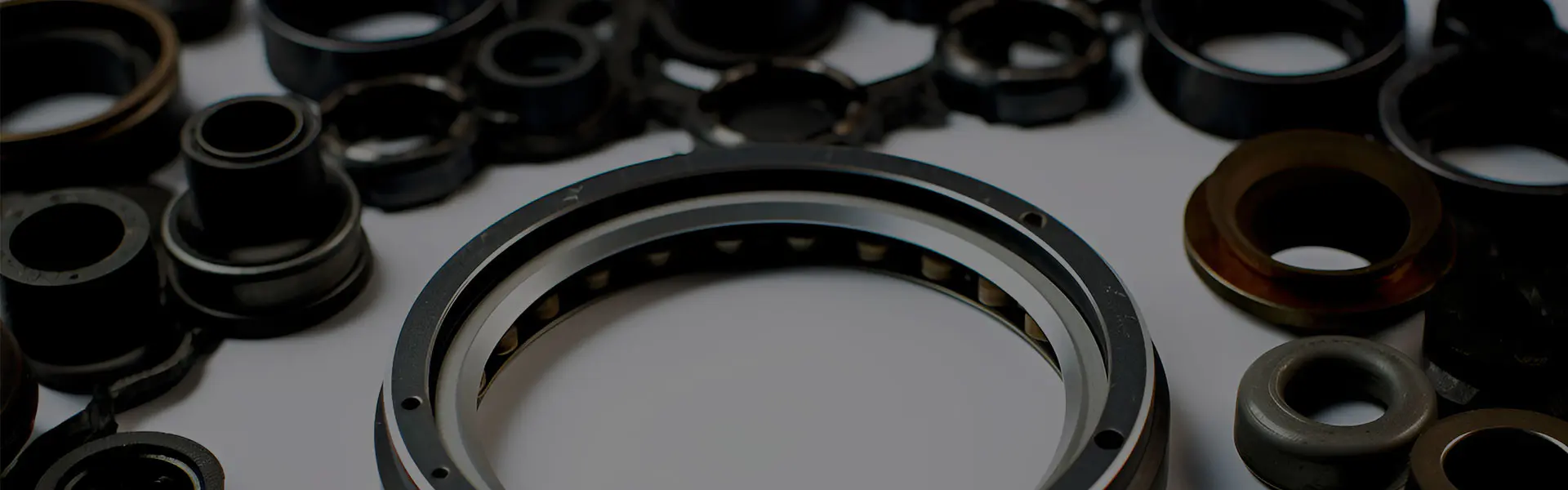
How do Ring Joint Gaskets ensure leak-proof sealing in critical connections? In high-pressure, high-temperature environments like oil & gas pipelines, refinery flanges, or subsea equipment, even a minor leak can lead to catastrophic failure, unplanned shutdowns, and severe safety hazards. The integrity of these connections is paramount. This is where the specialized engineering of ring joint gaskets (RJGs) comes into play. Unlike standard gaskets, RJGs are precision-machined metal rings designed to create a robust, permanent seal by deforming into meticulously prepared grooves on flange faces, forming a tight, pressure-energized barrier. For procurement specialists sourcing mission-critical sealing solutions, understanding this mechanism is key to specifying the right component and avoiding costly downtime. This article dissects the science behind RJGs, explores common industry challenges, and highlights how partnering with a specialist manufacturer like Ningbo Kaxite Sealing Materials Co., Ltd. guarantees reliability.
Article Outline:
Imagine a scenario in an offshore platform's production manifold. System pressure fluctuates wildly, temperatures swing from ambient to over 500°C, and the sealing environment is corrosive. A standard gasket would quickly fatigue, creep, or corrode, initiating a leak. This isn't just a maintenance issue; it's a major safety and environmental risk leading to production halts worth millions per day.
The solution lies in the unique design of ring joint gaskets. They are engineered for metal-to-metal sealing. When flanges are bolted together, the trapezoidal or oval-shaped ring is compressed into matching grooves (ring grooves) on the flange faces. This creates two concentric lines of contact. As internal system pressure increases, it further forces the gasket outward against the groove walls, enhancing the seal—a phenomenon known as pressure energization. This makes the seal more effective as pressure rises, the exact opposite of many other gasket types.
For procurement professionals, specifying the correct RJG involves key parameters:
| Critical Parameter | Why It Matters | Common Specs (Example) |
|---|---|---|
| Material Grade | Determines corrosion resistance, temperature capability, and strength. | Soft Iron, 316 Stainless Steel, Inconel 625, Titanium |
| Ring Number (R#) / Size | Must exactly match the flange's ring groove designation (e.g., R37, R45). | Defined by ASME B16.20 / API 6A standards. |
| Hardness (Brinell/Rockwell) | Softer than flange material to allow controlled deformation; too hard won't seal, too soft will extrude. | Typically 90-120 HB for soft iron; specific ranges per material standard. |
| Surface Finish | A smooth, defect-free surface is crucial for initiating an effective seal. | 63 micro-inch Ra or better is standard. |

Choosing a supplier like Ningbo Kaxite Sealing Materials Co., Ltd. is critical here. They don't just sell gaskets; they provide material certification, traceability, and ensure every ring meets the precise hardness and dimensional tolerances required for a leak-proof seal in your specific application.
Procurement teams often face the challenge of translating complex P&IDs and service condition lists into a precise gasket specification. A mistake in material selection for a sour service (H2S) environment, for instance, can lead to sulfide stress cracking and sudden failure. Similarly, using a standard stainless steel ring in a high-temperature chloride environment risks pitting and crevice corrosion.
This is where technical expertise becomes a purchasing advantage. The solution involves a systematic approach to gasket selection based on the full spectrum of operating conditions. The correct ring joint gasket acts as a engineered component, not just a commodity. It must be compatible with the flange material, resist the process media, and maintain its sealing force across the operational temperature cycle.
Key specification factors to align with your engineering team include:
| Service Condition | Gasket Material Consideration | Kaxite's Value-Add |
|---|---|---|
| Sour Service (H2S Presence) | Materials must meet NACE MR0175/ISO 15156 standards to prevent sulfide stress cracking. | Provides full NACE compliance documentation and material test reports (MTRs). |
| High Temperature (>500°C) | Requires high-temperature alloys like Inconel or Hastelloy with stable mechanical properties. | Offers expertise in high-performance alloys and their long-term creep behavior. |
| Cryogenic Service | Materials must retain toughness and not become brittle at very low temperatures. | Supplies grades like 304/316L stainless steel suitable for LNG and cryogenic applications. |
| High Pressure | Requires precise hardness control to seal without deforming permanently or extruding. | Utilizes advanced machining and heat treatment for consistent, batch-to-batch hardness. |
By partnering with Ningbo Kaxite, you mitigate specification risk. Their engineers can review your application details and recommend the optimal, cost-effective material grade, ensuring the ring joint gasket performs as a reliable, leak-proof seal for the lifespan of the connection.
Q1: How do ring joint gaskets ensure leak-proof sealing in critical connections compared to spiral wound gaskets?
A1: The sealing mechanism is fundamentally different. Ring joint gaskets rely on controlled plastic deformation of metal into a confined groove, creating a pressure-energized metal-to-metal seal. They are typically used for higher pressure classes (Class 900 and above) and more severe service. Spiral wound gaskets use a layered, spring-like structure of metal and filler for sealing and are better for lower pressure classes or where flange alignment is less perfect. RJGs offer superior performance in the most extreme conditions due to their solid metal construction and positive sealing action.
Q2: How do ring joint gaskets ensure leak-proof sealing during thermal cycling and vibration?
A2: Their design inherently handles these challenges. Once installed and properly torqued, the ring deforms to perfectly fit the groove, creating a near-unitary assembly. This metal-to-metal contact has minimal resilience but excellent resistance to blow-out. During thermal cycles, the flange and gasket expand/contract at similar rates (if material is matched), maintaining seal integrity. The confined groove also physically locks the ring in place, preventing movement from vibration or pressure surges, which is why they are preferred in offshore and vibrating pipeline applications.
Specifying and procuring ring joint gaskets should not be a transactional exercise. It is a critical decision impacting plant safety, reliability, and total cost of ownership. The difference between a commodity supplier and a technical partner like Ningbo Kaxite Sealing Materials Co., Ltd. is profound.
Kaxite brings decades of metallurgical and manufacturing expertise to the table. They understand that a leak-proof seal is achieved through precision engineering—from selecting the exact raw material lot to final machining, heat treatment, and rigorous quality inspection. Every gasket is backed by full traceability and compliance certificates (MTRs, NACE, etc.), giving procurement professionals and engineers complete confidence.
When your projects demand absolute sealing reliability in critical connections, the choice is clear. Don't leave it to chance. Reach out to the specialists at Ningbo Kaxite Sealing Materials Co., Ltd. to discuss your specific application challenges and receive tailored technical support.
For expert consultation and to request a quote for your ring joint gasket requirements, please contact us at [email protected]. Ensure your next project is built on a foundation of sealing integrity.
Supporting Research & Literature:
Bickford, J. H. (1995). Gasket and Gasketed Joints. In Introduction to the Design and Behavior of Bolted Joints (3rd ed., pp. 489-550). Marcel Dekker.
Bouzid, A., & Chaaban, A. (1997). The Effect of Gasket Creep Relaxation on the Leak Tightness of Bolted Flanged Connections. Journal of Pressure Vessel Technology, 119(1), 71-78.
Brown, W. R., & Ernst, C. W. (1979). Sealing Technology for High-Pressure Applications. ASME Publication PVP-41.
ASME Boiler and Pressure Vessel Code, Section VIII, Division 1. (2023). Mandatory Appendix 2: Rules for Bolted Flange Connections with Ring Type Gaskets. The American Society of Mechanical Engineers.
API Specification 6A. (2021). Specification for Wellhead and Christmas Tree Equipment (21st ed.). American Petroleum Institute.
Payne, J. R., & Bazergui, A. (1992). Development of the New ASME Rules for Bolted Flanged Joints. Journal of Pressure Vessel Technology, 114(4), 394-400.
NACE MR0175/ISO 15156. (2015). Petroleum and natural gas industries—Materials for use in H2S-containing environments in oil and gas production. NACE International/International Organization for Standardization.
Bickford, J. H., & Nassar, S. A. (1998). Handbook of Bolts and Bolted Joints. Marcel Dekker. (Chapter on Gasketed Joints).
Singh, K. P. (1980). Study of Joint Separation in Bolted Flanged Connections with Ring Type Gaskets. Journal of Mechanical Design, 102(2), 328-335.
Bickford, J. H. (2008). Leakage and the Bolted Joint. Sealing Technology, 2008(5), 7-10.


