Language

In the critical world of industrial sealing, the integrity of a gasket is paramount. Machines for spiral wound gaskets represent the cornerstone of precision manufacturing for these essential components. Unlike simple cutting or stamping, these specialized machines meticulously wind alternating layers of pre-formed metal strip and filler material (such as graphite, PTFE, or ceramic) around a central metal core ring. This automated, controlled process is what gives spiral wound gaskets their renowned resilience, excellent recovery properties, and ability to seal under high pressures and temperatures. At Kaxite Sealing, we understand that the quality of the gasket is intrinsically linked to the precision and reliability of the machine that creates it. Our engineering philosophy centers on building machines that don't just manufacture parts but ensure sealing reliability for the most demanding applications in oil & gas, petrochemical, power generation, and beyond.
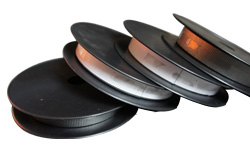
The process begins with carefully calibrated spools of metal strip and filler. The machine's precision guide system and tension controls feed these materials into the winding head. As the mandrel (forming tool) rotates, each layer is wound with exacting overlap and tension, creating the signature spiral structure. Advanced machines feature programmable logic controllers (PLCs) that allow operators to set parameters like winding pitch, layer count, and final diameter with digital accuracy, ensuring every gasket, from the smallest to the largest diameters, meets exact specifications. This level of control is impossible with manual methods and is why professional-grade machines for spiral wound gaskets are a non-negotiable investment for serious manufacturers.
Kaxite Sealing designs and manufactures a range of machines for spiral wound gaskets, from semi-automatic models for versatile workshop use to fully automated, high-volume production lines. Our machines are built for durability, precision, and ease of operation. Below is a detailed breakdown of the core technical parameters and features that define our equipment's capability.
| Parameter | Model KS-SWG300 | Model KS-SWG600 | Model KS-SWG1200 Pro |
|---|---|---|---|
| Max. Gasket Inner Diameter (ID) | 300 mm (12 inches) | 600 mm (24 inches) | 1200 mm (48 inches) |
| Min. Gasket Inner Diameter (ID) | 15 mm (0.6 inches) | 25 mm (1 inch) | 50 mm (2 inches) |
| Metal Strip Width Range | 3.0 mm - 4.5 mm | 3.0 mm - 6.0 mm | 4.5 mm - 9.0 mm |
| Filler Strip Width Range | 3.2 mm - 4.7 mm | 3.2 mm - 6.2 mm | 4.7 mm - 9.2 mm |
| Max. Winding Speed | 200 RPM | 180 RPM | 150 RPM |
| Power Supply | 400V / 3PH / 50Hz (or as per region) | 400V / 3PH / 50Hz (or as per region) | 400V / 3PH / 50Hz (or as per region) |
| Machine Footprint (LxWxH) | 1.8 x 1.2 x 1.5 m | 2.2 x 1.5 x 1.6 m | 3.0 x 1.8 x 1.8 m |
| Control System | PLC with 7" HMI | PLC with 10" HMI | Industrial PC with 15" HMI & Data Logging |
These specifications highlight the scalability of the Kaxite Sealing portfolio, ensuring there is a machine perfectly suited for job-shop prototyping, mid-volume production, or large-scale industrial manufacturing.
Q: What is the primary advantage of using an automated machine over manual winding for spiral wound gaskets?
A: The primary advantages are consistency, precision, speed, and traceability. An automated machine applies exact, repeatable tension and pitch to every layer, creating a gasket with uniform density and mechanical properties. This eliminates the variability inherent in manual work, directly leading to more reliable sealing performance, especially under cyclic loading. Automation also dramatically increases production rates and allows for precise digital records of production parameters for each gasket, which is crucial for quality assurance in regulated industries.
Q: How difficult is it to changeover a machine to produce a different gasket size or specification?
A: With modern machines from Kaxite Sealing, changeover is relatively quick and straightforward. The most common change involves swapping the mandrel (the core around which the gasket is wound). Our machines use a standardized, tool-less mandrel mounting system. Furthermore, all winding parameters—pitch, number of layers, final diameter—are stored as recipes in the PLC. To switch jobs, an operator typically selects the new recipe from the HMI, changes the mandrel and material spools, and the machine is ready. This reduces non-productive downtime significantly.
Q: Can one machine handle all types of metal and filler materials?
A: Yes, a well-designed machine is highly versatile. The key is in the material feeding and tensioning system. Kaxite Sealing machines feature independent, adjustable tension controls for both the metal and filler spools. This allows the machine to accommodate materials with different mechanical properties—from soft aluminum strips and flexible graphite to high-strength Inconel strips and PTFE filler. The guide systems are also designed to handle the standard width and thickness ranges without requiring major adjustments.
Q: What kind of maintenance do these machines require?
A: Regular preventive maintenance is essential for long-term accuracy and uptime. Key tasks include:
Q: How does the control system improve gasket quality and production management?
A: The PLC-based control system is the brain of the machine. It translates the gasket design (layer count, pitch, density) into precise motor movements. It monitors real-time parameters like tension and speed, making micro-adjustments to maintain consistency. If a material breaks or runs out, the system stops automatically. Advanced models, like the Kaxite Sealing KS-SWG1200 Pro, can log production data (date, time, operator, recipe used, serial number) for each gasket, creating a complete digital history for quality traceability. This data can be exported for integration into factory MES (Manufacturing Execution Systems).
Q: Are Kaxite Sealing machines suitable for producing gaskets to international standards like ASME B16.20 or API 601?
A: Absolutely. The precision and programmability of our machines for spiral wound gaskets make them ideal for manufacturing gaskets that must comply with stringent standards such as ASME B16.20 (Metallic Gaskets for Pipe Flanges) and API 601 (Metallic Gaskets for Refinery Piping). The ability to precisely control the winding pitch, the number of metal/filler layers, and the final dimensions ensures that the finished gasket's density, thickness, and cross-section consistently meet the required specifications. This repeatable compliance is a major reason why major OEMs and gasket manufacturers trust Kaxite Sealing equipment.
Investing in a machine for spiral wound gaskets is a significant decision that impacts your production capability for years to come. At Kaxite Sealing, our partnership extends far beyond the sale. We offer comprehensive integration support, including thorough operational training for your technicians at your facility. Our training covers not only routine operation and recipe management but also basic troubleshooting and preventive maintenance procedures. Furthermore, we maintain a global inventory of commonly required spare parts to minimize potential downtime. Our engineering team is also available for consultation on special applications, custom tooling design for non-standard gasket profiles, and upgrades to existing machinery. With Kaxite Sealing, you gain more than a machine; you gain a reliable partner dedicated to the success and efficiency of your sealing products manufacturing line.