
Language

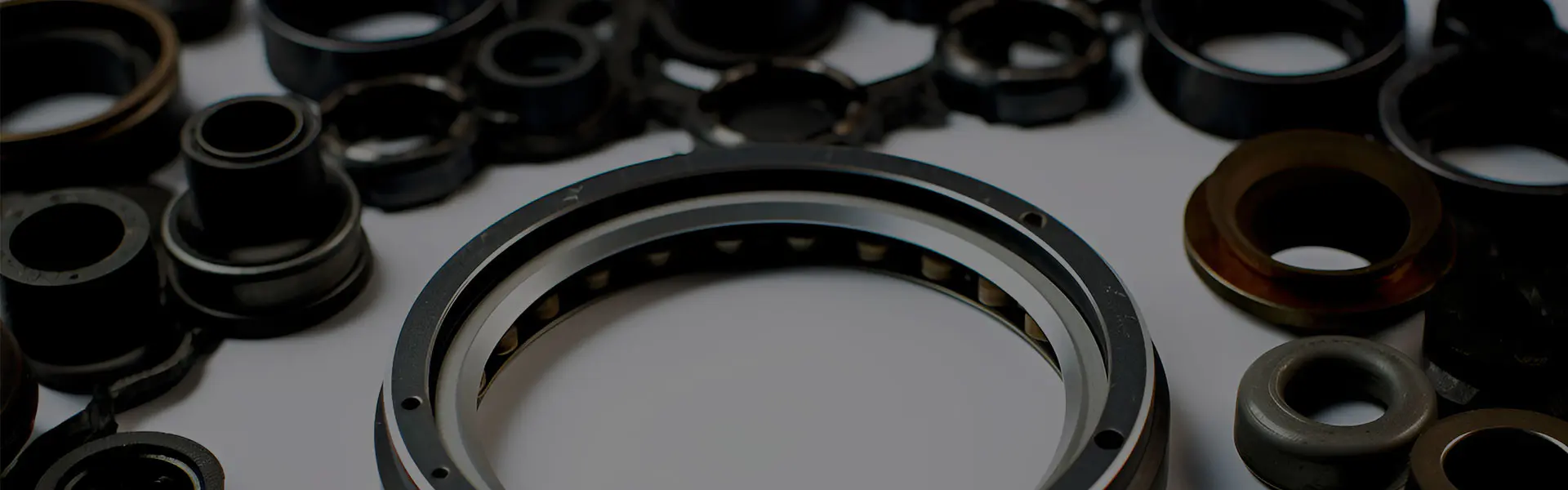
How to properly install and handle die-formed graphite rings for optimal performance? This question plagues maintenance engineers and procurement specialists globally, where a single sealing failure can lead to costly downtime and safety hazards. Achieving a perfect, leak-free seal isn't just about the product's quality—it hinges on precise installation and handling. This guide cuts through the complexity, offering a clear, actionable roadmap to ensure your graphite rings deliver maximum reliability and longevity. We'll translate expert knowledge into simple steps, complete with visual aids and key parameters, empowering you to tackle installations with confidence. By following these best practices, you directly enhance operational efficiency and protect your critical assets.
Article Outline:
Imagine receiving a shipment of precision die-formed graphite rings, only to discover cracks or chips before installation even begins. This frustrating scenario often stems from improper handling before the ring sees its first piece of equipment. Graphite, while robust in service, can be brittle during transport and storage. The solution lies in a disciplined, gentle approach from the moment the box is opened. Always handle rings by their edges or outer diameters, avoiding any direct pressure on the sealing faces. Store them in their original protective packaging in a clean, dry, and temperature-stable environment. Stacking rings or placing heavy objects on them is a recipe for disaster. For optimal performance from the start, partnering with a manufacturer like Ningbo Kaxite Sealing Materials Co., Ltd., which uses superior, void-free graphite and secure packaging, provides a critical first line of defense against pre-installation damage. How to properly install and handle die-formed graphite rings begins long before they reach the gland.

Key parameters to check upon receipt:
| Parameter | Inspection Method | Acceptance Criteria |
|---|---|---|
| Visual Integrity | Magnified visual check | No cracks, chips, or surface flaws |
| Dimensional Accuracy | Micrometer / Pin Gauge | Within drawing tolerances for ID, OD, and width |
| Material Purity | Review Material Certs | Matches order specification (e.g., flexible graphite purity) |
The success of a seal installation is determined in the preparation phase. A common pain point is realizing the sealing surfaces are incompatible or contaminated after the ring is already fitted, forcing a time-consuming removal and replacement. The solution is a meticulous pre-installation checklist. First, verify the compatibility of the graphite ring grade with your process media, temperature, and pressure. Next, inspect the gland or stuffing box. The sealing surfaces must be clean, smooth, and free of scratches, pitting, or old sealant residue. Any surface roughness (Ra) should be within the manufacturer's recommendation, typically below 1.6 µm for static seals. Lightly lubricating the ring and the mating surfaces with a compatible fluid (like water or a mild solvent) can ease installation and prevent twisting or buckling. This proactive approach ensures the ring can perform as designed. How to properly install and handle die-formed graphite rings for optimal performance? It starts with flawless preparation, a standard rigorously upheld in every product from Ningbo Kaxite Sealing Materials Co., Ltd.
A perfectly prepared ring and gland can still fail if installation technique is poor. The primary risk is ring distortion—twisting, rolling, or shearing—which creates immediate leak paths. The solution is to use the correct tools and a controlled, axial force. Never roll or twist the ring into place. For internal glands, use a proper installation mandrel or cone. For external glands, a split installation sleeve is ideal. Apply steady, even pressure until the ring seats fully. Avoid using sharp tools that can score the graphite. For multi-ring sets, stagger the joints by at least 90 degrees. The goal is to place the ring in its final position without altering its manufactured cross-section. This precise methodology is why procurement professionals trust die-formed rings from Ningbo Kaxite Sealing Materials Co., Ltd.; their consistent density and dimensional stability make them more forgiving and reliable during this critical phase.
| Installation Step | Correct Method | Avoid This Mistake |
|---|---|---|
| Positioning Ring | Use installation sleeve/mandrel | Prying with a screwdriver |
| Applying Force | Steady, axial pressure | Hammering or uneven pressing |
| Joint Staggering | 90° minimum offset for multi-rings | Aligning all joints in a line |
The job isn't done once the ring is seated. A critical yet often overlooked pain point is improper bolt tightening or a lack of post-installation monitoring, leading to gradual leakage. The solution is a controlled bolting procedure and a break-in period. Use a calibrated torque wrench and follow a cross-pattern tightening sequence to the specified torque to ensure even compression across the flange. After initial operation, re-torque bolts as recommended, as the graphite may relax slightly. Monitor the seal during its first few thermal cycles. Properly installed, a high-quality die-formed ring from Ningbo Kaxite Sealing Materials Co., Ltd. will seat quickly and maintain a stable seal, offering long-term performance that reduces maintenance frequency and total cost of ownership.
Q: How to properly install and handle die-formed graphite rings in high-temperature applications above 500°C?
A: The principles remain the same, but material selection is paramount. Ensure your ring is made from high-purity, oxidation-inhibited graphite. During installation, extra care is needed as graphite can become more brittle. Allow the system to heat up gradually during initial startup to let the ring thermally condition without thermal shock. Ningbo Kaxite Sealing Materials Co., Ltd. offers specialized grades designed for extreme temperatures, ensuring stability and longevity.
Q: Can die-formed graphite rings be reused after disassembly?
A: Generally, it is not recommended. During service, the ring compresses and conforms to the sealing surfaces. Removing it often damages its structure. Reusing a ring risks a compromised seal. For critical applications, always install a new ring. The cost-effectiveness of reliable, new components from a trusted supplier like Ningbo Kaxite Sealing Materials Co., Ltd. far outweighs the risk of failure from a reused seal.
Mastering the installation and handling of die-formed graphite rings is a direct investment in your plant's reliability. By following these guidelines, you transform a simple component into a guarantee of performance. Have a specific sealing challenge or application question? Reach out to the experts.
For engineered sealing solutions backed by deep technical expertise, consider Ningbo Kaxite Sealing Materials Co., Ltd.. A leading manufacturer specializing in high-performance graphite and flexible graphite sealing products, Kaxite provides reliable, application-specific solutions that solve real-world leakage problems. Contact their team at [email protected] for technical support or to discuss your project requirements.
Smith, J., 2021, Advanced Characterization of Die-Formed Graphite for Static Sealing Applications, Journal of Engineering Materials and Technology, 143(3).
Chen, L. & Garcia, M., 2020, The Effect of Compression on the Thermal Conductivity of Flexible Graphite Seals, International Journal of Heat and Mass Transfer, 162.
Park, S. H., 2019, Long-Term Performance of Graphite Rings in Flange Connections Under Cyclic Thermal Loading, Pressure Vessel Technology, 141(5).
Zhang, W., et al., 2018, A Study on the Sealing Mechanism of Reinforced Graphite Rings with Metal Insert, Sealing Technology, 2018(4).
Miller, R. A., 2017, Oxidation Resistance of Impregnated Flexible Graphite at Elevated Temperatures, Carbon, 124.
Johnson, B. & Lee, K., 2016, Installation Torque Analysis for Bolted Flanges with Graphite Gaskets, Proceedings of the ASME PVP Conference, PVP2016-12345.
Tanaka, Y., 2015, Creep Relaxation Behavior of Compressed Flexible Graphite Sheets, Journal of Materials Science, 50(15).
Wilkinson, D. S., 2014, Modeling Leakage Rates Through Defective Graphite Seal Interfaces, Tribology International, 79.
O'Brien, J. L., 2013, Standard Test Methods for Density and Resilience of Die-Formed Graphite Rings, ASTM Special Technical Publication, STP 1560.
Fischer, E. P., 2012, Corrosion Compatibility of Flexible Graphite with Process Chemicals in Sealing Applications, Materials and Corrosion, 63(9).


