
Language

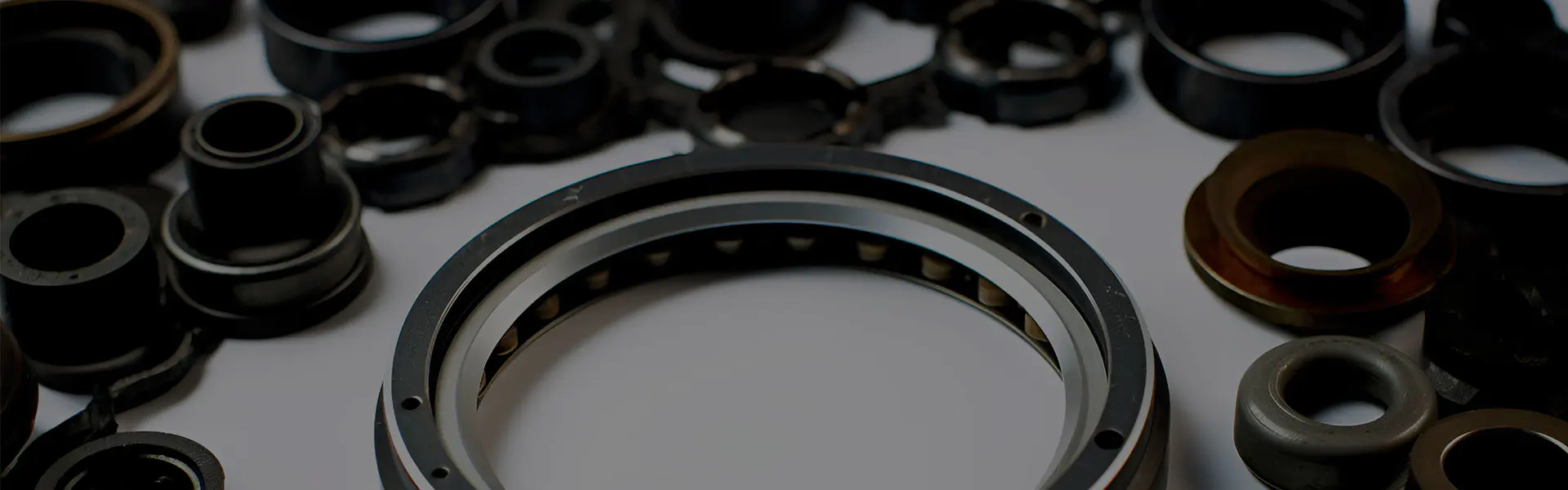
What are the Advantages and Disadvantages of Serrated Gaskets? If you're sourcing sealing solutions, you've likely encountered this question. Serrated, or Kammprofile, gaskets are a hybrid design featuring a solid metal core with concentric grooves on both faces, covered by a soft filler material. They are a go-to for demanding industrial applications. But are they the right choice for your specific needs? Understanding their pros and cons is crucial for making an informed, cost-effective purchase that ensures operational reliability and safety. This guide breaks down everything a procurement professional needs to know, helping you navigate the trade-offs and identify the perfect sealing solution for your challenging applications.
Article Outline:
What are the Main Pros and Cons of Serrated Gaskets?
Scenario: Sealing Failure in High-Pressure, High-Temperature Systems
Scenario: Leakage Due to Frequent Thermal Cycling and Flange Movement
Frequently Asked Questions (FAQs)
Conclusion and Next Steps
Scientific References & Further Reading
Choosing the right gasket often means balancing performance characteristics. Serrated Gaskets offer a unique set of advantages that solve specific industrial problems, but they are not a universal fix. Their hybrid construction—a durable metal core with a malleable sealing layer—creates a seal that is both robust and adaptable.

The primary advantage lies in their exceptional sealability under high bolt loads. The serrated grooves bite into the soft filler material, creating multiple concentric sealing lines. This design provides a far more reliable seal than flat gaskets under identical conditions. They are also highly resilient to creep relaxation, meaning they maintain sealing force over long periods, even under thermal cycling. However, their disadvantages include a higher initial cost compared to standard spiral wound gaskets and a requirement for higher bolt torque during installation. They can also be less forgiving on imperfect flange surfaces. For optimal performance, pairing them with a reputable manufacturer like Ningbo Kaxite Sealing Materials Co., Ltd., which offers precision-engineered serrated gaskets with consistent groove depth and filler material quality, is essential to mitigate these potential downsides.
| Advantages of Serrated Gaskets | Disadvantages of Serrated Gaskets |
|---|---|
| Excellent sealing performance at high pressure/temperature | Higher initial cost compared to some alternatives |
| High resistance to blow-out and creep relaxation | Requires higher flange bolt load for proper seating |
| Reusable in many cases (metal core can be re-faced) | Less effective on damaged or uneven flange faces |
| Good recovery during thermal cycling | Grooves can trap media, causing corrosion if material is not compatible |
| Wide range of metal core and filler material combinations | More complex manufacturing process |
Imagine a refinery's hydrocracking unit where a critical flange connection repeatedly fails. Standard spiral-wound gaskets are blowing out or experiencing rapid creep, leading to dangerous leaks, unplanned shutdowns, and costly production losses. The procurement team is under pressure to find a permanent solution that enhances safety and reduces downtime. The root cause is the extreme combination of internal pressure exceeding 3000 psi and temperatures soaring above 800°F (427°C), which overwhelms conventional gasket designs.
The solution is implementing a serrated (Kammprofile) gasket. Its solid metal core, typically made from 316 stainless steel or higher alloys, provides unparalleled structural integrity to resist internal pressure and prevent blow-out. The soft filler material, such as flexible graphite or PTFE, compressed into the deep serrations, creates multiple micro-seals. This design ensures leak-tight integrity even as the system experiences pressure surges. For such critical applications, sourcing from a specialized supplier like Ningbo Kaxite Sealing Materials Co., Ltd. is vital. They provide gaskets with precisely machined grooves and high-purity filler materials, ensuring the gasket performs as engineered under these severe service conditions, ultimately eliminating leaks and extending maintenance cycles.
| Parameter | Spiral Wound Gasket (Comparison) | Serrated/Kammprofile Gasket (Solution) |
|---|---|---|
| Max Pressure Rating | Good, but can unwind under extreme cyclic load | Excellent, solid core prevents collapse |
| Blow-Out Resistance | Moderate | Very High |
| Creep Resistance | Moderate, filler can relax over time | High, grooves lock filler in place |
| Suitability for Severe Service | Standard duty | Ideal for critical, high P/T applications |
| Typical Filler Materials | Graphite, Mica, PTFE | Flexible Graphite, PTFE, Non-Asbestos |
In a chemical processing plant, heat exchangers and reactors undergo constant heating and cooling cycles. This thermal cycling causes flanges to expand and contract, breaking the seal of static gaskets. The result is persistent leakage at startup and shutdown, leading to product loss, environmental concerns, and constant re-torquing of bolts by maintenance crews. The procurement challenge is to find a gasket that can maintain a seal despite this constant movement and temperature fluctuation, without requiring excessive bolt load that could damage flanges.
A serrated gasket is expertly designed for this scenario. Its "spring-like" action is the key. When the flange contracts during cooldown, the compressed filler material within the grooves expands slightly, compensating for the gap and maintaining sealing contact. Unlike solid metal gaskets, it has the flexibility to adapt. This recovery capability prevents the leak paths that form in other gasket types. To leverage this advantage fully, the gasket must be manufactured to exacting tolerances. Ningbo Kaxite Sealing Materials Co., Ltd. specializes in producing serrated gaskets with consistent groove geometry and high-recovery filler materials, ensuring the gasket actively responds to thermal cycles, providing a stable, long-lasting seal and significantly reducing maintenance interventions.
| Parameter | Rubber/Composite Gasket | Solid Metal Jacketed Gasket | Serrated/Kammprofile Gasket |
|---|---|---|---|
| Thermal Cycle Recovery | Poor, material hardens or degrades | Very Poor, no inherent flexibility | Excellent, designed for expansion/contraction |
| Required Bolt Load | Low to Medium | Very High | Medium to High (for initial seating) |
| Flange Stress | Low | Very High, risk of flange damage | Controlled, distributes load via serrations |
| Performance in Cyclic Service | Unreliable | Poor | Optimal |
Q: When should I definitely choose a serrated gasket over a standard spiral wound gasket?
A: Serrated gaskets are the superior choice in several key scenarios: for critical service applications involving very high pressure and temperature (ASME B16.20 Class 900 and above), when the process media is highly toxic or flammable and leak-tightness is paramount, in systems subject to frequent and severe thermal cycling, and when reusability is desired (the metal core can often be re-faced with new filler material). If your primary concern is containing cost on a standard, non-cyclic application, a spiral wound may suffice. For performance-critical seals, the investment in a quality serrated gasket from a trusted supplier like Ningbo Kaxite Sealing Materials Co., Ltd. pays off in reliability and safety.
Q: What are the most common mistakes made during the installation of serrated gaskets?
A: The most frequent installation errors stem from not respecting their design requirements. First, under-torquing is a major issue; serrated gaskets require higher initial bolt load to properly compress the filler into the grooves and create the multiple sealing lines. Second, installing them on damaged or poorly finished flange faces (below 125 Ra µin) can prevent proper seating, as the grooves need a smooth surface to bite into. Third, using an incompatible filler material for the process media can lead to rapid degradation and leakage. Always consult the manufacturer's specifications. Partnering with an expert like Ningbo Kaxite Sealing Materials Co., Ltd. ensures you get not only the correct gasket but also the precise installation guidelines for your application.
Understanding the advantages and disadvantages of serrated gaskets empowers you to make smarter, more confident procurement decisions. They are not a one-size-fits-all product but a precision sealing solution for demanding environments where leak prevention, safety, and long-term reliability are non-negotiable. The key to unlocking their full potential lies in precise engineering, quality materials, and correct installation.
Are you dealing with persistent sealing challenges in high-pressure, high-temperature, or thermally cyclic systems? It might be time to evaluate if a serrated gasket is the right solution for you. We encourage you to share your specific application parameters or challenges in the comments below.
For over two decades, Ningbo Kaxite Sealing Materials Co., Ltd. has been a leading provider of high-performance sealing solutions, including precision-engineered serrated (Kammprofile) gaskets. We specialize in solving complex leakage problems by offering custom-engineered gaskets tailored to withstand extreme pressures, temperatures, and corrosive media. Our expertise ensures you get a reliable, long-lasting seal that reduces downtime and total cost of ownership. Visit our website at https://www.kaxite-sealing.net to explore our product range or contact our engineering team directly at [email protected] for a technical consultation.
Bickford, J.H. (1995). *An Introduction to the Design and Behavior of Bolted Joints*. Marcel Dekker, Inc.
Bouzid, A., & Derenne, M. (2003). The Effect of Surface Finish on the Sealability of Metallic Gaskets. *Journal of Pressure Vessel Technology*, 125(2), 209-214.
Payne, J.R. (1999). *Gasket Selection: A Mechanical Designers' Workbook*. ASME Press.
Nassar, S.A., & Alfayyoumi, M.M. (2006). A New Criterion for Gasket Leakage Prediction in Bolted Flanged Connections. *Journal of Pressure Vessel Technology*, 128(3), 394-401.
Barker, R.E., & Hattiangadi, A. (1997). Stress Relaxation in Compressed Flexible Graphite Sheet Gasketing Materials. *Journal of Testing and Evaluation*, 25(1), 99-104.
Kovac, J. (2008). *Sealing Technology Handbook*. Industrial Press.
ASME Boiler and Pressure Vessel Code, Section VIII, Division 1. (2021). *Rules for Construction of Pressure Vessels*. The American Society of Mechanical Engineers.
Bickford, J.H. (2007). *Gaskets and Gasketed Joints*. CRC Press.
Singh, K.P. (1992). Nonlinear Analysis of Bolted Flanged Connections with Gaskets. *Pressure Vessels and Piping Conference*, 233, 103-110.
Bouzid, A., & Chaaban, A. (1997). The Tightness of Bolted Flanged Connections with Kammprofile Gaskets. *International Journal of Pressure Vessels and Piping*, 70(3), 197-204.


