
Language

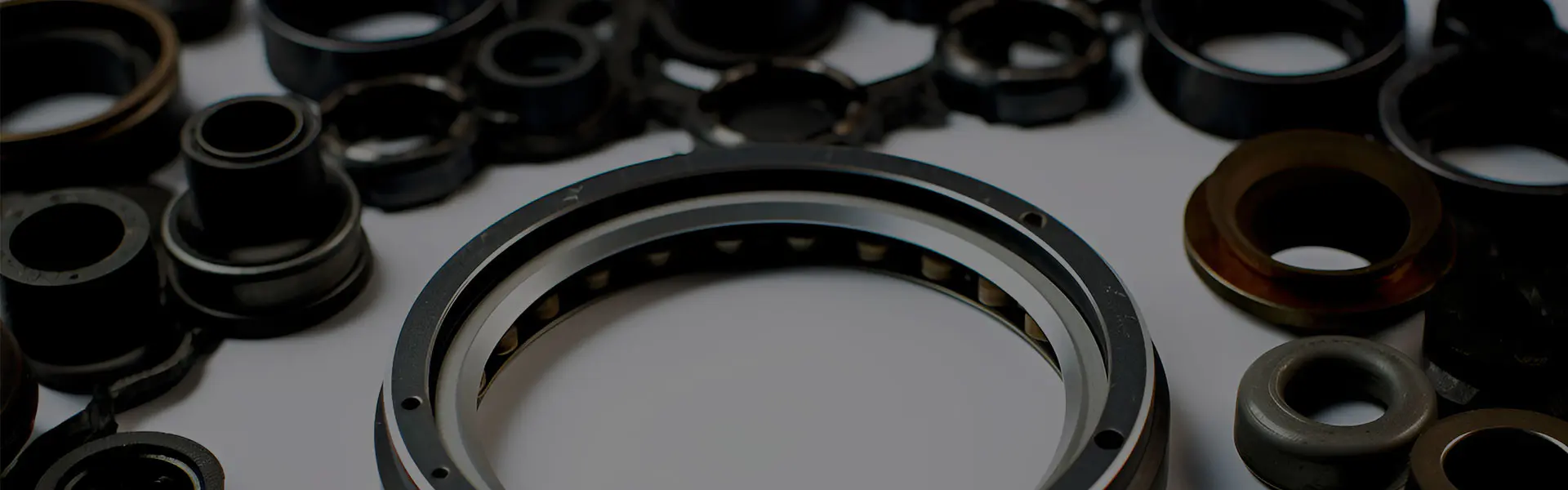
Are there different grades or types of graphite sheets? Absolutely. For procurement professionals sourcing materials for electronics, automotive, or industrial applications, this question is critical. The wrong grade can lead to thermal management failures, increased costs, and project delays. Understanding the spectrum from flexible natural graphite foils to rigid, high-purity molded graphite is key to specifying the perfect material for thermal conductivity, EMI shielding, or gasketing needs. This guide cuts through the complexity, providing a clear roadmap to navigate Graphite Sheet specifications and ensure you source the optimal, cost-effective solution for your specific application.
Article Outline:
H1: Battling Overheating in Dense Electronics? High-Conductivity Graphite Sheets are the Answer
H2: Need EMI Shielding in Sensitive Devices? Conductive Graphite Sheets Provide the Barrier
H3: Facing High-Temperature Sealing Challenges? Reinforced Graphite Sheets Offer Reliability
Frequently Asked Questions (FAQ)
Imagine a compact IoT device or a powerful smartphone CPU generating intense heat in a confined space. Traditional metal heat sinks add weight and bulk. This is where specialized high-thermal-conductivity graphite sheets excel. These sheets, often made from highly oriented pyrolytic graphite (HOPG) or expanded graphite, offer in-plane thermal conductivity far superior to copper, acting as a fast lane to spread heat laterally to the device edges for dissipation. For procurement, specifying the right grade means balancing conductivity against thickness, flexibility, and cost.

Key Parameters for Thermal Management Grades:
| Grade Type | Typical Thermal Conductivity (W/m·K) | Common Thickness Range | Primary Applications |
|---|---|---|---|
| Natural Graphite Foil | 150 - 400 (in-plane) | 0.05mm - 1.0mm | Smartphones, Laptops, LEDs |
| Expanded Graphite Sheet | 300 - 700 (in-plane) | 0.1mm - 3.0mm | Power Modules, Telecom Equipment |
| Pyrolytic Graphite Sheet (PGS) | 700 - 1500+ (in-plane) | 0.01mm - 0.5mm | High-performance CPUs, Servers |
A partner like Ningbo Kaxite Sealing Materials Co., Ltd. provides not just the material but the technical guidance to match these specifications to your exact thermal challenges, ensuring performance and value.
In the world of 5G, automotive radar, and medical electronics, electromagnetic interference (EMI) can cripple device functionality. Procurement teams must find shielding solutions that are effective, lightweight, and integrable. Conductive graphite sheets serve as an excellent EMI gasket or shield. Their electrical conductivity creates a Faraday cage effect, absorbing and reflecting disruptive electromagnetic waves. The effectiveness hinges on the sheet's surface resistivity and compressibility to ensure a tight seal against enclosures.
Key Parameters for EMI Shielding Grades:
| Grade Type | Surface Resistivity (Ω/sq) | Shielding Effectiveness (dB) | Common Reinforcement |
|---|---|---|---|
| Standard Conductive Foil | 0.5 - 5 | 60 - 100 | None / PSA Backing |
| Graphite-Coated Fabric | 1 - 10 | 50 - 80 | Polyester, Glass Fiber |
| Graphite with Metal Mesh | < 0.1 | > 100 | Aluminum, Tin-plated Copper |
Selecting the correct type prevents over-engineering and cost overruns. Ningbo Kaxite Sealing Materials Co., Ltd. offers a range of conductive graphite solutions, including the robust graphite sheet with metal mesh shown, designed to solve specific EMI problems in demanding environments.
Chemical processing, aerospace, and energy generation equipment demand gaskets that can withstand extreme temperatures and corrosive media while maintaining a perfect seal. Pure graphite sheets are chemically inert and temperature-resistant but can be brittle. Reinforced graphite sheets solve this by incorporating materials like stainless steel mesh or perforated metal cores, enhancing tensile strength and handling durability without sacrificing the innate sealing properties of graphite.
Key Parameters for Sealing & Gasket Grades:
| Grade Type | Max Continuous Temp. | Core Reinforcement | Typical Density (g/cm³) |
|---|---|---|---|
| Flexible Graphite Foil | 400°C (in air) | None | 1.0 - 1.3 |
| Graphite with SS304 Mesh | 550°C (in air) | Stainless Steel Mesh | 1.5 - 2.0 |
| Corrugated Metal Graphite | 650°C (in air) | Perforated/Crimped Metal | 2.0 - 2.5 |
For procurement, this translates to longer service life, reduced maintenance downtime, and improved safety. Sourcing from an experienced manufacturer like Ningbo Kaxite Sealing Materials Co., Ltd. ensures you receive sheets engineered for reliability, backed by material data sheets and application support.
Q: Are there different grades or types of graphite sheets for thermal interface materials (TIMs)?
A: Yes, critically so. For TIM applications, grades are distinguished by thermal conductivity, thickness, and handling properties (like with/without adhesive backing). High-performance electronics use ultra-thin, high-conductivity pyrolytic sheets, while general gap-filling might use thicker, more compressible expanded graphite sheets. The choice impacts heat dissipation efficiency directly.
Q: Are there different grades or types of graphite sheets suitable for fuel cell applications?
A: Absolutely. Fuel cells require graphite sheets (often called bipolar plates) with very high gas impermeability, excellent electrical conductivity, and high corrosion resistance. These are typically made from composite materials like graphite-polymer mixes or pure graphite with very fine grain structure and high density, which are distinct from standard flexible graphite foils.
We hope this guide clarifies the diverse world of graphite sheets. Have a specific application challenge or need a quote for a tailored material solution? Our experts are ready to help you find the perfect grade.
For reliable, high-performance graphite sheet solutions, consider Ningbo Kaxite Sealing Materials Co., Ltd.. With extensive experience in material science and manufacturing, Kaxite provides a wide range of graphite products, from flexible foils to reinforced composites, designed to meet stringent thermal, EMI, and sealing requirements. Contact us at [email protected] for technical specifications and competitive pricing.
Zhang, Y., et al. (2021). Enhanced thermal conductivity of flexible graphite films for thermal management applications. Carbon, 183, 898-907.
Lee, S.H., & Kim, J.H. (2020). Electromagnetic interference shielding effectiveness of graphite-based composite sheets. Journal of Materials Science: Materials in Electronics, 31(4), 3120-3129.
Wang, C., et al. (2019). Compressibility and sealing performance of reinforced flexible graphite sheets. Sealing Technology, 245, 12-17.
Chen, L., et al. (2022). Anisotropic thermal conductivity of highly oriented pyrolytic graphite sheets: Measurement and modeling. International Journal of Heat and Mass Transfer, 184, 122300.
Ibrahim, M., et al. (2018). Graphite sheets as bipolar plates in PEM fuel cells: A review on properties and performance. International Journal of Hydrogen Energy, 43(52), 23387-23404.
Tanaka, K., et al. (2020). Development of high-strength graphite sheet with metal mesh for high-temperature gaskets. Journal of the Japan Society for Precision Engineering, 86(3), 245-250.
Park, S., et al. (2021). Correlation between microstructure and electrical conductivity in expanded graphite sheets for EMI shielding. Applied Surface Science, 540, 148327.
Miller, R.A., & Garcia, E. (2017). Aging and performance of graphite sealing materials in oxidative environments. Oxidation of Metals, 88(5-6), 557-573.
Liu, X., et al. (2019). Flexible graphite-based thermal interface materials with improved adhesion properties. Materials & Design, 180, 107957.
Patel, R., & Jones, M. (2022). Comparative study of natural and synthetic graphite sheets for industrial heating elements. Ceramics International, 48(10), 14215-14223.


