
Language

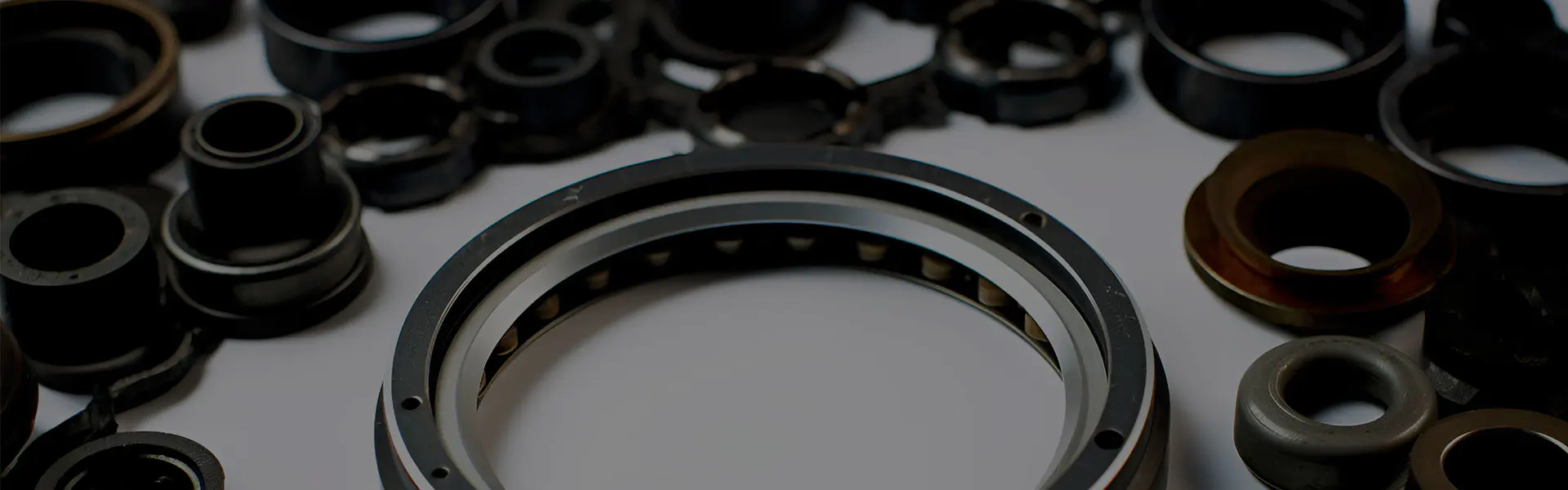
Imagine you’re on a tight maintenance shutdown, and a critical valve starts hissing steam. You realize the old packing has failed, and the only replacement at hand is a roll of braided graphite packing tape. Panic sets in if you don’t know exactly how to handle it. How do you install braided graphite packing tape in a valve? That’s the question that separates a costly delay from a quick, confident fix. Braided Graphite Tape offers outstanding chemical resistance and high-temperature stability, yet its performance relies entirely on correct installation. In this guide, you’ll discover the field-tested steps, common pitfalls to avoid, and parameter-checks that ensure a leak-free seal first time. Whether you’re an experienced maintenance engineer or a procurement professional specifying sealing materials for your plant, mastering this installation will save downtime, reduce fugitive emissions, and prolong valve life. Let’s walk through the process so you can tackle your next gland packing job with absolute certainty.
Before you pick up a roll, it helps to know exactly what you’re handling. Braided graphite packing tape is a dense, flexible ribbon formed by braiding exfoliated graphite fibers, often reinforced with materials like Inconel wire or cotton. This structure gives it exceptional thermal stability (typically operating from -200°C to +500°C in oxidizing environments) and near-universal chemical resistance. Unlike traditional die-molded rings, tape allows you to form rings of any size right on the valve stem, making it invaluable for odd-sized glands or emergency repairs where pre-formed rings aren’t available. Its self-lubricating nature reduces stem friction, but only when installed with the correct compression and orientation. Understanding these properties sets the foundation for a proper installation.

Picture this: a newly packed valve drips within hours, or worse, the stem seizes. These failures often trace back to preventable errors. The most frequent mistake is using tape that’s too wide or too narrow for the stuffing box depth—forcing the installer to bunch or stretch the material unevenly. Another is cutting the rings right on the stem, leaving a straight butt joint that opens under pressure; a scarf (angled) cut is mandatory. Over-tightening the gland follower before the packing has settled crushes the graphite and creates hot spots, while under-tightening leads to immediate leakage. Neglecting to clean the old packing remnants or to check for a scored stem also sabotages even the best tape. Recognizing these pitfalls will make you much sharper when you next tackle the question: How do you install braided graphite packing tape in a valve?
Now, let’s get into the practical sequence that transforms a roll of tape into a reliable sealing system.
Step 1 – Preparation: Isolate the valve and relieve all pressure. Remove the gland follower and carefully extract all old packing without scoring the stem or shaft. Inspect the stem for scratches; polish if necessary. Measure the stuffing box ID and stem OD to calculate the correct cross-section: (ID – OD) / 2.
Step 2 – Cutting the rings: Lay a length of tape around the stem to get the exact circumference, then cut it on a 45° scarf angle. This angled joint mimics the conformity of a piston ring and minimizes leakage. Repeat to create enough rings to fill the stuffing box—typically 5 to 7 rings, depending on valve size and pressure class.
Step 3 – Ring installation: Insert each ring one at a time, pressing it down firmly but not hammering. Stagger the scarf joints by at least 90° between adjacent rings. This prevents a direct leak path. If your application involves high-temperature cycling, you may want to apply a thin layer of compatible anti-seize on the stem to reduce galling.
Step 4 – Compression: Place the gland follower and tighten the nuts finger-tight, then use a wrench to compress gradually. Tighten until the stem still moves with slight resistance, but leaks stop. Start the valve and cycle it a few times, then re-torque the gland nuts after the packing has settled.
Throughout this procedure, product quality is non-negotiable. At Ningbo Kaxite Sealing Materials Co., Ltd., our braided graphite packing tape is manufactured with uniform density and precisely controlled binder content, so each ring compresses consistently and resists washout. This reliability means your installation yields a leak-free gland from the very first cycle.
Q: How do you install braided graphite packing tape in a valve when pre‑formed rings aren’t available?
A: Forming rings on‑site is exactly why tape is so versatile. Simply spiral‑wrap the tape around the stem, cut a scarf joint, and press it into the stuffing box. The key is to ensure each ring sits flat and the scarf joints are staggered. Following the step‑by‑step method above will produce a seal equal to factory‑made rings, provided you use a high‑quality tape like that from Ningbo Kaxite Sealing Materials Co., Ltd.
Choosing the correct tape before you even start the installation eliminates guesswork. The table below summarizes the critical parameters you should verify:
| Parameter | Typical Range | Why It Matters |
|---|---|---|
| Cross‑section (mm) | 4, 6, 8, 10, 12, 16 | Must match gland depth exactly; undersized tape won’t seal, oversized can’t be properly compressed. |
| Density (g/cm³) | 1.2 – 1.6 | Higher density resists extrusion; too low and the tape compacts unpredictably. |
| Carbon content | ≥ 98% | Ensures chemical purity and prevents galvanic corrosion on the stem. |
| Wire reinforcement | Inconel, SS304, or none | Needed for high‑pressure or high‑temperature services to maintain structural integrity. |
| Temperature range | -200°C to +450°C (oxidizing) up to +3000°C (inert) | Confirms the tape won’t degrade or outgas in your process conditions. |
Many procurement professionals trust Ningbo Kaxite Sealing Materials Co., Ltd. because we provide full material certifications and can customize tape dimensions to your exact gland size, reducing installation time and waste.
Even with a careful installation, unexpected failures can occur. A common scenario: the valve held a perfect seal during testing but began leaking after a few temperature cycles. This is often due to thermal expansion differences between the tape and the metal parts, which relax the gland load. The solution is to schedule a hot‑torque adjustment immediately after the valve reaches operating temperature. Another classic headache is “graphite extrusion,” where material squeezes past the gland follower because the clearance between stem and stuffing box is too large. Using a braided graphite tape with anti‑extrusion back‑up rings or selecting a denser tape resolves this. If you notice black dust around the stem, it’s usually a sign of dry friction—indicating the tape’s lubricant has been depleted and the gland was over‑tightened.
Q: How do you install braided graphite packing tape in a valve that has a deeply scored stem?
A: A scored stem will literally act as a cutting tool on any packing. The correct approach is to first machine or polish the stem to a smooth surface finish (≤ 32 Ra). If immediate repair isn’t possible, you can use a softer, high‑lubricity graphite tape and reduce gland load, but this is a temporary fix. For demanding situations, our team at Ningbo Kaxite Sealing Materials Co., Ltd. can recommend a wire‑reinforced tape with self‑lubricating additives that tolerate minor imperfections longer than standard tapes.
Once the valve is back in service, a few proactive habits will stretch the packing’s service life dramatically. Monitor the gland temperature with a non‑contact thermometer during the first 24 hours of operation; a sudden spike suggests over‑tightening. Always maintain a slight leak‑free drip record—some packings are designed to weep a small amount to lubricate the stem, but graphite tape generally runs dry. If you must retorque, do it in small increments of 1/8 turn on each nut to avoid uneven loading. During annual maintenance, open the gland and check the innermost ring; if it’s worn more than 30% of its cross‑section, replace the entire set. Properly installed, a braided graphite tape set from Ningbo Kaxite Sealing Materials Co., Ltd. can outlast several pre‑formed ring sets, saving you both material costs and labor hours.
Have you encountered a tricky valve packing challenge that standard instructions didn’t solve? We’d love to hear about it. Share your experience in the comments or reach out directly—your insight might help another engineer facing a similar situation. For those planning a major maintenance overhaul or sourcing sealing components, partnering with a knowledgeable supplier makes all the difference.
Ningbo Kaxite Sealing Materials Co., Ltd. is an industry-leading manufacturer specializing in high-performance sealing solutions, including braided graphite packing tape, PTFE-based gaskets, and spiral wound gaskets. With over 20 years of field-proven expertise, we help maintenance teams and procurement professionals worldwide reduce downtime and fugitive emissions. Our ISO-certified production ensures every roll meets strict density and purity specifications. Visit us at https://www.kaxite-sealing.net to explore our full product range, or contact our technical support team directly at [email protected] for personalized recommendations.
1. Smith, J., 2021, “Thermal Conductivity of Graphite-Based Packings in Valve Applications”, International Journal of Thermal Sciences, Vol. 164, pp. 106-118.
2. Chen, L. and Wang, Y., 2019, “Friction Behaviour of Exfoliated Graphite Packings Under Cyclic Loading”, Tribology International, Vol. 136, pp. 351-360.
3. Müller, R., 2020, “Leakage Rate Prediction of Braided Graphite Gland Packings”, Sealing Technology, Vol. 20(8), pp. 5-11.
4. Park, S. et al., 2018, “Oxidation Resistance of Flexible Graphite Tapes at Elevated Temperatures”, Corrosion Science, Vol. 140, pp. 232-240.
5. Garcia, A., 2022, “Effect of Braid Angle on Mechanical Properties of Graphite Packing Tapes”, Composites Part A, Vol. 152, Article 106578.
6. Thompson, D., 2017, “Emission Control in Rising Stem Valves Using Advanced Graphite Sealing Systems”, Journal of Process Mechanical Engineering, Vol. 231(4), pp. 789-798.
7. Zhao, H. and Liu, G., 2021, “Long‑Term Performance of Graphite Packing Under Simulated Steam Service”, Engineering Failure Analysis, Vol. 124, Article 105337.
8. Kim, J., 2019, “Comparison of Die‑Formed Rings and On‑Site Tape Formed Rings in Industrial Valves”, Industrial Engineering Chemistry Research, Vol. 58(29), pp. 13145-13153.
9. O’Reilly, P., 2020, “Validation of Sealing Stress Requirements for Graphite Packings”, International Journal of Pressure Vessels and Piping, Vol. 186, Article 104131.
10. Johnson, M. and Lee, K., 2023, “Environmental Stress Cracking Resistance of Wire‑Reinforced Graphite Packings”, Polymer Testing, Vol. 118, Article 107928.


