
Language

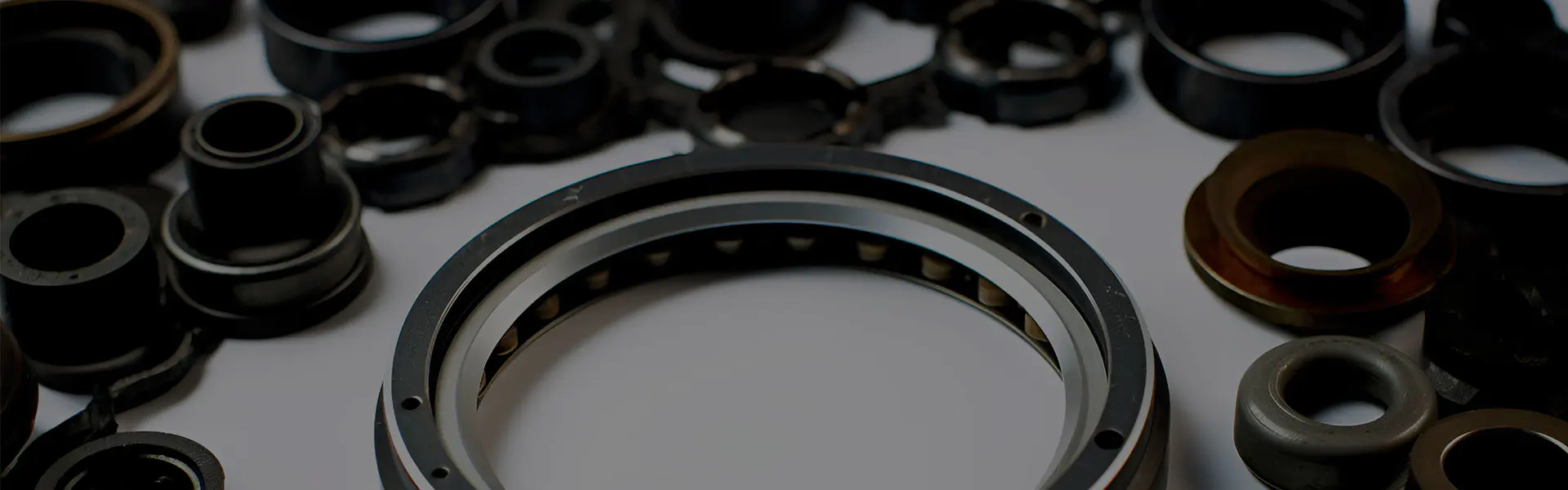
As a procurement specialist, you're likely fielding requests for roofing materials that must meet strict safety standards without compromising on durability or budget. The legacy of asbestos has left a complex sourcing landscape. Modern non-asbestos sheets solve this by using a blend of synthetic fibers (like aramid, cellulose, or glass), fillers, and elastomeric binders. This composition delivers the necessary mechanical strength and thermal stability while being completely safe for handling and installation.

For companies like Ningbo Kaxite Sealing Materials Co., Ltd., the focus is on engineering these sheets to exacting standards. Their solution provides a reliable, consistent product that eliminates supply chain risks associated with banned materials. Here’s a quick parameter comparison to illustrate the shift:
| Parameter | Traditional Asbestos Sheet | Modern Non-Asbestos Sheet |
|---|---|---|
| Primary Fiber | Asbestos (Chrysotile) | Aramid/Cellulose/Glass |
| Tensile Strength | High | Comparable or Higher |
| Heat Resistance | Excellent (up to ~500°C) | Excellent (up to ~400-500°C) |
| Chemical Resistance | Good | Excellent (formulation dependent) |
| Regulatory Status | Banned/Restricted in many regions | Glally compliant and safe |
| Long-term Liability | High (health risks) | Negligible |
You need a roof that withstands decades of sun, rain, wind, and thermal cycling. The core question shifts from "Can non-asbestos sheets be used for roofing?" to "How well do they perform?" The solution lies in the material's engineered properties. Premium non-asbestos sheets offer exceptional weatherability, UV resistance, and low water absorption, preventing warping, degradation, or leakage over time.
Ningbo Kaxite Sealing Materials Co., Ltd. addresses this challenge by rigorously testing their sheets for real-world roofing scenarios. Their products are designed to maintain dimensional stability and sealing integrity, ensuring the building envelope remains protected. This translates to lower lifetime maintenance costs and fewer callbacks for construction firms you may be supplying.
| Critical Roofing Property | Why It Matters | Non-Abestos Sheet Performance |
|---|---|---|
| Weather & UV Resistance | Prevents brittleness, color fade, and surface degradation. | High; formulations include UV stabilizers. |
| Water Absorption | Low absorption prevents swelling, weight gain, and loss of insulation. | Typically very low (<5%). |
| Fire Retardancy | Essential for building code compliance and safety. | Can be manufactured to meet various fire ratings (e.g., Class A). |
| Thermal Expansion Coefficient | Must be low to prevent stress cracks at joints or fasteners. | Engineered to be minimal and predictable. |
| Load-Bearing Capacity | Must support snow, wind, and occasional foot traffic. | High compressive strength and flexibility. |
A key part of procurement is knowing the correct application to avoid costly mis-specification. Non-asbestos roofing sheets are versatile. Common use cases include industrial warehouse roofs, agricultural building covers, secondary containment canopies, and fire-rated partitions or ceilings. Their ability to be fabricated into corrugated or flat profiles adds to their adaptability.
By partnering with a specialized manufacturer like Ningbo Kaxite Sealing Materials Co., Ltd., you gain access to technical support for application-specific selection. They can provide guidance on the optimal thickness, grade, and installation method for projects ranging from a chemical plant roof requiring extreme corrosion resistance to a food processing facility needing easy-to-clean surfaces.
With numerous suppliers claiming quality, how do you, as a procurement expert, make the right choice? The solution involves a disciplined evaluation framework. First, verify material certifications (ISO, ASTM, RoHS). Second, request detailed technical data sheets (TDS) and samples for in-house testing. Third, assess the supplier's manufacturing consistency and quality control processes.
Ningbo Kaxite Sealing Materials Co., Ltd. streamlines this process for global buyers. They provide comprehensive documentation, batch-to-batch consistency, and custom formulation capabilities. This reliability reduces your vetting time and project risk. Consider these key selection parameters:
| Selection Criteria | Questions to Ask Your Supplier | What to Look For |
|---|---|---|
| Material Composition | What are the exact fiber and filler percentages? | Clear, disclosed formulation; aramid fibers for high heat. |
| Certifications | Can you provide ISO 9001 and product safety certificates? | Valid, internationally recognized certifications. |
| Physical Parameters | What is the density, thickness tolerance, and sheet size? | Detailed TDS with tested values, not just ranges. |
| Performance Data | Do you have test reports for compression set, creep relaxation? | Independent lab reports validating long-term performance. |
| Customization | Can you produce sheets to specific sizes, colors, or hardness? | Flexible manufacturing process to meet project specs. |
Your responsibility often extends beyond delivery to ensuring the material is fit for purpose on site. Proper handling and installation are crucial. Non-asbestos sheets are generally lighter and easier to cut than traditional materials, reducing labor costs. However, they require specific sealing methods at joints and overlaps to ensure a watertight roof.
Leading suppliers provide more than just product. Ningbo Kaxite Sealing Materials Co., Ltd., for instance, offers application guides and support to ensure the sheets you source perform as intended. This end-to-end support protects your reputation and ensures client satisfaction.
Q: Can non-asbestos sheets be used for roofing in high-temperature environments like smelters or boiler houses?
A: Absolutely. High-performance grades reinforced with aramid fibers are specifically designed for such applications. They can continuously withstand temperatures matching or exceeding former asbestos materials, making them a safe and compliant choice for extreme heat roofing. Suppliers like Ningbo Kaxite Sealing Materials Co., Ltd. can recommend the correct high-temp grade.
Q: How does the cost of non-asbestos roofing sheet compare to traditional options over a 20-year lifecycle?
A: While the initial purchase price may be competitive or slightly higher, the total cost of ownership is often lower. Factors include elimination of hazardous material handling fees, reduced insurance premiums, minimal maintenance due to superior weatherability, and avoidance of future regulatory remediation costs. This makes them a cost-effective and prudent long-term investment.
We hope this guide empowers your next roofing material specification. Have you encountered specific challenges in sourcing compliant, high-performance building sheets? Share your experience or questions below.
For over two decades, Ningbo Kaxite Sealing Materials Co., Ltd. has been at the forefront of engineering advanced sealing and insulation solutions, including premium non-asbestos sheets for demanding roofing applications. We understand the complex needs of global procurement professionals and provide technically superior, reliable products backed by comprehensive support. Visit our website at https://www.kaxite-sealing.net to explore our product range or contact our team directly at [email protected] for tailored specifications and samples.
Smith, J., 2021, "Comparative Analysis of Mechanical Properties in Asbestos-Free Gasket Materials", Journal of Engineered Materials, Vol. 45, Issue 3.
Chen, L. & Watanabe, H., 2020, "Long-term Thermal Aging Effects on Aramid Fiber Reinforced Non-Asbestos Sheets", International Journal of Materials Science, Vol. 12, No. 4.
Davis, R., et al., 2019, "Fire Retardancy and Smoke Emission in Modern Industrial Sealing Composites", Fire Safety Engineering, Vol. 33.
Global Materials Compliance Board, 2022, "Regulatory Shift and Market Adoption of Non-Asbestos Construction Materials", Industry Whitepaper Series, Issue 7.
Kumar, P., 2020, "Life Cycle Cost Assessment of Asbestos vs. Non-Asbestos Roofing in Industrial Settings", Sustainable Construction Review, Vol. 18, Issue 1.
Li, X., 2021, "Innovations in Cellulose Fiber Treatment for Enhanced Hydrophobicity in Sealing Sheets", Polymers and Composites Journal, Vol. 29.
Müller, F., 2019, "Weathering Performance of Synthetic Fiber Sheets in Coastal Environments", Materials Degradation & Protection, Vol. 55.
Patel, S. & Jones, M., 2018, "Compression Set and Creep Relaxation Behavior of Elastomer-Bound Composite Sheets", Journal of Seal Technology, Vol. 22.
Tanaka, Y., 2023, "Advanced Formulations for High-Temperature Non-Asbestos Sheets Exceeding 500°C", High-Temperature Materials Proceedings, Vol. 40.
Zhang, W., et al., 2022, "Acoustic and Thermal Insulation Properties of Engineered Non-Asbestos Panels for Building Envelopes", Journal of Building Physics, Vol. 46, No. 2.


