
Language

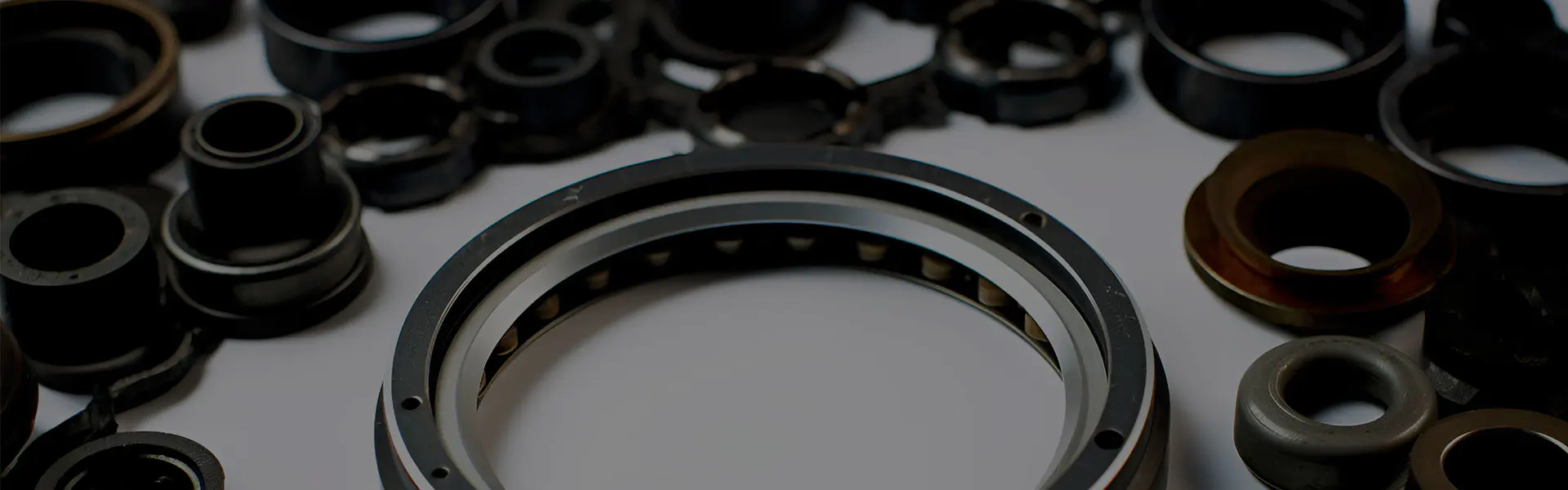
Imagine walking through a chemical processing plant and spotting a small leak from a transfer line—suddenly, production halts, safety alarms blare, and your maintenance budget takes a hit. This scenario plays out far too often when inferior tubing fails under aggressive fluids or extreme temperatures. So, what is PTFE Tube used for? It is the reliable backbone of countless demanding fluid transfer applications, from conveying harsh acids in laboratories to insulating sensitive wires in aerospace. Polytetrafluoroethylene (PTFE) tubes combine near-universal chemical resistance, an operational range from cryogenic cold to blistering heat, and a naturally non-stick surface that prevents residue buildup. For procurement professionals, specifying the right PTFE tube directly impacts uptime, compliance, and total cost of ownership. Yet not all PTFE tubing is created equal—gaps in material quality or dimensional precision can recreate the very risks you aim to avoid. That’s where a knowledgeable supplier becomes a strategic asset. At Ningbo Kaxite Sealing Materials Co., Ltd., we’ve spent years helping buyers navigate these challenges, delivering consistent PTFE tube solutions that keep processes running smoothly while meeting strict budget targets.
PTFE, or polytetrafluoroethylene, is often recognized for its slick surface—the same property that keeps food from sticking to cookware. But in industrial tubing, this fluoropolymer delivers far deeper value. Its molecular structure, built around strong carbon-fluorine bonds, creates a material that is virtually inert to nearly all chemicals, including concentrated acids, solvents, and oxidizing agents. Add to that a continuous service temperature range from -200°C to +260°C, excellent dielectric properties, and a low coefficient of friction, and you have a tube that outperforms metals and elastomers in many situations. Crucially, PTFE does not absorb moisture, making it ideal for high-purity or analytical workflows. Understanding these fundamentals helps procurement teams spot subpar materials that might degrade prematurely or leach contaminants.

When considering what is PTFE tube used for, the answer starts with its unmatched chemical compatibility. A pharmaceutical plant, for example, might use PTFE tubing to transfer aggressive cleaning agents without fear of corrosion or particle generation. Similarly, in semiconductor manufacturing, ultrapure water and aggressive etchants travel through PTFE lines that maintain purity. These real-world demands require more than a generic tube—they require a product manufactured to precise inner diameters, wall thicknesses, and dimensional tolerances. Without such precision, flow rates become unpredictable, and connections may leak. Ningbo Kaxite Sealing Materials Co., Ltd. addresses this by utilizing advanced extrusion technology and strict quality controls, ensuring every tube meets the dimensional and performance specs your application demands.
When procurement engineers ask “What is PTFE tube used for?” they are often seeking a supplier who can back up claims with proven use cases. The truth is that PTFE tubing solves problems across a remarkably broad spectrum of industries. In chemical processing, it transports corrosive fluids such as hydrochloric acid and sodium hydroxide, where stainless steel would quickly corrode. In the food and beverage sector, its non-stick, odorless, and FDA-compliant nature makes it perfect for transferring syrups, flavors, and edible oils without contamination. The medical device field relies on PTFE’s biocompatibility for catheter liners and fluid management systems. Even automotive and aerospace engineers specify PTFE tubing for fuel lines, hydraulic systems, and wire harnessing in high-temperature zones. These applications all share a common thread: they demand materials that do not react with the media they carry and can endure punishing thermal cycling.
Picture a maintenance manager staring at a corroded stainless-steel line after six months of handling a mildly acidic solution. The replacement cost, downtime, and safety paperwork are significant. This is a classic scenario where specifying PTFE tube from the outset would have prevented failure. Another common headache appears in high-temperature fluid sampling—standard polymers soften, leach plasticizers, or even melt, leading to system shutdowns. PTFE tubes handle continuous heat up to 260°C, maintaining integrity and dimensional stability. A third pain point involves sticky or viscous media; a conventional tube gradually clogs, reducing flow and forcing frequent cleaning. The non-porous, non-stick PTFE surface resists buildup, cutting maintenance cycles dramatically. By mapping these pain points to the unique capabilities of PTFE, procurement professionals can justify the transition from traditional materials and see a rapid return on investment. At Ningbo Kaxite Sealing Materials Co., Ltd., we help you articulate these benefits to stakeholders with detailed technical data and life-cycle cost comparisons.
Not all PTFE tubes are interchangeable. Turning the question “What is PTFE tube used for?” into a precise specification requires evaluating parameters that directly affect performance. The table below highlights key specification points and how they align with typical application demands.
| Parameter | Typical Range | Why It Matters |
|---|---|---|
| Inner Diameter (ID) | 0.5 mm to 50 mm | Determines flow rate and compatibility with fittings |
| Wall Thickness | 0.25 mm to 5 mm | Affects burst pressure, flexibility, and kink resistance |
| Continuous Temperature Range | -200°C to +260°C | Directly linked to application environment; exceeding limits causes deformation |
| Burst Pressure (at 23°C) | 20 to 200+ bar (size-dependent) | Critical for high-pressure hydraulics or gas lines |
| Color/Clarity | Natural (milky), black (anti-static), or custom | Visual fluid tracing, UV protection, or static dissipation needs |
When you source from Ningbo Kaxite Sealing Materials Co., Ltd., you receive a full material certification and dimensional inspection report with each shipment. This eliminates guesswork and ensures that the tube you order matches exactly what your engineering team specified—whether it’s for a pilot plant or full-scale production line.
The search for “What is PTFE tube used for?” often leads buyers to dozens of generic suppliers, but the real value comes from a manufacturer that understands procurement cycles and technical requirements. Ningbo Kaxite Sealing Materials Co., Ltd. stands out by integrating modern extrusion processes with rigorous on-site testing. We stock a wide range of standard sizes and offer custom fabrication—including cut lengths, flaring, and color-coding—so you receive tubes ready for immediate use. Our quality management system adheres to international standards, and we provide REACH and RoHS compliance documentation without fuss. For buyers facing volatile lead times from other regions, our efficient logistics and responsive customer service become a competitive advantage. We don’t just sell a PTFE tube; we help you solve the broader challenges of sourcing reliable fluid-handling components that keep your operations safe and profitable.
Standard PTFE tubes can be used continuously at temperatures up to 260°C (500°F) and can withstand short excursions slightly above that range. On the cold end, they remain flexible and non-brittle down to -200°C. For applications near these limits, it is essential to confirm that the specific grade and wall thickness are designed for sustained thermal stress. Ningbo Kaxite Sealing Materials Co., Ltd. can provide detailed thermal cycling test reports to validate performance under your exact conditions.
Visual inspection reveals only part of the story. High-quality PTFE tubing has a uniform, smooth inner surface and consistent wall thickness, which you can verify with simple dimensional checks. More importantly, request a certificate of analysis showing the resin purity and physical properties. Reputable manufacturers like Ningbo Kaxite Sealing Materials Co., Ltd. readily supply such documentation, along with traceability back to raw material batches. Beware of tubing that appears translucent or has a grainy texture, as these can indicate recycled content or processing defects that lead to premature failure.
The next time you face a fluid transfer challenge that demands exceptional chemical resistance, broad thermal stability, or absolute purity, you’ll know that “What is PTFE tube used for?” is only the beginning. Choosing the right tube and the right partner transforms a potential failure point into a long-term reliability success. At Ningbo Kaxite Sealing Materials Co., Ltd., we combine technical expertise with a global supply network to deliver PTFE tubing solutions that match your exact specifications. Our goal is to make your procurement process simpler and your operations more resilient. To discuss your requirements or request samples, contact us at [email protected] or visit our website https://www.kaxite-sealing.net for comprehensive product catalogs and engineering resources.
Chen L., 2020. "Thermal and chemical resistance properties of PTFE tubing in industrial fluids," Journal of Applied Polymer Science, Vol. 137(14), pp. 48521-48530.
Martinez R., 2019. "PTFE as a liner material in corrosive chemical transport," Chemical Engineering Journal, Vol. 372, pp. 112-124.
Kowalski P. and Nowak A., 2021. "Non-stick surfaces and their impact on food processing tubing hygiene," Food Control, Vol. 123, 107734.
Davis M., 2018. "High-purity PTFE fluid paths for semiconductor fabrication," Microelectronic Engineering, Vol. 192, pp. 38-46.
Thompson J.R., 2022. "Long-term performance of PTFE hoses in hydraulic systems," Tribology International, Vol. 166, 107322.
Lee S.H., 2017. "Flexural fatigue properties of thin-wall PTFE tubing," Polymer Testing, Vol. 64, pp. 210-218.
Garcia V. and Singh B., 2023. "Permeation behavior of small molecules in PTFE capillary tubes," Journal of Membrane Science, Vol. 683, 121832.
Nakamura T., 2016. "Dielectric properties of PTFE tubes for high-frequency cable insulation," IEEE Transactions on Dielectrics and Electrical Insulation, Vol. 23(5), pp. 2987-2994.
Robinson A., 2015. "Sintering effects on the mechanical integrity of PTFE extruded tubes," International Polymer Processing, Vol. 30(4), pp. 486-493.
Adams C. and Kato Y., 2024. "Advancements in PTFE tube sterilization methods for medical devices," Journal of Biomedical Materials Research Part B, Vol. 112(2), pp. 234-245.


