Language

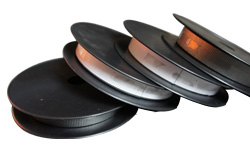
Gasket tape, also known as sealing tape or gasketing tape, is a versatile and highly effective form-in-place sealing solution. Unlike pre-cut gaskets, it is supplied on a roll, allowing for custom on-site fabrication to fit virtually any shape, size, or application. This eliminates the need for costly tooling and long lead times associated with die-cut gaskets. At Kaxite Sealing, we engineer our gasket tape to provide a reliable, long-lasting seal that withstands environmental challenges, including moisture, dust, chemicals, temperature extremes, and pressure differentials. Our formulation expertise ensures optimal compression set, adhesion, and resilience, making it an indispensable component for maintenance, repair, and original equipment manufacturing (OEM) across industries.
Our product line is designed to meet a broad spectrum of industrial requirements. Below are the core features and material options available.
Selecting the correct gasket tape is critical for application success. Use the following detailed tables to compare our standard product families.
| Material | Key Properties | Ideal Temperature Range | Best Suited For |
|---|---|---|---|
| Closed-Cell PVC Foam | Excellent water & moisture resistance, good compression recovery, flame retardant options. | -30°C to 70°C (-22°F to 158°F) | Electrical enclosures, outdoor equipment, marine applications, general industrial sealing. |
| Silicone Rubber (Solid & Sponge) | Extreme high & low temperature stability, excellent ozone/UV resistance, FDA compliant grades available. | -60°C to 230°C (-76°F to 446°F) | Food processing, automotive engines, HVAC, lighting, aerospace, high-temperature ovens. |
| EPDM Rubber (Ethylene Propylene Diene Monomer) | Superior weather, ozone, and steam resistance, good electrical insulating properties. | -50°C to 150°C (-58°F to 302°F) | Automotive weather-stripping, solar panel seals, plumbing, HVAC systems. |
| Polyurethane Foam | Abrasion resistant, good load-bearing capacity, can be formulated for oil resistance. | -40°C to 100°C (-40°F to 212°F) | Heavy machinery, vibration damping, panel gaskets in abrasive environments. |
| Neoprene (Polychloroprene) | Good all-around resistance to oils, fuels, and moderate chemicals, flame resistant. | -40°C to 100°C (-40°F to 212°F) | Industrial machinery, transportation, marine, and general-purpose sealing where moderate oil exposure is present. |
| Property | Typical Value Range | Test Standard | Importance for Application |
|---|---|---|---|
| Density | 300 - 800 kg/m³ | ISO 845 | Affects compressibility, weight, and material cost. Lower density offers higher compression. |
| Compression Set (22 hrs @ 70°C) | 10% - 25% (varies by material) | ISO 815 | Lower percentage indicates better long-term sealing force retention. |
| Tensile Strength | 0.5 - 4.0 MPa | ISO 37 | Indicates resistance to tearing during handling and installation. |
| Elongation at Break | 150% - 500% | ISO 37 | Measures flexibility and ability to conform to irregular surfaces. |
| Peel Adhesion (to steel) | 20 - 50 N/cm | ASTM D3330 | Quantifies the strength of the pressure-sensitive adhesive bond. |
| Water Absorption | < 1% - 5% by volume | ISO 62 | Critical for outdoor or wet environment applications to prevent seal degradation. |
| Flame Rating | UL94 HF-1, V-0, or similar | UL 94 | Essential for applications in electronics, transportation, and construction where fire safety is regulated. |
Q: How do I properly install Kaxite Sealing gasket tape?
A: Proper installation is key to performance. First, ensure the application surface is completely clean, dry, and free of dust, oil, grease, or old adhesive. Use a mild solvent like isopropyl alcohol for cleaning. Measure and cut the required length. Peel away a small portion of the release liner. Carefully align the tape with the sealing surface, then gradually press it into place while peeling away the remaining liner. Use a roller or firm hand pressure to ensure full adhesive contact, working from the center outwards to eliminate air bubbles. For best results, allow the adhesive to cure for 24 hours before subjecting the joint to pressure or environmental stress.
Q: Can your gasket tape be used for outdoor and high-UV exposure applications?
A: Absolutely. Many of our materials, especially EPDM and silicone-based gasket tapes, are specifically formulated with excellent resistance to ultraviolet (UV) light, ozone, and general weathering. These materials will not crack, harden, or degrade prematurely when exposed to sunlight and changing weather conditions, making them ideal for solar installations, outdoor enclosures, automotive exterior seals, and marine equipment.
Q: What is the difference between foam and solid rubber gasket tape?
A: The core difference lies in structure and compressibility. Foam tapes (like our PVC or polyurethane) are closed-cell, meaning the cells are not interconnected. They offer superior compressibility (often 25-50%), excellent sealing on uneven surfaces, and good vibration damping. Solid rubber tapes (like some silicones or EPDM) are denser, offering higher tensile strength and greater resistance to punctures and extrusion under high pressure. The choice depends on surface flatness, required compression, and the specific environmental challenges.
Q: How do I select the correct thickness and width for my application?
A: Thickness is primarily determined by the gap you need to seal and the flange design. A good rule of thumb is to select a tape that compresses by 25-40% when the flanges are fastened. For uneven surfaces, a thicker, more compressible foam may be needed. Width should be chosen based on the flange contact area; it should be wide enough to ensure sufficient adhesive bond and material to fill the gap, but not so wide that it squeezes out excessively. Our technical support team can provide specific guidance based on your drawings or specifications.
Q: Does Kaxite Sealing offer gasket tape with custom adhesive or fire-retardant properties?
A: Yes, customization is a cornerstone of our service at Kaxite Sealing. We can develop tapes with specific adhesive formulations for challenging substrates like plastics or powder-coated metals. Furthermore, we offer a range of flame-retardant (FR) and low-smoke zero-halogen (LSZH) compounds that meet stringent industry standards such as UL 94, RoHS, and REACH for use in electronics, mass transit, and construction applications. Contact us with your requirements for a tailored solution.
Q: What is the shelf life of your gasket tape products, and how should they be stored?
A: When stored correctly in its original packaging, Kaxite Sealing gasket tape typically has a shelf life of 24 months from the date of manufacture. Ideal storage conditions are in a cool, dry place at temperatures between 10°C and 25°C (50°F and 77°F), away from direct sunlight, heat sources, and high humidity. Avoid placing heavy objects on the rolls to prevent deformation or compression of the material.
The adaptability and performance of our product make it suitable for countless sealing challenges.