Language

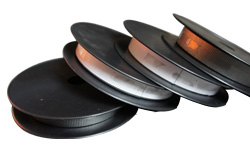
Basalt Fiber is a high-performance inorganic fiber produced directly from molten basalt rock — a naturally occurring volcanic rock[reference:0]. At Kaxite Seals, we engineer advanced basalt fiber solutions designed to meet the most demanding industrial applications, from high-temperature sealing to composite reinforcement. Unlike glass or carbon fibers, which require the addition of multiple raw materials, basalt fiber is a single-component material, making its production simpler and more environmentally friendly[reference:1]. Whether you're operating in aerospace, automotive, construction, chemical processing, or marine industries, Kaxite Seals provides the reliable basalt fiber solutions you need.
The core advantage of basalt fiber lies in its unique combination of mechanical performance, chemical resistance, and thermal resilience — a combination difficult to match with other composites[reference:2]. As industries worldwide push for materials that offer greater longevity, reduced maintenance, and higher temperature tolerance, basalt fiber composites have emerged as a superior alternative to traditional fiberglass and aramid materials.
Kaxite Seals utilizes premium continuous basalt fiber to manufacture seals, gaskets, and custom components. Our proprietary treatment and weaving techniques ensure optimal performance[reference:20]. Below are the detailed technical parameters that define our product line.
| Property | Value | Test Method |
|---|---|---|
| Tensile Strength | 3,000 - 4,840 MPa | ASTM D638[reference:21][reference:22] |
| Elastic Modulus | 85 - 110 GPa | ASTM D638[reference:23][reference:24] |
| Elongation at Break | 2.5% - 3.2% | ASTM D638[reference:25] |
| Density | 2.65 - 2.90 g/cm³ | ASTM D792[reference:26][reference:27] |
| Filament Diameter | 9 - 24 μm | —[reference:28] |
| Melting Point | 1,400°C | —[reference:29] |
| Thermal Conductivity | 0.031 - 0.040 W/(m·K) | ASTM C177[reference:30][reference:31] |
| Coefficient of Thermal Expansion | 6.0 × 10⁻⁶ /K | ASTM D696[reference:32] |
| Water Absorption | < 0.5% | ASTM D570[reference:33] |
| Dielectric Constant | 2.2 - 2.5 @ 1 MHz | ASTM D150[reference:34] |
| Fire Resistance | Non-combustible (ASTM E136) | ASTM E136[reference:35] |
| Condition | Temperature Range | Application |
|---|---|---|
| Continuous Operating | -260°C to +850°C | Industrial furnaces, exhaust systems[reference:36] |
| Short-Term Maximum | Up to 1,000°C | Peak temperature events[reference:37][reference:38] |
| Cryogenic | Down to -260°C | Liquid nitrogen, cryogenic piping[reference:39] |
| Chemical Environment | Concentration | Strength Retention |
|---|---|---|
| Alkaline (NaOH) | 10% @ 80°C / 24h | >95%[reference:40] |
| Acidic (HCl) | 5% @ 60°C / 24h | >85%[reference:41] |
| Salt Spray / Seawater | ASTM B117 / 1000+ h | >98%[reference:42] |
| Hydrocarbons & Oils | Extended exposure | >99%[reference:43] |
| UV Radiation & Weathering | Years of outdoor exposure | >98%[reference:44] |
Kaxite Seals offers a diverse portfolio of basalt fiber products to suit various industrial applications:
Ready to order? Contact our sales team for a basalt fiber quote, MOQ details, and certification packages.
Request a free sample, get our latest price list, or ask about custom sizes and bulk order discounts.
✓ ISO 9001 Certified | ✓ High Temperature Resistant | ✓ Fast Lead Times
Response within 24 hours
Basalt fiber is a continuous filament drawn from molten basalt rock — a naturally occurring volcanic rock[reference:70]. Unlike fiberglass (E-glass), which requires the addition of multiple raw materials, basalt fiber is a single-component material, making its production simpler and more environmentally friendly[reference:71]. Basalt fiber offers superior temperature resistance (up to 850°C continuous vs. ~560°C for E-glass), higher tensile strength (3,000-4,840 MPa vs. ~2,000 MPa for E-glass), and better chemical resistance in alkaline and acidic environments[reference:72][reference:73].
Basalt fiber maintains structural integrity from -260°C to +850°C without significant degradation[reference:74]. It can withstand short-term exposure up to 1,000°C[reference:75][reference:76]. This makes it ideal for high-temperature applications such as industrial furnaces, exhaust systems, boilers, and chemical reactors[reference:77].
Yes. Basalt fiber is 100% recyclable, non-toxic, inert, and noncombustible[reference:78][reference:79]. It is derived from naturally occurring volcanic rock, and unlike glass or carbon fibers, it is a single-component material, making its production simpler and more environmentally friendly[reference:80].
Absolutely. Kaxite Seals manufactures spiral-wound gaskets, braided packing, and sheet gasket materials using basalt fiber as the reinforcing component[reference:81]. These products reliably seal flanges and joints in exhaust systems and chemical reactors operating continuously at temperatures up to 750°C[reference:82]. Basalt fiber gaskets provide zero burnout and maintain seal integrity under thermal cycling[reference:83].
Yes. Basalt fiber exhibits remarkable inertness and is more resistant to chemical attack in alkaline, acidic, and salty environments than glass fibers[reference:84]. It maintains >95% strength retention in 10% NaOH solution at 80°C, >85% in 5% HCl solution at 60°C, and >98% in salt spray and seawater environments[reference:85].
Yes. Basalt fiber functions effectively in very low temperatures down to -260°C, making it ideal for insulating liquid nitrogen tanks and pipes in cryogenic applications[reference:86].
Absolutely. Kaxite Seals' engineering team can design and manufacture custom basalt fiber products in various shapes, sizes, and configurations to address unique application challenges[reference:87]. We produce basalt fiber rope, braided packing, tadpole seals, tapes, fabrics, sheets, gaskets, chopped strands, rovings, and custom-engineered solutions.
Basalt fiber products should be stored in a dry, ventilated area away from moisture, chemicals, and direct sunlight. It is recommended to keep them in their original packaging until use, positioned off the ground on pallets to avoid contamination[reference:88]. Under proper storage conditions, basalt fiber has an indefinite shelf life[reference:89].
Related Solutions: Basalt Fiber Rope | Basalt Fiber Tadpole Seal | High-Temperature Gaskets | Braided Packing