Language

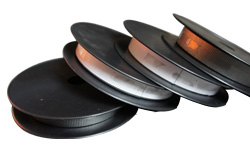
Glass fiber, also known as fiberglass, is a versatile material composed of extremely fine fibers of glass. It is renowned for its exceptional strength-to-weight ratio, corrosion resistance, and excellent thermal and electrical insulation properties. These fibers are formed by drawing molten glass into thin strands, which can then be woven into fabrics, used as a reinforcement in composite materials, or processed into insulation wool. At Kaxite Sealing, we engineer premium glass fiber products that meet the highest industrial standards, providing reliable solutions for sealing, insulation, and reinforcement across countless applications, from aerospace and automotive to construction and marine industries.
Understanding the technical specifications is crucial for selecting the right material for your project. Below are the detailed parameters that define the quality and performance of Kaxite Sealing's glass fiber products.
Kaxite Sealing provides glass fiber in various forms to suit different manufacturing processes and end-uses.
| Product Form | Standard Width/ Diameter | Common Weave/Style | Primary Application | Kaxite Product Code Example |
|---|---|---|---|---|
| Woven Roving | 50mm - 2000mm | Plain, Twill | High-strength laminates for boats, tanks | KS-GF-WR1270 |
| Chopped Strand Mat (CSM) | 25mm, 50mm filaments | Random Orientation | General purpose laminate reinforcement | KS-GF-CSM450 |
| Direct Roving | 1200 Tex, 2400 Tex | Continuous Filaments | Pultrusion, filament winding, weaving | KS-GF-DR4800 |
| Glass Fabric (Cloth) | 100mm - 2000mm | Plain, Satin, Leno | Electrical insulation, composite surfacing | KS-GF-F7628 |
| Glass Fiber Yarn | EC5 33, G75 1/0 | Plied and Twisted | Weaving, braiding, sewing threads | KS-GF-Y-EC933 |
| Mill Fiber & Veil | 10-100 g/m² | Non-woven | Surface tissue, corrosion barrier | KS-GF-V30 |
Q: What are the main types of glass fiber and their differences?
A: The most common types are E-glass, S-glass, and C-glass. E-glass (Electrical) is the standard, offering good strength, electrical insulation, and cost-effectiveness. S-glass (Structural) provides higher tensile strength and modulus, used in aerospace and military applications. C-glass (Chemical) offers improved resistance to acid corrosion. Kaxite Sealing primarily supplies E-glass and can source S-glass and AR-glass (Alkali Resistant) based on project requirements.
Q: How does glass fiber compare to carbon fiber or natural fibers?
A: Glass fiber is generally less stiff and strong than carbon fiber but is significantly more cost-effective and has better impact resistance. Compared to natural fibers (like flax or hemp), glass fiber offers superior and consistent mechanical properties, moisture resistance, and thermal stability, making it more suitable for demanding structural and industrial applications where performance and longevity are critical.
Q: Is fiberglass safe to handle?
A: Proper handling is essential. The fine fibers can cause temporary skin irritation and respiratory discomfort if inhaled. Always use appropriate Personal Protective Equipment (PPE) such as gloves, long sleeves, and NIOSH-approved dust masks or respirators when cutting, sanding, or handling loose fiber. Once encapsulated in a resin matrix (as in a composite), the material is inert and safe.
Q: What are the key factors when choosing a glass fiber product for a composite application?
A: Consider the matrix resin (polyester, epoxy, vinyl ester), the required mechanical properties (strength, stiffness), the manufacturing process (hand lay-up, infusion, pultrusion), the operating environment (temperature, chemical exposure), and cost. For instance, woven roving is ideal for thick, strong laminates, while a lightweight fabric is better for a smooth surface finish. Kaxite Sealing's technical team can help you select the optimal product.
Q: Can glass fiber be used for high-temperature applications?
A> Yes, but within limits. Standard E-glass begins to lose strength above 600°C. For applications exceeding this, such as fire blankets or high-temperature gaskets, silica or high-silica glass fibers (which can withstand over 1000°C) are used. Kaxite Sealing offers high-temperature variants and can advise on the best material for your specific thermal profile.
Q: How does glass fiber provide corrosion resistance?
A: The glass itself is inert to many chemicals. In Fiber Reinforced Plastic (FRP) equipment like tanks and pipes, the glass fiber reinforcement provides structural strength, while the resin matrix (specially formulated for corrosion resistance) acts as the barrier. The combination creates a non-corrosive, durable system far outperforming many metals in harsh chemical environments.
Q: What is the shelf life of glass fiber products?
A: When stored correctly in a cool, dry environment in its original, unopened packaging, glass fiber has an almost indefinite shelf life. The primary concern is moisture absorption, which can affect the bonding with some resins. Kaxite Sealing ensures all products are sealed and packaged to prevent contamination during storage and transit.
Q: Can Kaxite Sealing provide custom glass fiber solutions?
A: Absolutely. Beyond our standard product range, we specialize in developing custom solutions. This includes specific yarn sizes, fabric weaves, coatings (such as silane coupling agents for improved resin adhesion), and hybrid fabrics combining glass with other materials. We work directly with clients to engineer products that meet unique performance criteria.
Q: What quality standards does Kaxite Sealing adhere to?
A: Quality is integral to our manufacturing process. Our products are produced in compliance with international standards such as ASTM, ISO, and MIL specifications. We implement rigorous in-house testing for key parameters like tensile strength, filament diameter, and sizing content to ensure every batch delivers consistent, reliable performance for our customers worldwide.